

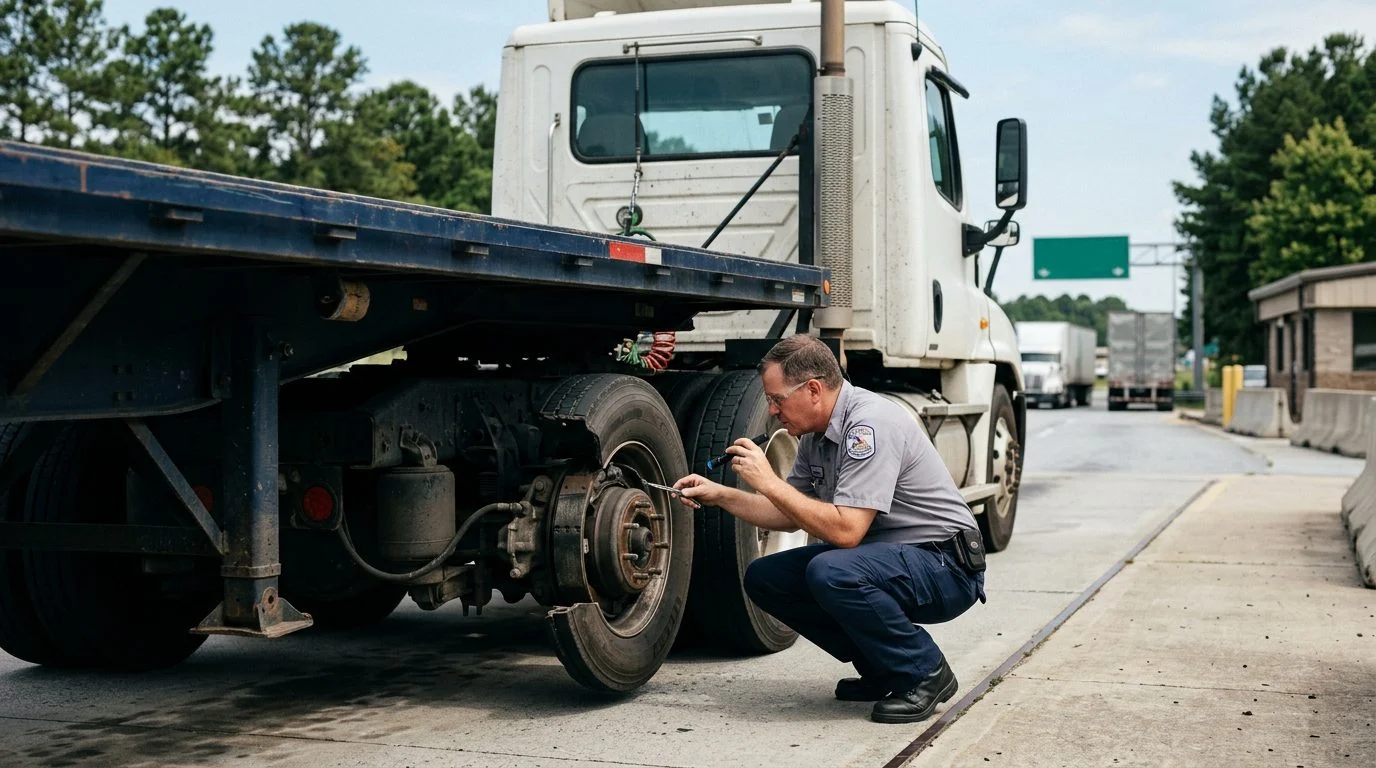
Truck Accident Lawyer | Atlanta, Georgia
Hurt in an 18-Wheeler Crash? Start With a Lawyer Who Reads the Evidence
Trucking companies and their insurers move quickly after a wreck. A lawyer who works just as quickly can help protect the records that matter most.
About T. Madden & Associates, P.C.
1999
Representing injured Georgians since
5
Offices in Jonesboro, Atlanta, Decatur, Macon and Augusta
24/7
Call us anytime
By Terance Madden · Published November 18, 2026
When a big truck hurts someone in your family, the calls, the paperwork and the hard questions often land on one person, and a good truck crash attorney is one who takes on that work and answers those questions with you. Here is what happens when you call T. Madden & Associates, P.C. about a truck crash.
Who is a good truck accident attorney in Atlanta, Georgia? Start with these questions
A good fit is a lawyer who asks the right questions early, explains each step in plain English, and shows how they handle commercial truck cases. That’s the test. Truck crash cases turn on details, and how a firm handles those details matters.
A personal injury lawyer represents people hurt because someone else was careless. You’ll read more about fees later in this guide.
If you’re reading this, you’re probably carrying a lot right now. You may be handling hospital visits, insurance letters and the questions from work and home. You’re not alone in that. This guide covers what to ask when you call T. Madden & Associates, P.C. about a truck case, and why each question matters for a truck case in Georgia.
If someone you love is still recovering from a truck crash, you don't have to sort out the records and insurance calls alone. Talk with our team about what your family is facing. Talk it through with our team — the first consultation is free, confidential, and carries no obligation.
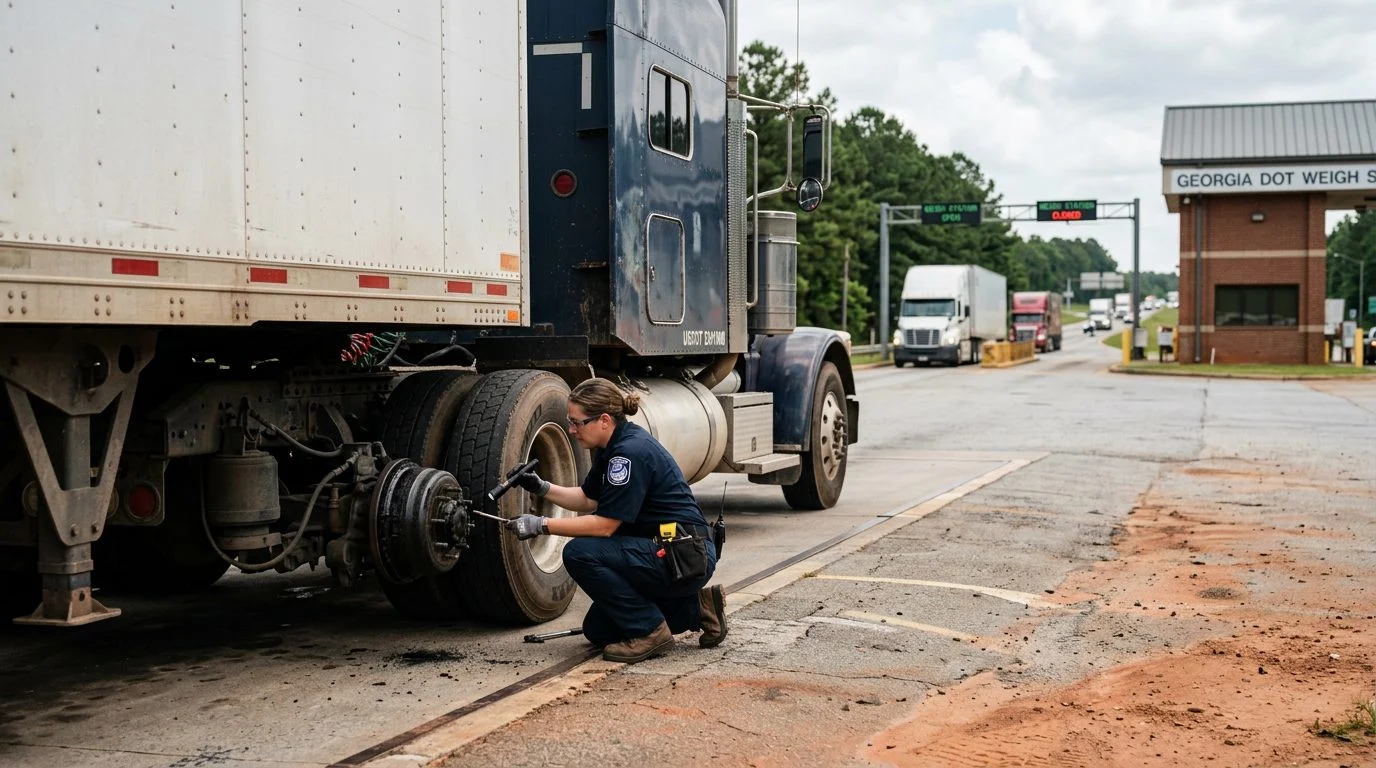
Why a truck crash is not a car crash
A truck crash is different because of weight, parties and paperwork. A loaded commercial truck weighs far more than a passenger car. That mass changes how the crash unfolds and how serious the injuries can be.
More than one party may share the blame. The driver is one. The trucking company is another. The company that loaded the cargo, or a vendor that maintained the brakes or tires, may also play a part. Each one may carry its own insurance.
Trucking companies must also follow federal safety rules. Under 49 CFR 395.8, motor carriers subject to the rules must require drivers, except private motor carriers of passengers (nonbusiness), to record their duty status using an ELD, and may let drivers record it manually on a grid only in limited cases, such as for certain commercial motor vehicles manufactured before model year 2000. Those records show when a driver was working and when he or she was resting.
The truck also keeps its own data. The engine control module (ECM, the truck’s onboard computer) and the black box record speed, braking and other events. Driver logs add hours driven. This data can disappear if no one asks for it quickly. Speed and timing matter, so the sooner it’s preserved, the better.
Why an engineer’s eye matters when the evidence is data
In a truck crash case, the data from the truck can matter as much as the paperwork. Data needs someone who knows how to test it against the facts.
Before law school, Terance Madden trained as an electrical engineer. His engineering training shapes how he evaluates the evidence and builds the case.
Before law school, he trained as an electrical engineer. That means he starts by asking what the evidence shows and how the crash happened. He matches timestamps, braking events and sensor readings to the scene and to the physical damage on the vehicles. If the data and the damage don’t match, that’s a question to answer, not a detail to skip.
He also asks which records exist and which ones must be preserved right away. That includes the ECM and black box data, driver logs, maintenance records and dash-cam video. Reading that evidence takes careful attention to how the technology works. Terance Madden’s engineering training helps him check the numbers.
Questions to ask about your truck crash case
Bring these questions to your free consultation with T. Madden & Associates, P.C. The answers tell you how the case will run.
- How much of your work involves commercial trucks? Ask what types of trucks and crashes they have handled.
- Who will work on my family member’s case day to day? Ask how the family will be updated, and how often.
- How will you preserve the evidence? Ask how quickly they send preservation letters for the truck’s data, driver logs and maintenance records.
- Will you prepare the case as if it may go to trial? Ask what that preparation includes.
- Who will you pursue for payment? Ask about the driver, the trucking company and any other liable party.
The firm has offices in Atlanta, Jonesboro (Clayton County), Decatur, Macon and Augusta. Ask where your case would be handled and who would handle it.
The employer’s own negligence: the Negligent Five
In many truck cases, the trucking company can be liable for its own negligence (carelessness), not just for the driver’s conduct. Georgia law makes an employer answer for its driver’s work within the scope of the job, under O.C.G.A. § 51-2-2. The company can also face claims for its own choices.
The firm calls these claims the Negligent Five. In plain words:
- Negligent hiring: the company did not use ordinary care in choosing the driver.
- Negligent training: the company did not train the driver properly.
- Negligent entrustment: the company lent the truck while knowing the driver was incompetent or habitually reckless.
- Negligent retention: the company kept the driver after learning of incompetence.
- Negligent supervision: the company failed to oversee the driver’s work.
Georgia’s vicarious-liability statute, O.C.G.A. § 51-2-2, makes a person liable for torts committed by his servant by his command or in the prosecution and within the scope of his business; it does not set the employer’s duty to use ordinary care in selecting employees or to stop keeping them after learning of incompetence. The Georgia Supreme Court has held that these employer claims are based on the employer’s own acts, in Quynn v. Hulsey.
That matters to your family. Each claim can open another source of insurance. A lawyer asks for hiring files, training logs and safety reports early, because those records show what the company knew.
How Big Insurance handles truck crash claims, and how the firm responds
Big Insurance is not on your family’s side. Its job is to limit what it pays. Knowing that changes how you should handle the first calls.
Expect a fast first offer. Expect a request for a recorded statement before anyone knows the full extent of the injuries. Expect delays in paying bills, disputes over whether treatment was needed, and arguments that the damage was small. A “low impact” argument often shows up, too. Each of these steps can slow a claim or push the offer lower.
An insurer’s first offer is rarely what a claim is worth. Don’t treat it as the final word.
The response is to pursue every layer of coverage. That can include the driver’s liability policy, the trucking company’s policy, any umbrella or excess coverage, corporate coverage, and uninsured or underinsured motorist (UM/UIM) coverage on the family’s own policy. Georgia requires auto liability policies to offer uninsured motorist coverage, with set minimum limits the insured can choose above.
The claim should also reflect the full cost of the injury over time. That can include future medical care and lost earning capacity, where the facts support them. Preparing the case as if it may go to trial changes how the claim is valued.
Not sure what your next step is?
Talk it through with our team — the first consultation is free, confidential, and carries no obligation.
How fees and case costs work
You may still be responsible for court costs and case expenses, so ask about those in the same conversation.
The first consultation is free, confidential and carries no obligation to continue.
Ask for the fee agreement in writing before you sign. Read how the fee is calculated, and how case expenses are handled. Truck cases can involve data retrieval and engineering review, which cost money. Those costs should be explained up front, so your family isn’t surprised later.
How long a truck crash lawsuit can take, and who manages it
A truck crash case often takes longer than a car crash case. There are more records, more data and more defendants. The timeline depends on the facts of each case, and no one can promise a date at the start.
Georgia generally gives two years to bring a personal injury action. The rule is in O.C.G.A. § 9-3-33, and the statute has exceptions, so talk with a lawyer early.
The person managing the recovery usually needs the most updates. That may be a spouse, a parent or an adult daughter. They handle appointments, bills and insurance letters. A good lawyer keeps that person informed in plain English.
Medicare can also affect the case. When a Medicare beneficiary is hurt in a crash, liability insurance generally pays first, and Medicare pays second. Medicare may make a conditional payment, which must be repaid from a settlement, according to CMS guidance. Ask early how those payments will be handled.
Can you sue a truck driver? Yes, and who else may be liable
Yes. A truck driver can be sued for a crash he or she caused. The trucking company and other liable parties may also be named.
Georgia uses a fault-sharing rule. Under O.C.G.A. § 51-12-33, a person’s damages are reduced by their own percentage of fault. A plaintiff who is 50 percent or more responsible recovers no damages. Each defendant pays only its own share of the award.
That’s why fault is fought over in every truck case. Claims for negligent hiring, training, supervision, and retention are based on the alleged negligent acts of the employer (Quynn v. Hulsey, 310 Ga. 473 (2020)).
If your family was hurt in a truck crash that someone else caused, you may have a claim. The next step is a conversation about the facts. Reach out to the firm at tmaddenlaw.com/contact to start a free case evaluation.
Frequently Asked Questions
Who is a good truck accident attorney in Atlanta, Georgia?
A good fit is a lawyer who handles truck crash cases, explains each step in plain English, and moves fast to preserve the evidence. T. Madden & Associates, P.C. has represented injured Georgia residents since 1999, and attorney Terance Madden’s electrical engineering training helps him read the technical records in these cases.
What evidence matters most after a truck crash?
Electronic control module (ECM) data, the truck’s black box, and driver logs can show speed, braking, and hours on the road. Because this records can be lost or overwritten, it helps to act quickly. Call the firm to learn what it can request and preserve for you.
Can more than the truck driver be held responsible?
Yes. The trucking company may share responsibility through its own negligence in hiring, training, entrusting, retaining, or supervising the driver. Other parties, such as maintenance vendors or cargo loaders, may also be liable, which can mean more insurance coverage.
What should I do if an insurance company calls me after a truck crash?
Be careful about giving a recorded statement before you talk to a lawyer. Big Insurance often opens with a low offer, and a first offer is rarely what a claim is worth. The initial consultation with T. Madden & Associates, P.C. is free, confidential, and carries no obligation to continue.