

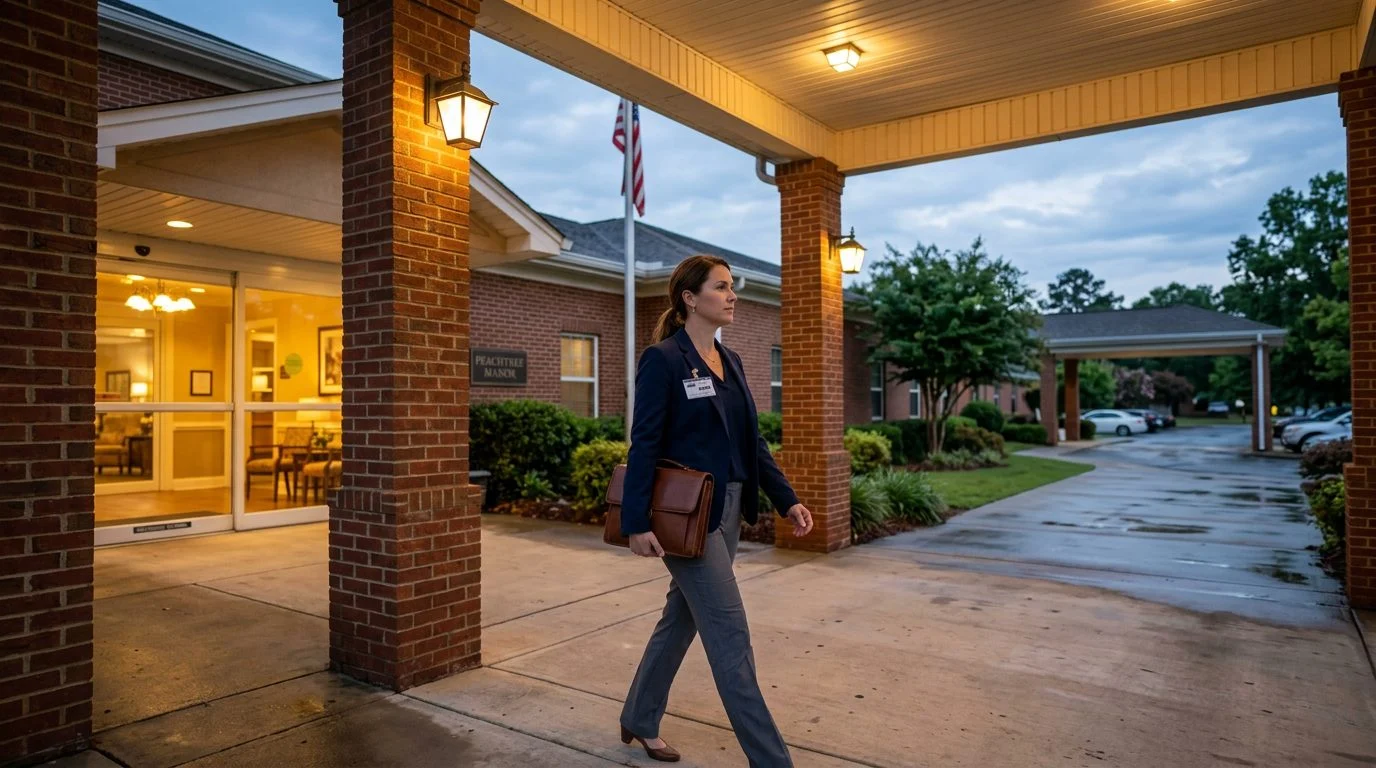
Augusta, Georgia | Nursing Home Abuse
Your Loved One Deserves Safe Care. When a Nursing Home Fails Them, We Listen and Act.
Augusta families come to T. Madden & Associates, P.C. with questions about a parent's injuries, a sudden decline, or a facility that won't give straight answers.
Why Augusta families call the firm
1999
In practice since
24/7
Call us anytime
Free
First consultation
By Terance Madden · Published November 20, 2026
If you’re looking for a nursing home abuse lawyer in Augusta, you may already suspect something is wrong. Trust that feeling and start asking questions. Abuse and neglect are different harms, and both can lead to a claim in Georgia.
Abuse is harm done on purpose or through rough, reckless handling. Neglect is the failure to give basic care, such as food, water, hygiene, medicine, or safe care. Georgia law requires nursing homes to give each resident care “with reasonable care and skill” and with “respect for the resident’s personal dignity and privacy” (Georgia resident care law).
What Nursing Home Abuse and Neglect Look Like
Warning signs often show up on the body first. Check for these on every visit:
- Bedsores or pressure wounds
- Bruises, cuts, or burns with no clear explanation
- Fractures or repeated falls
- Sudden weight loss or dehydration
- Infections that keep coming back
Behavior changes matter too. A resident may fear one staff member, pull away from family, become suddenly confused, or stop wanting to talk.
If you’re the adult daughter or spouse who visits, you’re often the first to notice. Start a simple log now. Write down dates, times, what you saw, and the names of staff involved. Photograph injuries and keep copies of care plans and bills.
Federal rules back up what you’re seeing. A facility must not use verbal, mental, sexual, or physical abuse, and residents have the right to be free from neglect (42 CFR § 483.12). Your notes help show which rule was broken and when.
If your parent in an Augusta nursing home shows signs of abuse or neglect, you don't have to face the next step alone; call T. Madden & Associates for a free consultation. Talk it through with our team — the first consultation is free, confidential, and carries no obligation.

What the Firm Handles for Augusta Families
T. Madden & Associates, P.C. handles nursing home abuse and neglect claims for residents hurt in facilities in Augusta and Richmond County. The firm also takes wrongful death claims when a resident dies from abuse or neglect. Georgia law sets out who may bring that kind of claim, and the firm reviews that question first.
Catastrophic injury claims are another focus. These include serious fractures, brain injuries, and injuries that cause permanent disability. Those losses change a family’s life, so the claim must account for future care, not just the bills so far.
Some cases overlap with medical malpractice. Malpractice means a health care provider’s treatment fell below the accepted standard of care. A missed diagnosis or a medication error can fall into that group.
The firm has practiced personal injury law in Georgia since 1999. It has an office in Augusta, along with offices in Jonesboro, Atlanta, Decatur, and Macon.
Who Can Be Held Responsible
More than one party can be responsible when a resident is harmed. That can include the facility, the company that owns it, and the company that runs its daily operations.
Georgia law says a person harmed when a long-term care facility violates a resident’s rights may sue the facility for damages (Georgia resident care law). Employers are also liable for torts committed by workers within the scope of their job (Georgia employer liability law). That covers an aide who abuses a resident or a nurse who ignores a medication error.
Outside contractors can matter too. A facility can answer for a contractor’s negligence in certain cases, such as when it keeps the right to control how the work is done.
The facility’s own choices count. Georgia’s high court has said claims for negligent hiring, training, supervision, and retention are claims based on the employer’s own negligent acts (Quynn v. Hulsey).
Georgia also splits fault among everyone who contributed to the harm, including people who are not named in the suit (Georgia fault apportionment law). That is why staffing logs and care plans matter. They show who had the duty and who broke it.
How a Nursing Home Abuse Case Moves, Step by Step
A case starts with a free first consultation, and the firm builds it from the records. Here is the usual path:
- Free first consultation. It is confidential and carries no obligation to continue. The firm listens to what you’ve seen and what your loved one needs now.
- Records requests. The firm asks for the chart, medication records, incident reports, staffing records, and any video the facility keeps. Georgia requires a provider to furnish a requested record within 30 days when the request includes the required authorizations (Georgia medical records law).
- Review. The firm reviews the records and tells you what they show and what is still unknown.
- The claim. The firm pursues the claim with the facility and its insurers. It files suit if the claim cannot be resolved fairly.
- Settlement or trial. The firm prepares as if the case will go to trial from day one.
If your parent has died, the records rules name who may ask for them. The estate’s executor or administrator comes first. If none has been appointed, the surviving spouse, then a child, then a parent may ask.
How long a case takes depends on the facts, the records, and how many parties are involved. The firm keeps the family updated at each stage. Georgia sets filing deadlines for these claims, so waiting can cost a family its claim.
The firm handles these cases on a no-fee-unless-we-win basis, but you may still be responsible for court costs and case expenses.
How Terance Madden’s Engineering Training Shapes the Case
Terance Madden starts a nursing home case by asking what the records show and how the harm happened. Before law school, he trained as an electrical engineer and earned a B.S. in Electrical Engineering.
That training shapes how he reads the evidence. He treats a facility like a system. He looks at what happened, in what order, and which records exist and must be preserved.
- Alarm and call-button histories show whether a resident’s call was answered, and how fast.
- Medication dispensing data shows what was given, when, and what was skipped.
- Equipment maintenance records show whether a lift, bed rail, or alarm was kept in working order.
A gap in the timeline often points to a missed check or a delayed response. Electronic logs can be overwritten, so the timing of the records request matters.
How Big Insurance Responds to Nursing Home Claims
Big Insurance is not on your family’s side, and a first offer is rarely what the claim is worth. Expect these tactics:
- An early, low offer made before the full picture is known
- A recorded statement from a worried family member who is upset or grieving
- Claims that the resident was already frail, so the harm doesn’t count
- Delays in releasing records or answering questions
- Arguments that the injury was too minor to matter
The firm pursues every coverage layer that applies. That can include liability coverage, corporate coverage, umbrella or excess coverage, and any other policy that covers the harm.
The claim should also account for the full, lifetime cost of the harm. Georgia law separates general damages, which the law presumes flow from a wrongful act, from special damages, which must be proved (Georgia damages law). Medical bills and future care need proof. The firm prepares each case as if it will go to trial.
Not sure what your next step is?
Talk it through with our team — the first consultation is free, confidential, and carries no obligation.

Frequently Asked Questions About Nursing Home Abuse Claims in Augusta
Can a family member testify in a nursing home abuse lawsuit?
Family observations can add context the records leave out. Dates, changes you noticed, and what staff told you all help.
Can I sue a nursing home for not feeding a resident?
Neglect of food and fluids can support a claim when the facility failed its duty of care. Each case turns on its own facts.
What can a family seek in a nursing home neglect case?
Families may seek medical bills, future care costs, and the harm the resident suffered. Some losses must be proved, as explained above.
What if my loved one is still in the facility?
Keep a written log and save copies of care plans and bills. If anyone is in immediate danger, call 911 first.
Is the first consultation free?
Yes. The first consultation is free, confidential, and carries no obligation to continue.
If your parent is in a nursing home in Augusta and you’ve seen signs of abuse or neglect, the next step is a call. You can request a free consultation today, and the firm’s phone line is available 24/7.