

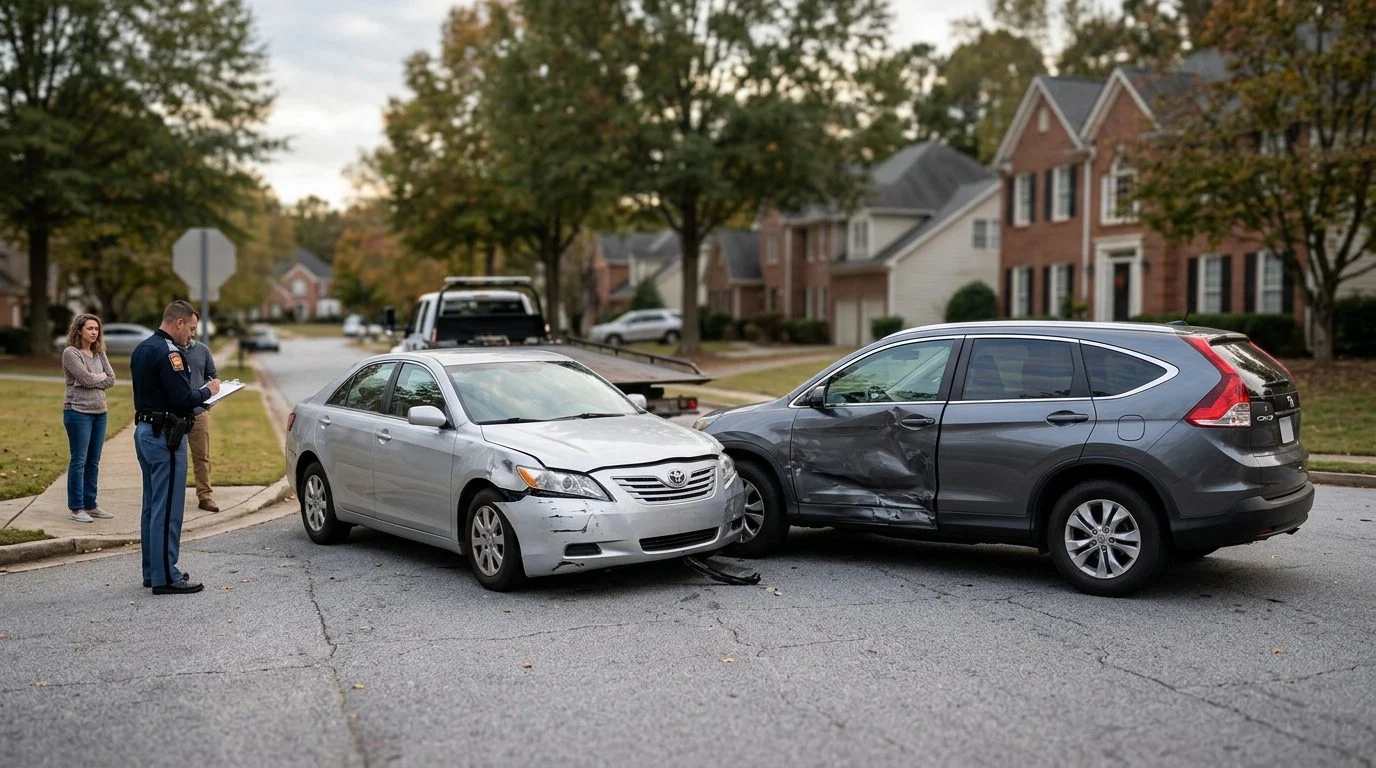
Georgia car crash claims | Jonesboro, Atlanta, Decatur, Macon, Augusta
Someone else hit your car? You may have a claim against them.
Repair bills, medical care, and missed work can add up fast. Here is how the other driver's responsibility, your losses, and your options fit together.
T. Madden & Associates, P.C.
1999
Year the firm began practice
5
Georgia offices: Jonesboro, Atlanta, Decatur, Macon, Augusta
24/7
Call anytime to talk about your crash
By Terance Madden · Published November 17, 2026
You may be asking this for someone you love. A crash left a car wrecked, a body hurt, and a pile of calls and bills on the kitchen table. In many Georgia crashes, yes, you can sue the driver whose carelessness caused the crash. Whether you can, and what the claim is worth, turns on the facts. Here is how Georgia law works, in plain words.
The short answer: yes, if another driver’s carelessness caused the crash
In many Georgia crashes, the injured person can sue the driver whose carelessness caused the harm. Carelessness has a legal name: negligence, which means failing to use the care a reasonable person would use. The absence of that care is ordinary negligence. Georgia’s definition of ordinary diligence
Damages are the money losses and suffering that followed. Georgia’s breach of legal duty rule
The driver is not always the only one who answers. Georgia law makes a person liable for torts committed by a servant within the scope of his business. O.C.G.A. § 51-2-2 If the at-fault driver was working, the employer may answer too. Quynn v. Hulsey A company’s own choices can matter to the claim.
If someone else's carelessness damaged your car or hurt you, you may have a claim, and you don't have to sort it out alone. Talk with our team. Talk it through with our team — the first consultation is free, confidential, and carries no obligation.
Two claims, not one: your vehicle and your body
Your car and your body are two separate claims. Each has its own bills, its own paperwork and its own timeline.
The property damage claim covers the vehicle. That includes repairs, or the car’s value if it is totaled, plus rental costs and loss of use while the car is out of service. The bodily injury claim covers your health. That includes medical bills, pain, time off work and lost pay. The two claims can move on different tracks and settle at different times.
Georgia splits damages into two groups. General damages are the harm the law presumes from a careless act, such as pain and suffering. They can be recovered without proof of an exact amount. Special damages are actual losses, like medical bills and repair invoices. They must be proved. O.C.G.A. § 51-12-2
Fault is the next hurdle. Georgia uses modified comparative negligence, a rule that counts shared fault. The judge reduces an award by the injured person’s share of fault. If that person is 50 percent or more responsible, the law bars any recovery. Georgia’s fault apportionment statute
Start a practical step today. Put the crash report, vehicle photos, repair estimates, tow receipts and rental invoices in one folder. Date each item and keep copies. That folder becomes the backbone of your claim.
How late is too late to sue in Georgia?
For most personal injury claims, Georgia generally gives two years to file suit. For damage to property, including your car, the window is generally four years. The injury deadline comes from O.C.G.A. § 9-3-33. The property deadline comes from O.C.G.A. § 9-3-31.
These deadlines are strict. The injury statute opens with “except as otherwise provided,” so exceptions exist, and the facts decide which rule fits. Don’t guess. Get the dates checked early.
An open insurance claim is not a lawsuit on file. Talks with an adjuster are not the same as filing suit, so keep your own calendar moving. Write the crash date down today. Set reminders well ahead of both the two-year and four-year marks.
Symptoms that show up days later, and why the medical record matters
Some injuries take time to show themselves. A medical check is wise even when the car looks only lightly damaged.
Watch for headaches, dizziness, numbness or tingling, changes in sleep, trouble focusing, and new neck or back pain. Some people notice these signs hours or days after a crash. Write each sign down with the date you noticed it.
The medical record is the bridge between the crash and the injury. Each visit, test, referral and prescription should describe what happened and when. Gaps in treatment give Big Insurance an opening. Its reviewers may argue the injury came from something else, or was not as serious as you say. Steady, documented care makes that argument harder to make.
For the spouse, mother or adult daughter keeping the file, your work is part of the case. Track appointments, medication changes, missed work and what you see at home. Keep discharge papers and every bill. Your notes describe the daily cost of the injury, and that matters as much as the scans.
What Big Insurance does after a crash, and how a claim pushes back
Big Insurance is not on your side, and a first offer is rarely what your claim is worth. Plan for that from day one.
Expect a quick, low offer, often made before the medical picture is clear. Expect a request for a recorded statement, asked while you are sore and worn out. Expect slow replies, delays in paying, and disputes over whether a treatment was needed. Expect the “low impact” argument, which says the car was damaged too little to hurt anyone. A small-looking dent does not tell the story of a body.
The response is to pursue every coverage layer that applies. O.C.G.A. § 33-7-11 Policies must cover injury sustained from the owner or operator of an uninsured motor vehicle, which includes one whose insurer is insolvent and pays only part of the liability.
Other layers can include the at-fault driver’s liability coverage and corporate coverage when a business is involved, and any umbrella or excess policy. Under O.C.G.A. § 33-7-11, the required uninsured motorist coverage excludes umbrella or excess liability policies unless affirmatively provided for in such policies or in a policy endorsement. The firm pursues each one that applies.
You may be asked for a recorded statement. Don’t rush it. Think before you speak, and never guess about dates or symptoms. The firm prepares every claim as if it may go to trial.
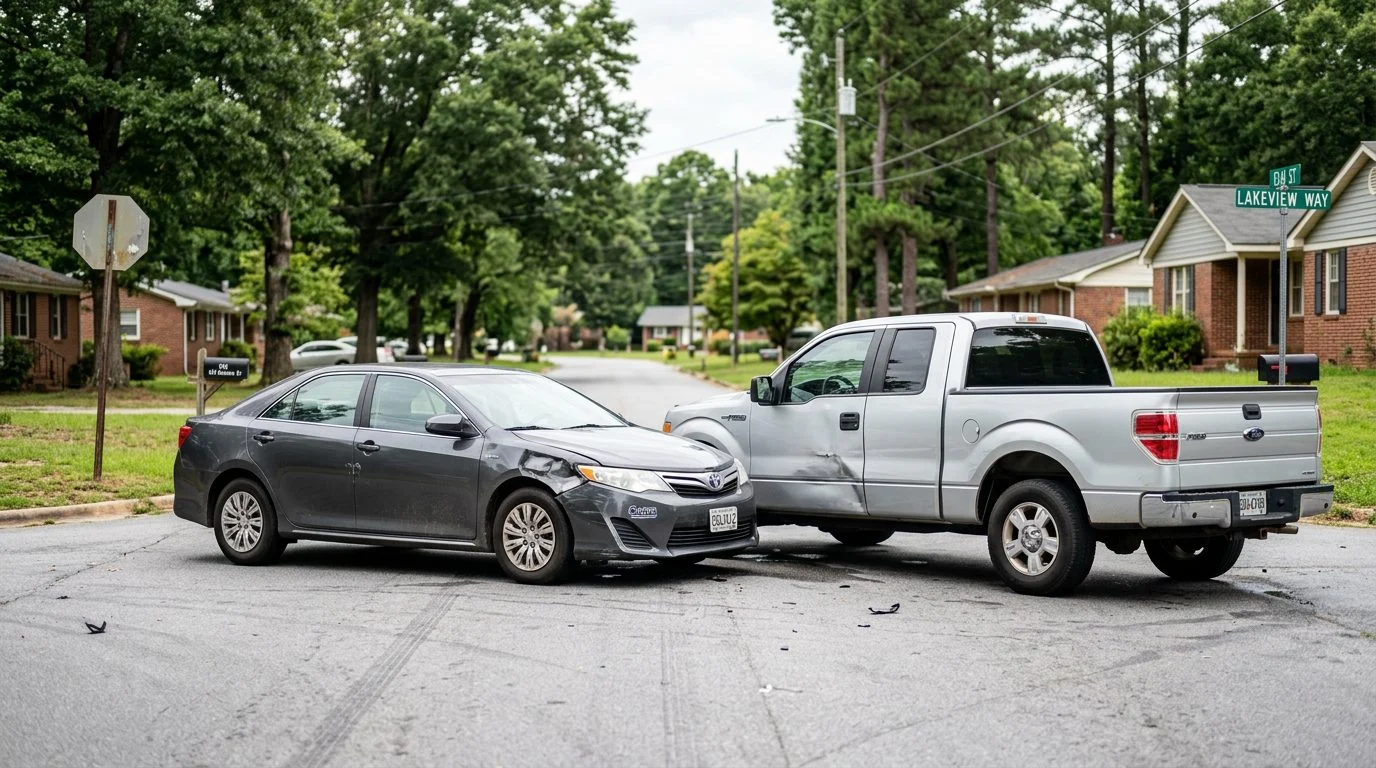
What the vehicle, its data and the crash scene can show
The car itself often holds early clues. Many newer vehicles have an event data recorder (EDR), often called a black box. It can store speed, braking and throttle information for a short window before impact.
That data, along with the damage pattern and the scene, can show how the crash happened. It can also show who had a chance to avoid it.
Before law school, Terance Madden trained as an electrical engineer. That training shapes how he reviews a case. He asks what the evidence actually shows, how the crash happened, and which records exist and must be preserved. In a car case, he reads the vehicle’s data, the damage pattern, the photos and the timeline together.
Preserve the car. Don’t repair, sell or scrap it until it has been inspected, when a claim is possible. Ask the shop or tow yard to hold it. In plain words, a recorder may show whether the brakes were applied before impact, how fast the car was moving, and whether the throttle was pressed.
Not sure what your next step is?
Talk it through with our team — the first consultation is free, confidential, and carries no obligation.
What a car crash settlement depends on
A settlement depends on the facts, and no two claims line up the same way. The value looks at injuries and treatment, medical bills, lost income, vehicle damage, available coverage and how fault is divided.
The first offer is the insurer’s starting point. It is not a measure of what your claim is worth. Georgia sets rules for written settlement offers in motor vehicle injury claims prepared with an attorney. The recipient may ask in writing about releases, liens (claims against money for unpaid bills) and medical records. That request is not a counteroffer. Georgia’s motor vehicle settlement offer rules
Size matters, too. Georgia law says that if an injury is small or the mitigating circumstances are strong, only nominal damages (a very small token award) may be given. O.C.G.A. § 51-12-4 That is why the medical record and the full list of losses matter so much.
Bring the full picture to the table, not just the repair bill. Show the time lost, the pain, the appointments and the cost of help at home.
If the crash was someone else’s fault: what to do next
Use this short checklist:
- Get medical care, and keep every record.
- Report the crash to your own insurer.
- Keep the car, the photos, the receipts and the tow and rental papers.
- Write down what the other driver said, along with the time, the place and any witness names.
- Read a release carefully before you sign it. A release is a legal document that gives up your right to seek more money for the same injuries.
If a commercial truck was involved, the trucking company’s insurance and records can become part of the claim. Our truck crash page explains that side in more detail.
If you were hurt, or your vehicle was damaged, in a crash someone else caused, you don’t have to sort out the deadlines and coverage alone. T. Madden & Associates, P.C. offers a free, confidential first consultation with no obligation to continue. Start your free case evaluation and let the firm review your deadlines and coverage with you.
Frequently Asked Questions
Can I sue someone for crashing into my vehicle?
Yes, if the other driver’s carelessness caused the crash. After a crash, repair bills, medical care, and time away from work can add up quickly, and the firm can talk through what those costs look like in your situation.
How long do I have to file a claim after a crash in Georgia?
For most personal injury claims, Georgia law requires you to file suit within two years after your right of action accrues, meaning the point when you have a legal claim to bring (O.C.G.A. § 9-3-33). Property damage claims generally have a four-year deadline (O.C.G.A. § 9-3-31), but exceptions apply, so talk to a lawyer early.
Can I still recover money if I was partly at fault for the crash?
Maybe. Under Georgia’s modified comparative fault rule, your damages are reduced by your share of fault, and you recover nothing if you are 50 percent or more responsible (O.C.G.A. § 51-12-33; Quynn v. Hulsey (2020)). You can recover if you were less than 50 percent at fault, but your award is reduced by your share of the fault.
Do I have to talk to the other driver’s insurance company?
No, and you should be careful before you do. Big Insurance often opens with a low offer and may ask for a recorded statement early on. If the at-fault driver is uninsured or doesn’t have enough coverage, your own uninsured or underinsured motorist coverage may apply. Hurt in a crash that was someone else’s fault? Call T. Madden & Associates, P.C. for a free, confidential consultation with no obligation to continue.