

Truck Accident Lawyer | Georgia
Hurt by a Contractor Driver? Find Out Who May Be Responsible.
T. Madden & Associates, P.C. has helped people injured in Georgia crashes since 1999. Your first consultation is free, confidential and comes with no obligation to continue.
Serving Georgia Since 1999
1999
Year the firm began practice
5
Offices: Jonesboro, Atlanta, Decatur, Macon, Augusta
24/7
Phone line available any time
By Terance Madden · Published October 25, 2026
The Short Answer: Sometimes, Yes
Can you sue a trucking company for an independent contractor driver Georgia? Sometimes, yes. A claim against the trucking company can be possible even when the driver is labeled a contractor. Many factors can shape who is responsible after a crash. The facts of the crash, and how the company really worked with the driver, matter most.
This question usually comes up after a crash. The company or its insurer may point to the contractor label to deny any role. That answer isn’t the end of the story. Georgia law looks at the relationship in several ways, and a claim can rest on the company’s own choices.
If you’re reading this for an injured family member, you may be juggling medical visits, missed paychecks and calls from an insurance adjuster. That’s a lot to sort out at once. This page walks through the main routes, so you know what questions to ask and what records to keep.
If the driver's contractor label has you asking who is responsible, we can talk through your facts in a free, confidential first consultation. Talk it through with our team — the first consultation is free, confidential, and carries no obligation.
Are Truck Drivers Independent Contractors in Georgia?
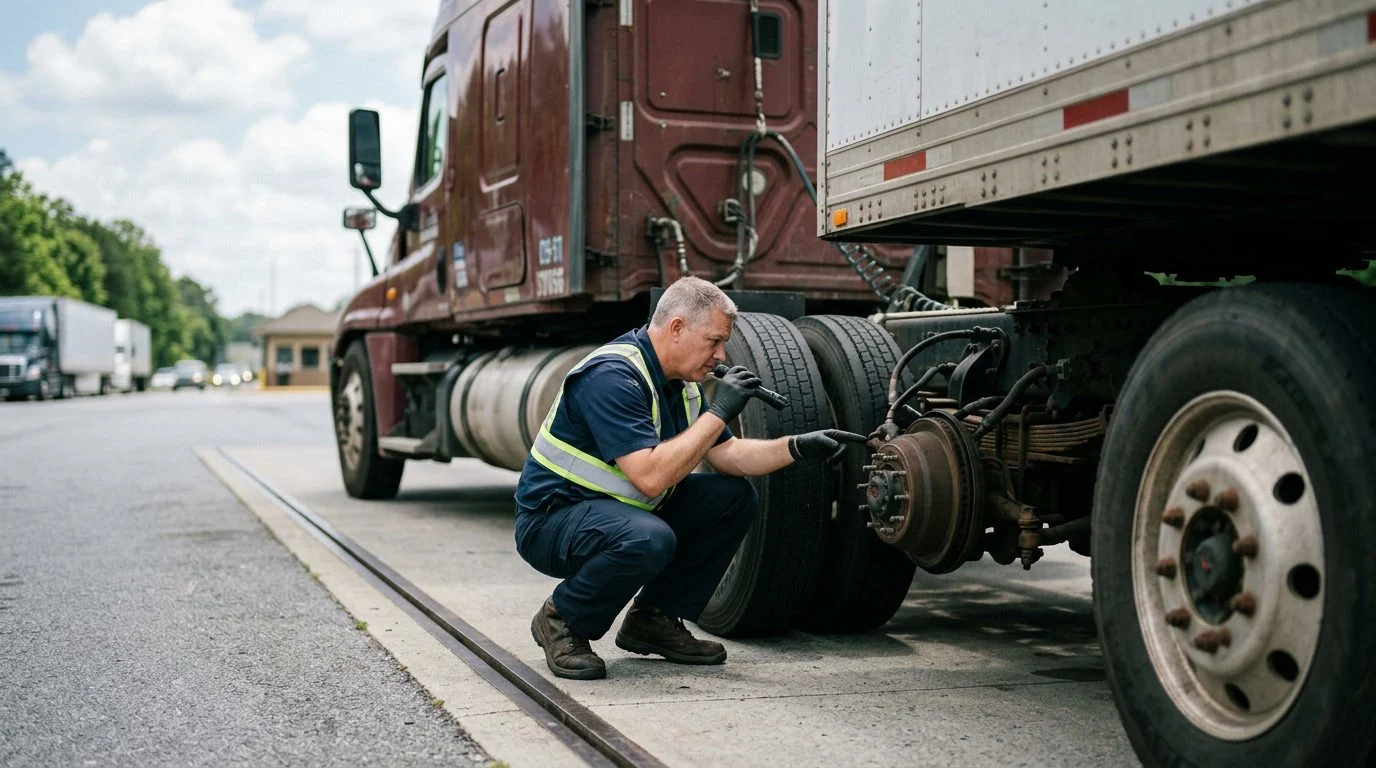
A truck driver may be an employee, an owner-operator who leases a truck to a carrier, or a contractor doing other work. Different kinds of records can help show what happened in a case. What counts is how the work actually happens day to day.
Federal lease rules say the lease terms don’t settle the question alone. An independent contractor relationship may still exist when the carrier lessee complies with 49 U.S.C. 14102 and attendant administrative requirements, as noted in federal lease rules.
Ask practical questions. Who set the routes and delivery schedule? Who assigned the loads? Who told the driver when to start and stop? Who paid for fuel, tolls and repairs? The answers often matter more than the title on the paperwork.
When a Trucking Company Can Still Be Held Responsible
A trucking company can still be held responsible when it controlled how the driver did the work. It can also be responsible when its own conduct helped cause the harm.
Under O.C.G.A. § 51-2-5, an employer can be liable for a contractor’s negligence in several situations. One is when the employer keeps the right to direct or control the time and manner of the work. Another is when the employer interferes and assumes control so as to create the relation of master and servant, or so that an injury results which is traceable to that interference. Others include work that is dangerous to others however carefully it’s done, and a wrongful act that violates a duty imposed by statute.
Georgia also makes a person liable for torts committed by a servant within the scope of the person’s business. That rule appears in O.C.G.A. § 51-2-2.
Some claims also look at how the company presented the driver to the public. Its name on the truck, its uniforms, or its dispatch system can all matter. These details help show what relationship the public reasonably saw. The company’s own mistakes are a separate route, covered below.
How Leasing Arrangements and Federal Trucking Rules Can Matter
A lease can show how a carrier controlled a truck it did not own. Federal rules can also place duties on that carrier.
Federal law lets regulators require a carrier that uses trucks it doesn’t own to put the arrangement in writing. The carrier may also be required to keep a copy in each truck, inspect the trucks, and obtain liability and cargo insurance. The statute also addresses control and responsibility for operating those trucks, found in 49 U.S.C. § 14102.
Federal motor carrier rules also require the carrier to enforce driver duties. Under 49 C.F.R. § 390.11, the motor carrier must require observance of the duties and prohibitions prescribed for the driver in part 325 of subchapter A or in this subchapter.
The lease itself can be useful evidence. Under 49 C.F.R. § 376.12, a lease must state who is responsible for loading and unloading. It must also state who pays for fuel, fuel taxes, tolls, and permits. Gather the lease, dispatch records and insurance paperwork. Together they can show how the truck was being run on the day of the crash.
Negligent Hiring, Supervision, and Retention Claims
A trucking company can be sued for its own decisions. These claims focus on what the company did, or failed to do, when it chose, trained, watched or kept the driver.
In Quynn v. Hulsey (2020), the Georgia Supreme Court addressed claims of this kind.
In plain terms, negligent hiring asks whether the company checked a driver before putting him on the road.
Federal rules show what a company should have on file. Under 49 C.F.R. § 391.51, each carrier must keep a driver qualification file. That file includes the driver’s motor vehicle record from the licensing authority and a medical examiner’s certificate. The file must be kept while the driver works for the carrier and for three years after, except that records paragraph (d) lists may be removed three years after the date of execution. A contractor label doesn’t erase these claims, because they focus on the company’s own conduct.
Evidence That Helps Show Who Is Responsible
The most useful evidence shows who controlled the trip and what the company knew about the driver. Early action matters, because some records have a set minimum keep period.
Under 49 C.F.R. § 395.8, a motor carrier must keep records of duty status and supporting documents for at least six months from the date of receipt. Ask for these records early.
Useful evidence often includes:
- The driver qualification file, including license records and medical certificates.
- Records of duty status, which show driving time and on-duty time.
- Dispatch records, load assignments and messages showing how the company directed the trip.
- Leases, insurance paperwork, and maintenance and inspection records for the truck.
- The police report, photos, witness names, and phone records if distraction is part of the story.
Some mistakes make proof harder. People sometimes throw away damaged gear or delay gathering photos. Others post about the crash online, which the other side can use. Keep your own notes of dates, times and what people said.
Not sure what your next step is?
Talk it through with our team — the first consultation is free, confidential, and carries no obligation.
Filing a Claim: Insurance, Adjusters, and Deadlines
Georgia generally gives two years to file a personal injury lawsuit. Under O.C.G.A. § 9-3-33, that two-year period runs from when the right of action accrues. Claims for loss of consortium have four years under the same statute. Because timing matters, don’t wait to learn the facts.
A claim can involve several insurance policies. These may include the carrier’s policy, the driver’s policy, and coverage tied to the leased truck. Federal law allows regulators to require carriers to carry liability insurance on leased trucks.
The trucking company’s insurer may call quickly. Adjusters work for the insurer. Before you give a recorded statement or sign anything, slow down and think about what you’re agreeing to. Write down who called, when, and what was said.
Damages You May Be Able to Pursue
Georgia separates general damages from special damages. That distinction appears in O.C.G.A. § 51-12-2.
Special damages often include medical bills, lost wages and future medical care. Your bills, pay records and medical opinions help prove them. General damages can include pain, suffering and loss of enjoyment of life.
If someone died, Georgia law addresses wrongful death. Under O.C.G.A. § 51-4-2, a surviving spouse, or a child or children if there is no surviving spouse, may recover the full value of the decedent’s life, as shown by the evidence.
Your own share of fault matters too. Under O.C.G.A. § 51-12-33, damages are reduced in proportion to your fault. If you are 50 percent or more responsible, you can’t recover damages. Each liable party pays only its own share, not a joint amount. That’s why it matters to identify every party that may share responsibility. Each claim depends on its own medical and financial facts.

Talk With T. Madden & Associates About Your Situation
T. Madden & Associates, P.C. offers a free, confidential first consultation with no obligation to continue. If someone you love was hurt or killed, or you’re recovering and out of work, the paperwork can feel confusing. You don’t have to sort it out alone.
Can you sue a trucking company for an independent contractor driver Georgia?
Sometimes. A claim can be possible when the company controlled the work or was negligent itself.
How long do you have to file?
Georgia generally allows two years for personal injury claims.
Does my own fault matter?
Yes. Damages are reduced in proportion to your percentage of fault, and under O.C.G.A. § 51-12-33 (Quynn v. Hulsey (2020))(g), you are not entitled to receive any damages if you are 50 percent or more responsible for the injury or damages claimed.
When you’re ready, you can reach the firm through its contact page to talk about your facts.
The firm works on a no-fee-unless-we-win basis, but you may still be responsible for court costs and case expenses. Terance Madden is the responsible lawyer for this page. T. Madden & Associates, P.C. has practiced since 1999, with offices in Jonesboro (Clayton County), Atlanta, Decatur, Macon and Augusta.
Questions We Look at Early in a Contractor Driver Case
How the driver was assigned
We review the contracts, dispatch records and any lease arrangements that connect the driver to the trucking company.
Who controlled the work
Schedules, routes, delivery deadlines and equipment rules can all show how much control a company had over the driver's day.
The company's own conduct
Hiring, training, supervision and maintenance decisions can raise questions about the company's own role in the crash.
Evidence that can disappear
Truck logs, electronic data, dash camera footage and inspection reports often need to be requested quickly, so early action matters.
Why Bring Your Truck Crash Claim to Our Firm
Lawyers who handle your claim
Terance Madden and Shenia Madden, along with our support staff, work with clients hurt in truck crashes across Georgia.
Offices across Georgia
We have offices in Jonesboro, Atlanta, Decatur, Macon and Augusta, and we meet clients where it is most convenient.
No fees unless there is a recovery
Our fee is taken only if there is a recovery. Clients may still be responsible for court costs and case expenses, and we explain these before you decide.
Available 24/7
Call us at any hour to talk about what happened. Your first consultation is free, confidential and has no obligation to continue.
Before You Talk to an Insurance Adjuster
Trucking companies and their insurers often contact injured people quickly. Avoid giving a recorded statement or signing any release or settlement paper until you have spoken with a lawyer about your claim.
Talk With a Georgia Truck Accident Lawyer About Your Contractor Driver Claim
Related practice areas
- Semi Truck Insurance Minimum in Georgia: $750,000 Federal