

Clayton County, GA · Delivery Truck Accidents
Hurt in a Delivery Truck Crash? Talk to a Clayton County Lawyer Today
T. Madden & Associates, P.C. has represented injured Georgians since 1999. Start with a free, confidential consultation, with no obligation to continue. Call any time, 24/7.
About T. Madden & Associates, P.C.
1999
Representing injured people since
5
Offices: Jonesboro, Atlanta, Decatur, Macon and Augusta
By Terance Madden · Published October 20, 2026
A delivery truck accident lawyer Clayton County residents can reach helps sort out who is responsible after a step van or box van crash. Delivery truck cases usually involve more parties, more records, and more rules than a typical car wreck. This page explains those differences, what a claim may cover, and what to expect. T. Madden & Associates, P.C. has been in practice since 1999, with its Jonesboro office in Clayton County.
What a Delivery Truck Accident Case Involves
A delivery truck accident case involves a commercial vehicle, and that changes how the claim is built.
A step van has a walk-in cargo body and a rear step. A box van is an enclosed cargo truck. Both are common on Clayton County streets, in shopping center lots, and on highways near Jonesboro. Many carry company logos, follow set routes, and are driven by professional drivers working to delivery schedules.
A standard car accident claim often involves two drivers and their personal auto policies. A delivery truck claim can involve the driver, a delivery company, a route operator, and more than one insurer. Company records, driver logs, and vehicle data often become central evidence.
This page is for drivers, passengers, motorcyclists, pedestrians, and cyclists hurt by a delivery vehicle. It also speaks to families facing a wrongful death after a fatal delivery van crash.
A delivery van crash may have left you with a claim worth reviewing, and our team can go over it with you. Start your free case evaluation today. Talk it through with our team — the first consultation is free, confidential, and carries no obligation.

Who Can Be Held Responsible
Several parties may be responsible, so the claim often reaches past the driver.
- The driver.
- The employer or delivery company.
- A contractor or subcontractor that ran the route.
- The vehicle owner or lessor.
- Anyone responsible for maintenance or loading.
Georgia makes a person liable for torts committed by a servant within the scope of the person’s business. An employer can also be liable for a contractor’s negligence in listed situations. One example is when the employer keeps the right to direct or control the time and manner of the work, under O.C.G.A. § 51-2-5. Identifying the correct company early matters.
Georgia uses a modified comparative fault rule, which means shared fault (each party’s share of blame) matters. Under O.C.G.A. § 51-12-33, damages are reduced in proportion to the injured person’s share of fault. A person who is 50 percent or more responsible cannot recover damages. Each liable party pays its own share, not one shared amount.
Common Causes of Step Van and Box Van Crashes
Delivery truck crashes often come from fatigue, distraction, backing and turning errors, or poor maintenance.
- Fatigue and tight schedules. Federal rules limit driving time. For drivers of property-carrying commercial motor vehicles, a driver may not drive without first taking 10 consecutive hours off duty, except as otherwise provided in § 395.1, under 49 C.F.R. § 395.3. No driver may operate a commercial motor vehicle while the driver’s ability or alertness is so impaired, or so likely to become impaired, through fatigue, illness, or any other cause, as to make it unsafe, under 49 C.F.R. § 392.3. The rule has one exception: in a case of grave emergency where the hazard to occupants or other highway users would be increased by compliance, the driver may continue to operate the vehicle to the nearest place at which that hazard is removed.
- Distraction. Handheld phones, navigation screens, and delivery scanners pull attention from the road.
- Backing and turning. Large vans have blind spots. Backing or turning in tight residential spaces raises crash risk.
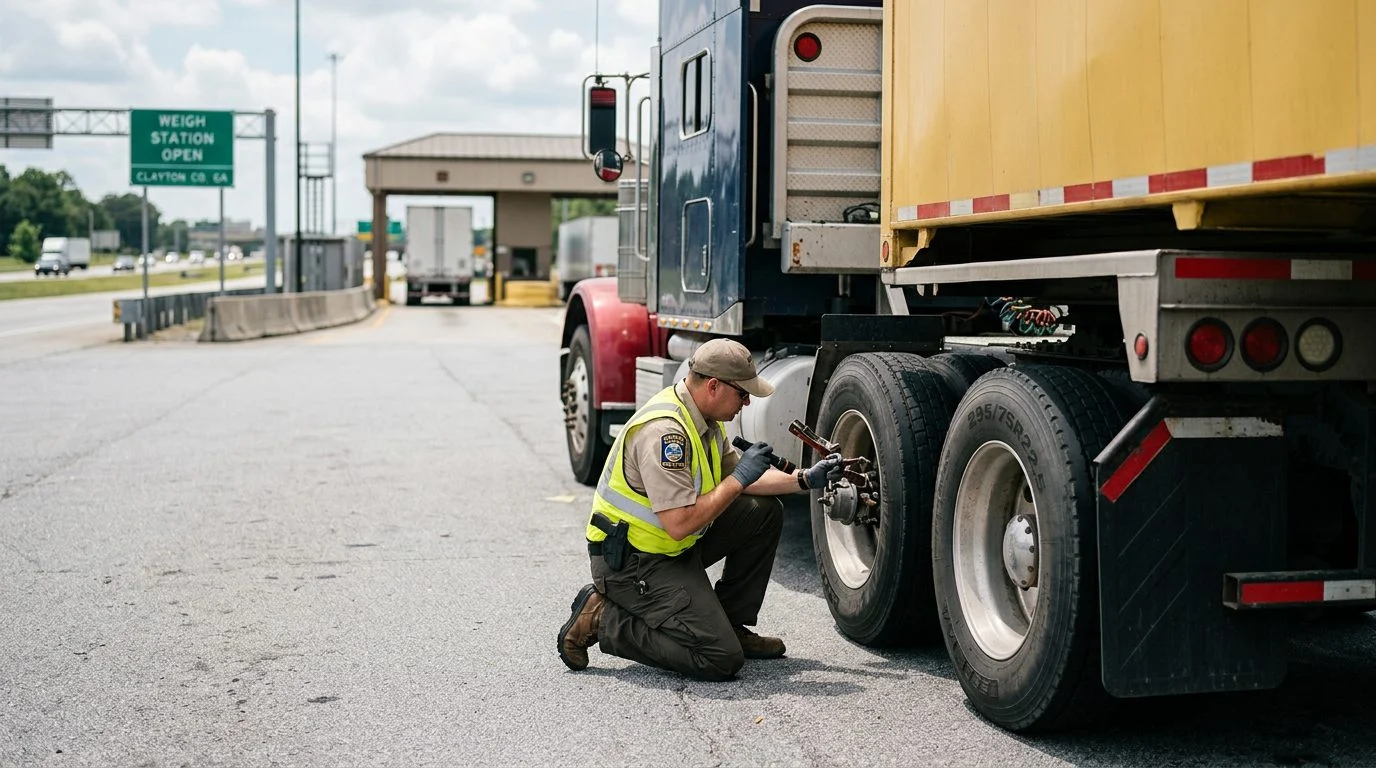
- Maintenance and cargo. Brake, tire, and lighting problems, plus loads that are not secured, can contribute to a crash.
A police report, driver logs, and vehicle records help show what happened.
What the Claim May Cover
A delivery truck claim may cover medical costs, lost income, and other losses that the evidence can prove.
Economic losses include emergency care, ongoing treatment, rehabilitation, prescriptions, lost wages, and lost earning capacity. Georgia separates general damages from special damages. Under O.C.G.A. § 51-12-2, special damages must be proved, while general damages may be recovered without proof of an amount. Pain, emotional distress, and loss of enjoyment of life also form part of many claims.
For wrongful death, O.C.G.A. § 51-4-2 lets a surviving spouse, or a child or children if there is no spouse, recover the full value of the decedent’s life, as shown by the evidence. Under O.C.G.A. § 51-4-5, when death of a human being results from a crime or from criminal or other negligence, the personal representative may recover funeral, medical, and other necessary expenses.
Some injuries need a longer review. Spinal cord injuries can be serious and need urgent medical attention. Automobile crashes can cause traumatic brain injuries, which can affect care needs for months or longer. Future medical needs take time to assess.
How Our Firm Handles a Delivery Truck Case
The firm starts with a free, confidential first consultation that carries no obligation to continue.
- Intake. You describe the crash, the injuries, and who was involved.
- Evidence requests. Early requests can cover the police report, photos, driver and vehicle details, delivery scan timestamps, driver logs, dashcam footage, and maintenance records.
- Written preservation demands. Some of this data is kept only for a limited time, so written requests should go out early.
- Party review. The team looks at who may be responsible, from the driver to the company and any contractor.
- Insurer contact. Our team handles communication with insurers and reviews any settlement offer with you before you decide.
- Updates. We keep you informed at each stage.
T. Madden & Associates, P.C. has been in practice since 1999. Its Jonesboro office serves Clayton County, and it also has offices in Atlanta, Decatur, Macon, and Augusta. For a delivery truck accident lawyer Clayton County readers can reach, the Jonesboro office is the closest starting point.
Frequently Asked Questions
Here are short answers to common questions about delivery truck crashes in Georgia.
How long do I have to file a claim in Georgia?
Georgia’s general deadline for injuries to the person is two years after the right of action accrues, under O.C.G.A. § 9-3-33. Some claims follow different timing, so act early.
Does the delivery company’s insurance cover the driver?
Coverage turns on the policies involved and the facts of the crash. The team reviews the policies that may apply during the free evaluation.
Do I need a lawyer if the crash seemed minor?
Some injuries are not obvious right away. A free evaluation can help you understand your options before you accept any payment.
How is the lawyer paid?
The firm works on a no-fee-unless-we-win basis, but you may still be responsible for court costs and case expenses.
Who handles my case?
Terance Madden is the responsible lawyer for this page. Shenia Madden is also a lawyer with the firm, and the firm’s team supports each case.
Not sure what your next step is?
Talk it through with our team — the first consultation is free, confidential, and carries no obligation.
Talk to a Clayton County Delivery Truck Lawyer Today
If a delivery van crash left you hurt, you may have a claim worth reviewing, and you don’t have to sort it out alone. Start your free case evaluation through our contact page, or call us any time, 24/7.
T. Madden & Associates, P.C. | Responsible lawyer: Terance Madden | Offices in Jonesboro (Clayton County), Atlanta, Decatur, Macon, and Augusta.
How We Help Injured Clients
Free First Consultation
Your first consultation is free, confidential and comes with no obligation to continue.
No Fee Unless There Is a Recovery
Our fee is contingent on a recovery. You may still be responsible for court costs and case expenses, which we will explain before you decide.
Available 24/7
Injuries do not keep office hours. Call us at any time to talk about your situation.
Lawyers and Staff Who Listen
Our lawyers and support staff take time to understand what happened, who was involved and how the crash has affected your life.
Protect Your Evidence Early
Photos of the truck, the scene and your injuries, plus any paperwork from the delivery company, can be hard to recover later. Write down what you remember while it is still fresh.
What to Expect When You Contact Us
1. Tell Us What Happened
Share the basics of the crash, your injuries and any contact you have had with the delivery company or its insurer.
2. We Review the Facts
We look at the accident report, medical records and other documents to understand the claim.
3. We Explain Your Options
We discuss the possible next steps in plain language, so you can decide what is right for you.