

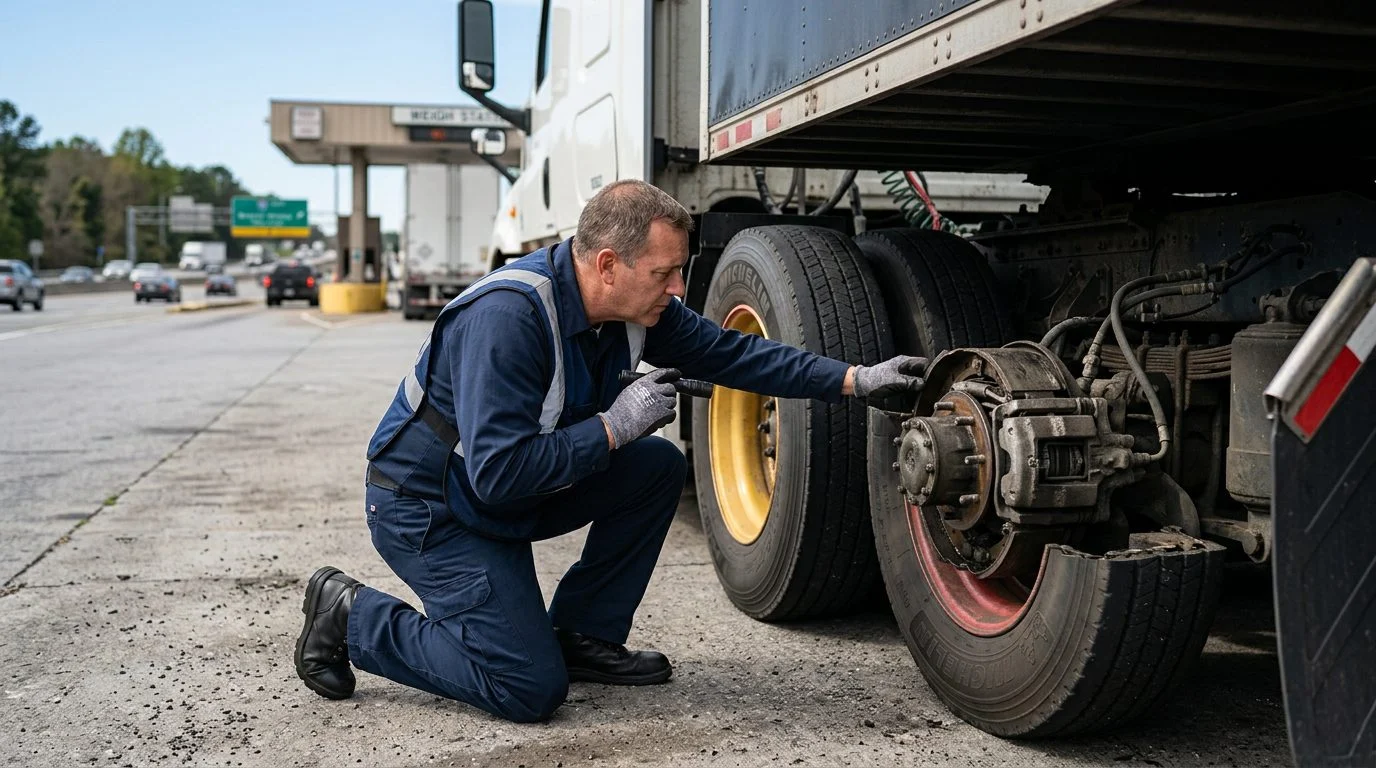
Truck Accident Evidence | Georgia
What Evidence Do You Need After a Truck Crash in Georgia?
Truck wreck cases often turn on records that disappear quickly. Learn which evidence matters most and how T. Madden & Associates, P.C. helps Georgians in Clayton County, Atlanta, Decatur, Macon and Augusta gather it.
About T. Madden & Associates, P.C.
Since 1999
Representing people hurt in Georgia
5 Offices
Jonesboro, Atlanta, Decatur, Macon, Augusta
24/7
Call us any time
By Terance Madden · Published October 22, 2026
The evidence you need after a truck crash in Georgia falls into two groups. You can save photos, names, and your own medical and wage records right away. The trucking company’s logs, driver file, and truck data must be requested in writing and preserved, and that should happen early.
This guide walks through what to save at the scene, what to ask the carrier to keep, and what to organize for the months ahead. T. Madden & Associates, P.C. has practiced Georgia personal injury law since 1999, and the firm represents people hurt in truck wrecks.
Why Evidence After a Truck Crash Is Different
A truck crash usually involves more parties and more records than a typical car wreck. The carrier, the driver, and sometimes a shipper or freight broker may each hold documents you cannot see on your own.
Trucks also produce electronic data. Logging devices, engine systems, GPS units, and dashcams can record how the truck moved before the crash. Some of that information can be overwritten or purged on a company’s own schedule.
Federal rules say records may be kept with any technology that accurately reflects all of the information in the record and remains accessible in a form that can be accurately reproduced later for reference. That is why a written request to keep records, sent early, matters so much. That is why a written request to keep records, sent early, matters so much.
If a loaded truck hit you on a Georgia road and the carrier's records are out of reach, you don't have to sort it out alone; reach out for a free first consultation. Talk it through with our team — the first consultation is free, confidential, and carries no obligation.

Evidence to Save at the Scene or Right After
The evidence you can save yourself starts at the scene, before vehicles are moved and the road is cleared. Focus on these items:
- Photos and video from several angles showing vehicle positions, damage, skid marks, debris, road and weather conditions, and signs. Take them before anything moves, if it is safe.
- The truck’s company name, USDOT number, unit or trailer number, and license plate.
- The driver’s name, phone number, and license information.
- Names and phone numbers of witnesses and other drivers involved.
- The responding officer’s name, badge or unit number, and the agency name.
- Any citation issued, since it helps you find the right agency for the crash report.
Write notes the same day. Memory fades quickly, and small details like your lane, the time, or what the driver said are easy to lose.
Getting the Official Crash Report and Police Records
The investigating agency writes the official crash report, and you can ask that agency how to get a copy. Read it when it arrives.
Check the time, location, lane positions, driver statements, and witness names. Errors happen. Note each correction you need and ask the agency how to request it.
Keep any notice about a citation issued to the truck driver, because it ties the paperwork to the crash. If the report describes events differently from what you remember, write your own account the same day and keep it with the report.
Trucking Company and Driver Records That Can Be Lost
The carrier holds the records that show how the driver and truck were run. These usually have to be requested in writing and preserved through legal channels. Key records include:
- A driver’s duty-status record is also governed by federal rules, and no driver or motor carrier may make a false report about it (§ 395.8).
- Maintenance and inspection records. Carriers must keep these for a period of 1 year, and for 6 months after the vehicle leaves their control (§ 396.3). Short windows like this are why early written requests matter.
- Post-accident testing. Federal rules require alcohol and drug testing of surviving drivers in certain crashes, including those involving a death, and in some injury or tow-away crashes followed by a citation (§ 382.303).
Freight brokers can also be part of a case.
Electronic Data From the Truck and Your Phone
Electronic data can show timing and movement that paper records cannot, and some of it can be lost. Under federal rules, an electronic logging device automatically records the date, time, location, engine hours, vehicle miles, driver identification, vehicle identification, and motor carrier identification (§ 395.26).
When the truck is in motion and no other entry was made in the previous hour, the device records an entry on its own.
Other truck data may include engine module records, dashcam video, and GPS or telematics information. Whether that data survives repairs or a return to service turns on the facts, so ask for it in writing right away.
Your own phone can help too. Time-stamped photos, texts sent around the crash, and call logs can help confirm the timeline. Don’t delete anything, even messages that feel embarrassing.
Your Medical Records, Bills, and Work Records
Keep every record of your injuries, treatment, bills, and missed work, because these show what the crash cost you. Start with emergency, urgent care, imaging, other doctors, therapy, and prescription records. Keep discharge papers and referrals too.
Write a simple timeline of symptoms and appointments. Gaps in treatment are often questioned, so note why you missed or delayed care.
Georgia law limits medical expenses to the reasonable value of medically necessary care, and the trier of fact decides that amount (§ 51-12-1.1). If a provider treats you under a letter of protection (a promise to be paid from any settlement), keep that letter and every itemized charge.
Special damages for medical and healthcare expenses are limited to the reasonable value of medically necessary care, treatment, or services, and the trier of fact determines that amount. General damages can be recovered without proof of an exact amount (§ 51-12-2). So keep pay stubs, employer letters, schedules, and mileage receipts.
Not sure what your next step is?
Talk it through with our team — the first consultation is free, confidential, and carries no obligation.
Timing: Preservation Letters and Georgia’s Filing Deadline
For most Georgia personal injury claims, the general filing deadline is two years after the right of action accrues (O.C.G.A. § 9-3-33; Cameron v. JMP Pizza, Inc. (2026)). Loss of consortium claims under the same statute have four years.
Georgia law sets time limits for filing claims arising from vehicle damage and injuries, and those limits can affect whether a claim can be pursued. Some claims carry other deadlines, so the facts of your case decide which timing applies.
A preservation demand is a written request asking the carrier and other parties to keep the truck, logs, driver file, and data. Many people send one early, since some carrier records have short retention periods.
Keep your papers organized. Store originals in a safe place, make copies, and keep a running list of what you sent and when.

Talk With the Firm About Your Own Crash
If a loaded tractor-trailer hit you on a Georgia road, you can ask T. Madden & Associates, P.C. for a free first consultation about the evidence in your case.
Quick answers
Does Georgia reduce my compensation if I was partly at fault?
Yes. Under O.C.G.A. § 51-12-33 (Quynn v. Hulsey, 310 Ga. 473 (2020)), a plaintiff 50 percent or more at fault recovers nothing (O.C.G.A. § 51-12-33; Quynn v. Hulsey, 310 Ga. 473 (2020)). Under O.C.G.A. § 51-12-33, when a plaintiff is to some degree responsible, the judge reduces the damages awarded in proportion to the plaintiff’s percentage of fault, and a plaintiff who is 50 percent or more responsible is not entitled to receive any damages.
How long do I have to file?
For most personal injury claims, the general period is two years under § 9-3-33.
What evidence do I need after a truck crash in Georgia?
Save scene photos, witness names, the crash report, medical records, and wage records. Ask the carrier in writing to keep its logs, driver file, and truck data.
If a loaded truck hit you on a Georgia road and the carrier’s records are out of reach, you don’t have to sort it out alone; reach out for a free first consultation.
T. Madden & Associates, P.C. offers a free first consultation, which is confidential and carries no obligation to continue. The firm works on a no-fee-unless-we-win basis, but you may still be responsible for court costs and case expenses.
Responsible lawyer: Terance Madden, T. Madden & Associates, P.C. The firm has offices in Jonesboro, Atlanta, Decatur, Macon and Augusta. To start a free case evaluation, use the contact page. This page gives general information, not legal advice, and every case turns on its own facts.
Why Evidence Matters in a Truck Case
Records Can Be Lost
Trucking companies keep logs, dispatch notes, maintenance files and driver records, and not all of them are kept forever. Early requests help preserve them.
Crash Scene Details
Photos of the vehicles, roadway, skid marks, debris and weather conditions help show how the collision happened.
Witness Accounts
Names and contact details of drivers, passengers and bystanders can be important while memories are still fresh.
Medical Records
Emergency room notes, imaging, treatment plans and bills document your injuries and how they affect your daily life.
Don't Wait to Gather What You Can
Save photos, texts, receipts and insurance letters, and write down what you remember while it is fresh. Avoid giving recorded statements to an insurance company before speaking with a lawyer.
How Our Team Helps Build Your Evidence
Free, Confidential Consultation
Your first consultation is free and confidential, with no obligation to continue. We review what you already have and explain what else may be needed.
Preservation Requests
Our lawyers and staff work to request and preserve trucking company records, electronic data and vehicle information before they can be lost.
Investigation and Documentation
We organize police reports, photographs, medical records and witness information into a clear file so the full picture of your case is easier to see.
Keeping You Informed
Attorneys who handle your case will explain each step in plain language, so you know what is being gathered and why.
Talk With T. Madden & Associates About Your Truck Crash
Related practice areas
- Truck Accident Lawyer in Georgia: Who Pays, Your Deadline, and What to Do Now