

Georgia Truck Accident Lawyer · Jonesboro, Atlanta, Decatur, Macon and Augusta
When More Than One Party Shares the Blame in a Georgia Truck Crash, Who Pays?
T. Madden & Associates, P.C. has represented people injured in Georgia since 1999. Here is how fault is divided in truck cases and what it can mean for your claim.
Serving Georgia Since 1999
1999
Year the firm began practice
5
Offices across Georgia
24/7
Phone line for injured people
By Terance Madden · Published November 3, 2026
Quick Answer: How Fault Is Divided in a Georgia Truck Crash
In a Georgia truck crash, fault can be shared among several parties. A jury can assign a percentage to the truck driver, the trucking company and, in some cases, a maker of a defective part. If the injured person is partly responsible, that share reduces what they can recover, and at 50 percent or more they recover nothing (O.C.G.A. § 51-12-33; Quynn v. Hulsey (2020)).
Truck crashes often involve more parties than car crashes do. A tractor-trailer may have a driver employed by one company, a truck leased from another and parts made by a third. Each link can matter when a claim is built.
Federal safety rules also shape how fault is judged. Trucking companies must keep records that show how they ran their drivers and equipment, and those records often matter when fault is disputed.
This page walks through the terms, the parties who may be named, the proof that matters and how insurers use shared fault in talks.
If a trucking company's insurer is asking about your share of the blame, you don't have to sort it out alone. Our team can talk through your facts with you. Talk it through with our team — the first consultation is free, confidential, and carries no obligation.
Liability vs. Fault: What the Terms Mean
Fault is the share of responsibility for causing a crash. Liability is the legal duty to pay for the harm that results. People often use these words as if they mean the same thing, but they don’t.
Fault is measured in percentages. A jury might decide the driver was 70 percent at fault and the injured person 30 percent. Liability then follows those shares.
Under Georgia law, damages are apportioned among the people who are liable, according to each person’s percentage of fault. Each person pays only its own share. The statute says these damages shall not be a joint liability among the persons liable, so one defendant does not automatically cover another’s share.
Insurers, courts and the public often blur the two terms. In a claim, the exact wording matters. A statement about fault can be read differently than a statement about liability.
Who Can Be Named: The Driver, the Carrier and the Manufacturer
Several parties can share fault in a truck crash. These include the driver, the trucking company and, in some cases, a manufacturer.
The truck driver. Driver conduct is often the first place people look. Speeding, following too closely, distracted driving or driving while exhausted can all be part of a claim. Federal rules say no driver may operate a commercial motor vehicle when fatigue, illness or another cause leaves the driver’s ability or alertness so impaired, or so likely to become impaired, as to make it unsafe, except in a grave emergency where compliance would increase the hazard, and then only to the nearest place where that hazard is removed (federal rule).
The trucking company (carrier). Federal rules provide that a motor carrier shall not require or permit a driver to operate a commercial motor vehicle while the driver’s ability or alertness is so impaired, or so likely to become impaired, through fatigue, illness, or any other cause, as to make it unsafe. The company’s own conduct can also be at issue. Federal rules also require a motor carrier to make sure drivers observe the driver rules.
The manufacturer. A part such as brakes, tires or a trailer system may be defective. A claim may be based on the design, how the part was made or warnings that were missing or inadequate.
Others. When the facts point to them, a maintenance contractor or a cargo loading company may also be named.
The 50% Bar Under Georgia’s Modified Comparative Fault Rule
Under O.C.G.A. § 51-12-33, a plaintiff who is 50 percent or more responsible for the injury or damages claimed is not entitled to receive any damages, and any damages otherwise awarded are reduced in proportion to the plaintiff’s percentage of fault. The award is reduced by that share. At 50 percent or more, the person cannot recover damages at all, under O.C.G.A. § 51-12-33.
Here is a simple example with made-up numbers. Suppose the trier of fact sets total damages at $100,000 and the injured person is found 20 percent at fault. The award would drop by $20,000, to $80,000. If the same person were found 50 percent at fault, nothing would be recoverable.
The outcome depends on the facts of each crash. Because the line sits at 50 percent, the percentage a jury assigns can matter as much as the total damages.
How a Jury Divides Fault Among Several Parties and Nonparties
A jury divides fault among everyone who contributed to the injury. That includes people who were never named in the lawsuit. The statute says fault is assessed for all persons or entities who contributed, whether or not they were, or could have been, named as parties.
Under the same statute, notice must be given not later than 120 days before trial, by filing a pleading that names the nonparty and briefly states why it is believed to be at fault. A fault finding against a nonparty does not make that nonparty liable in any action.
Damages are apportioned only among the people who are liable. So a share given to someone who is not a defendant does not add to what a defendant owes. The number of parties changes the math, which is why each one matters.
A fault percentage can also change the wage-loss side of a claim. For more on that part of a claim, see our guide on truck accident lost wages.
How Fault Is Proven: Records, Regulations and Physical Evidence
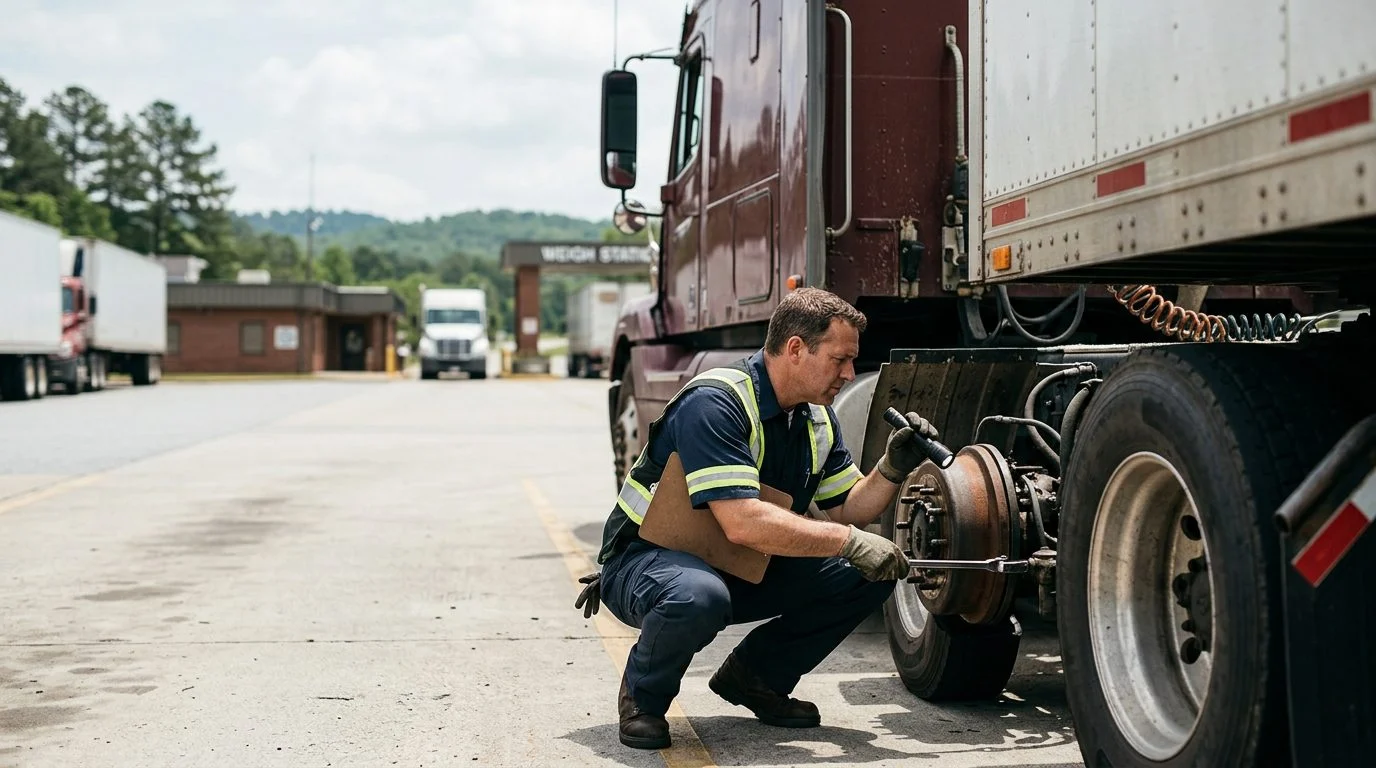
Fault is usually proven with the trucking company’s records, the truck itself and the crash scene. Federal rules set how long some records must be kept, which is one reason early action matters.
- Driver records. A motor carrier must keep a driver qualification file for each driver it employs.
- Duty-status records. Carriers must keep records of duty status and supporting documents for not less than 6 months from receipt.
- Maintenance records. Carriers must systematically inspect, repair and maintain the vehicles they control. Maintenance records are kept for 1 year where the vehicle is housed or maintained, and for 6 months after it leaves the carrier’s control.
- Post-accident testing. In certain crashes, the employer must test surviving drivers for alcohol as soon as practicable. If the test isn’t given within two hours, the employer must record why. After eight hours, it must stop trying.
- Physical evidence. The tractor, the trailer, failed parts, photographs and crash reports can show what happened.
A truck’s involvement in a crash does not by itself prove its operator caused it. The National Transportation Safety Board identifies probable causes of accidents but does not determine fault or liability.
Not sure what your next step is?
Talk it through with our team — the first consultation is free, confidential, and carries no obligation.
How Insurers Use Shared Fault in Negotiations
Insurers often argue that the injured person shares blame. A lower percentage can mean a lower offer. That argument can come up even when the facts are still in dispute.
Common steps include asking for a recorded statement, asking the injured person to accept a percentage early and pressing for a signed release before the full picture is known. Signing a release before the facts are clear can limit what a person can pursue later.
For what to say and what to avoid when a trucking company’s adjuster calls, read our guide on what to say to a trucking company’s adjuster.
Talk Through Your Own Crash With T. Madden & Associates, P.C.
Can I recover anything if I was partly at fault?
Yes, if you are less than 50 percent responsible under Georgia’s rule, you can still recover. Your award is reduced by your share of fault (O.C.G.A. § 51-12-33; Quynn v. Hulsey (2020)).
Can the trucking company be sued along with the driver?
Yes. The company may face its own negligence claims as well.
You may be recovering from a truck crash yourself. You may be caring for a family member who is, or you may be getting calls from a trucking company’s insurer about who was at fault. Those calls can feel like pressure to answer fast.
Our team can talk through the specifics with you. Useful details include who was driving, who owned and maintained the truck and which parts were involved. T. Madden & Associates, P.C. has practiced since 1999 and has offices in Jonesboro, Atlanta, Decatur, Macon and Augusta.
Our first consultation is free, confidential and comes with no obligation to continue (consulta inicial gratuita, confidencial y sin compromiso). We handle cases on a no-fee-unless-we-win basis, but you may still be responsible for court costs and case expenses.
If a truck crash has left you with questions about who was at fault, you don’t have to face them alone. Contact our team to start the conversation.
Disclaimer: This page is general information, not legal advice. Terance Madden is the responsible lawyer for this page at T. Madden & Associates, P.C. Contact the firm through its contact page.
How We Approach a Truck Accident Claim
Building the Record
We work to collect the crash report, driver logs, maintenance records, photos and witness accounts that help show how the collision happened.
Looking Beyond the Driver
Truck crashes often involve more than one party, including the carrier, the cargo loader or the maintenance contractor. We examine each possible source of responsibility.
Clear Explanations
Our attorneys, Terance Madden and Shenia Madden, explain how Georgia's fault rules may apply to your case in plain language before you decide what to do next.
No Fee Unless There Is a Recovery
Our fee is paid only if there is a recovery. You may still be responsible for court costs and case expenses, and we will explain those before we begin.
Keep Your Own Records Early
Photos of the scene, vehicle damage, your injuries and any medical visits can help document what happened. Keep copies of everything you receive from the trucking company or insurers, and note the names of anyone who saw the crash.
Questions People Ask After a Truck Crash
Can I still recover if I was partly at fault?
Georgia's comparative fault rule addresses this question. Our article explains how shared fault is treated and how it can affect a claim.
Can the trucking company be sued too?
Claims may be brought against the driver and the company, depending on the facts. We review each party's possible role in the crash.
What if the truck was overloaded or poorly maintained?
Maintenance logs, weight records and inspection reports can point to additional sources of responsibility. We look at these records closely.
Do I have to pay anything up front?
Our free first consultation is confidential and carries no obligation to continue. Fees are discussed openly before you decide.