

Wrongful Death | Clayton County
Fatal Truck Crash Lawyer in Clayton County
Terance Madden has represented Georgia families since 1999. We focus on wrongful death claims after fatal truck collisions and help families understand their options during a difficult time. Your first consultation is free, confidential, and carries no obligation to continue.
Why families contact T. Madden & Associates
1999
Practicing in Georgia since
5
Offices: Jonesboro, Atlanta, Decatur, Macon, Augusta
24/7
Call us any time
By Terance Madden · Published October 17, 2026
Under Georgia law, a surviving spouse may bring a wrongful death claim after a fatal truck crash. If there is no surviving spouse or child, the decedent’s parents may bring the claim (O.C.G.A. § 51-4-4). When no spouse, child or parent is entitled to bring it, the estate’s administrator or executor can act for the next of kin (O.C.G.A. § 51-4-5).
Families in Clayton County who need a fatal truck crash lawyer often start with that question. This guide explains who can act, what a claim can cover, who may be responsible, and which deadlines matter. T. Madden & Associates, P.C. has been in practice since 1999, with a Jonesboro office in Clayton County.
What a Fatal Truck Crash Case Involves
A fatal truck crash case is a wrongful death claim that arises from a collision with a commercial truck or other large commercial vehicle.
These cases differ from a typical car wreck. The driver, the company that runs the truck, and their insurers may all be involved. Each side may point at the others.
Crashes happen on interstates and on local roads in Clayton County and across Georgia. The setting changes the evidence, but the core questions stay the same.
The Federal Motor Carrier Safety Administration publishes large truck and bus crash facts, covering fatal, injury, and property-damage-only crashes nationally.
You did not choose this situation. Many families face insurance calls, police reports, and paperwork in the same weeks they plan a funeral.
If a family member died in a truck crash, you may have questions about claims and deadlines, and our team can talk with you for free at any hour. Talk it through with our team — the first consultation is free, confidential, and carries no obligation.

Who Can Bring a Wrongful Death Claim in Georgia
The surviving spouse usually brings the claim. Children may bring it when there is no surviving spouse.
Under O.C.G.A. § 51-4-2, the surviving spouse, or if there is no surviving spouse, a child or children, may recover for the homicide of the spouse or parent. The recovery is the full value of the life of the decedent, as shown by the evidence.
When no spouse, child or parent is entitled to bring the action under O.C.G.A. §§ 51-4-2 and 51-4-4, O.C.G.A. § 51-4-5 lets the administrator or executor bring the action for the next of kin.
An administrator or executor is the person a probate court appoints to manage a person’s estate. If no one has been appointed yet, that step often comes first.
Confirming who in your family can act is the first question to answer. That answer depends on the facts, and our team can review them with you during a free first consultation.
What a Wrongful Death Claim Can Cover
A Georgia wrongful death claim can seek the full value of the decedent’s life and the expenses tied to the crash.
- Full value of life. The law sets the recovery as the full value of the life of the decedent, as shown by the evidence (O.C.G.A. § 51-4-2).
- A spouse’s share. When there is a surviving spouse, that spouse receives no less than one-third of the recovery (O.C.G.A. § 51-4-2).
- Funeral and medical costs. The personal representative may recover funeral, medical, and other necessary expenses when death results from criminal or other negligence (O.C.G.A. § 51-4-5).
- Medical bills. Medical expense damages are limited to the reasonable value of medically necessary care (O.C.G.A. § 51-12-1.1).
- Protection from debts. A recovery under this section is not subject to the decedent’s debts or the estate’s liabilities (O.C.G.A. § 51-4-2).
Every family’s losses are different, and the evidence decides what can be proven. No one can predict a final amount.
Who May Be Responsible After a Truck Crash
The truck driver, the trucking company, and sometimes a maintenance or equipment party may be responsible.
- The driver. Federal motor carrier safety rules say that no driver shall operate a commercial motor vehicle, and a motor carrier shall not require or permit a driver to do so, while the driver’s ability or alertness is so impaired, or so likely to become impaired, through fatigue, illness, or any other cause, as to make it unsafe to begin or continue driving. The one exception is a grave emergency where following the rule would increase the hazard to occupants or other highway users, in which case the driver may continue only to the nearest place where that hazard is removed.
- The carrier. Georgia’s commercial vehicle rules must require drivers to be fully competent and sufficiently rested (O.C.G.A. § 40-1-8). Motor carriers must also follow the hours-of-service rules in 49 C.F.R. Part 395 (O.C.G.A. § 40-1-8).
- Duty-status logs. Under the federal hours-of-service recordkeeping rule, a motor carrier subject to it must require each of its drivers to record their duty status for each 24-hour period, generally with an electronic logging device (ELD), though in certain limited situations a carrier may allow the driver to record it manually instead.
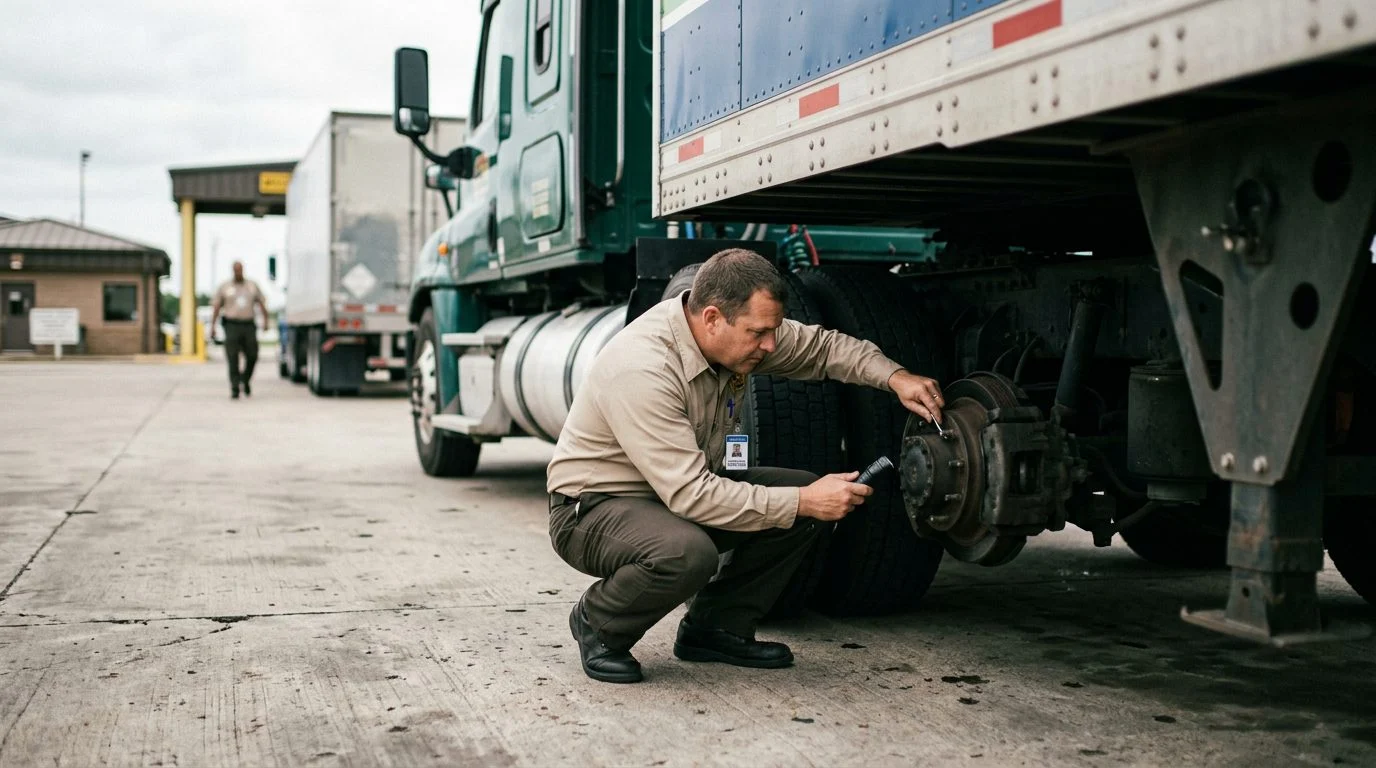
- Maintenance records. The federal inspection and maintenance rule requires every motor carrier and intermodal equipment provider to systematically inspect, repair, and maintain, or cause to be systematically inspected, repaired, and maintained, all motor vehicles and intermodal equipment subject to its control, keep parts and accessories such as frames, suspension systems, axles, wheels, rims, and steering systems in safe and proper operating condition at all times, and, with a narrow exception, maintain records of that work. Under 49 C.F.R. § 396.3(c), those maintenance records must be retained for one year at the location where the vehicle is either housed or maintained, and for six months after the vehicle leaves the motor carrier’s control.
- Driver files. Under the federal driver-qualification rule, each motor carrier must maintain a driver qualification file for each driver it employs, and that file must include items such as the driver’s employment application, a copy of the motor vehicle record from each licensing authority, and the driver’s road test certificate or an accepted equivalent.
Retention periods are limited, so early requests for these records matter.
What to Expect: Step-by-Step Timeline
The process starts with a free first consultation and moves through evidence, insurer contact, and either settlement talks or a lawsuit.
- Free first consultation. This conversation is confidential and carries no obligation to continue. We review the crash and your questions.
- Preserve evidence. We send letters asking the carrier to keep driver logs, dash camera footage, and maintenance files.
- Investigate. We review the police crash report, the scene, the vehicles, and the medical and funeral records.
- Handle insurers. The firm deals with insurance adjusters, so your family doesn’t have to answer their questions alone.
- Negotiate or file suit. If the insurer doesn’t offer a fair resolution, the firm can file a lawsuit. Timelines vary by case.
Complex truck cases often take months or longer. The early steps matter most while records are still available.
Deadlines, Costs, and Common Questions
Georgia’s general two-year deadline for injury claims is in O.C.G.A. § 9-3-33 (Cameron v. JMP Pizza, Inc. (2026)), and a criminal case can pause that clock.
- Two years. Actions for injuries to the person must be brought within two years after the right of action accrues (O.C.G.A. § 9-3-33).
- Criminal case pause. The period is tolled, or paused, while a criminal prosecution is pending, but the pause cannot exceed six years (§ 9-3-99).
- Shared fault. Damages drop in proportion to a plaintiff’s share of fault. A plaintiff 50 percent or more responsible recovers no damages (§ 51-12-33).
- Who pays. Fault is weighed for every person who contributed. Each liable person’s share is not joint with the others (§ 51-12-33).
Our team can confirm which deadline applies to your family’s claim.
Can you sue the truck driver? A claim can name the driver and the trucking company when the facts support it.
What should you avoid saying to an insurer? Avoid recorded statements and signing releases before you speak with us.
Are there costs? The firm handles these cases on a no-fee-unless-we-win basis, but you may still be responsible for court costs and case expenses. Your first consultation is free, confidential, and carries no obligation to continue.
Not sure what your next step is?
Talk it through with our team — the first consultation is free, confidential, and carries no obligation.
Why Families Work With T. Madden & Associates, P.C.
T. Madden & Associates, P.C. is a Georgia personal injury firm led by attorney Terance Madden, in practice since 1999.
- The attorney. Terance Madden is the responsible attorney for the firm.
- The offices. The firm has offices in Jonesboro (Clayton County), Atlanta, Decatur, Macon, and Augusta.
- The staff. Support staff, including assistants and office staff, help with records, scheduling, and calls. Our team communicates with families as the case moves.
- The practice areas. The firm handles car and truck wrecks, motorcycle and e-bike crashes, slip and falls, nursing home abuse, medical malpractice, negligent security, catastrophic injuries, and wrongful death.
We explain the law in plain terms so you can make decisions with clear facts.

Talk With Terance Madden About Your Family’s Situation
If a family member died in a truck crash, a free first consultation with Terance Madden can answer your questions about who may act and what comes next.
You may be handling a funeral, insurance calls, and deadline questions all at once. You don’t have to sort those out alone. Start a free case evaluation, or call us any time, 24/7.
This page is general information, not legal advice. Terance Madden is the responsible attorney for T. Madden & Associates, P.C. Contact the firm through the contact page.
What to expect when you contact our office
A free, confidential consultation
Tell us what happened in your own words. The first consultation is free and comes with no obligation to continue.
A review of the crash and its records
We look at the crash report, the circumstances of the collision, and the records your family already has so the picture is clear.
Clear communication with your family
We explain each step in plain language and keep you informed as the case moves forward.
Attention to the people left behind
Our team understands that a wrongful death case is about your loved one as well as the legal questions.
Before you speak with the trucking company
Trucking companies and their insurers often contact families quickly after a fatal crash. Speak with a lawyer before giving any recorded statement or signing any document.
How we handle a fatal truck crash case
1. Contact us
Call or submit a request for a free case evaluation. We are available 24/7 and will respond promptly.
2. Consultation
We listen to your family's account, answer your questions, and explain the next steps in plain terms.
3. Investigation
We gather the crash report, medical and employment records, and other evidence needed to understand what happened.
4. Representation
Terance Madden and our team work to pursue fair compensation for your family while keeping you informed at every stage.