

Truck Accident Lawyer · Georgia
Hurt in a Truck Crash? Take On the Trucking Company Head-On
T. Madden & Associates, P.C. represents people injured in truck wrecks across Georgia, from Clayton County and Jonesboro to Atlanta, Decatur, Macon and Augusta. Our firm has been in practice since 1999.
Why people call us
1999
Year our firm began practicing law
5
Offices across Georgia
24/7
Phone line available around the clock
Free
Confidential first consultation, with no obligation
By Terance Madden · Published October 20, 2026
You can sue a trucking company for negligence in Georgia when a driver’s or the company’s careless conduct caused your crash and your injuries. You must show that the company owed a duty, broke it, and caused real harm. This guide explains how that works in plain language. Attorney Terance Madden has been in practice since 1999. The firm’s truck accident lawyer page covers the wider process.
Can You Sue a Trucking Company in Georgia?
Yes. Injured people in Georgia can sue a trucking company when the company or its driver was negligent. Negligence is a failure to use reasonable care. Georgia law describes ordinary negligence as the absence of the care that ordinarily prudent people use in similar circumstances (O.C.G.A. § 51-1-2).
A truck crash lawsuit is a civil claim for compensation. It is separate from a traffic ticket or a criminal case.
Every case turns on its own facts. This page gives the general framework so you can see the questions that matter.
If a truck crash has left you or someone you love facing bills and hard decisions, our team is glad to talk through your options. Talk it through with our team — the first consultation is free, confidential, and carries no obligation.

Who Can Be Named in a Truck Crash Lawsuit?
The driver and the motor carrier that operated the truck can often both be named. A motor carrier is the company that runs the truck, and it usually holds the most records. Georgia law makes a person liable for torts committed by a servant in the prosecution and within the scope of the business (O.C.G.A. § 51-2-2). In plain terms, a company can answer for a driver’s negligence while the driver is doing the company’s work.
Whether the driver was working at the time matters. A driver on a purely personal errand may fall outside that rule, so the facts of the trip get checked early.
Other parties can share fault too. These may include the owner or lessor of the truck, a company that loaded or secured the cargo, a repair shop that did poor work, or a maker of a defective part. Under Georgia’s apportionment statute, the fact-finder weighs the fault of each person who contributed to the injury, and a nonparty’s fault is considered when the plaintiff settled with that nonparty or a defendant gave notice, no later than 120 days before trial, that the nonparty was wholly or partially at fault (O.C.G.A. § 51-12-33). Damages assigned to each liable person are that person’s own liability, not a joint liability.
Grounds for Negligence Against a Trucking Company
A trucking company can be liable for its own decisions, not only for the driver’s actions. Common grounds include:
- Negligent entrustment. The company let an unqualified driver operate a truck.
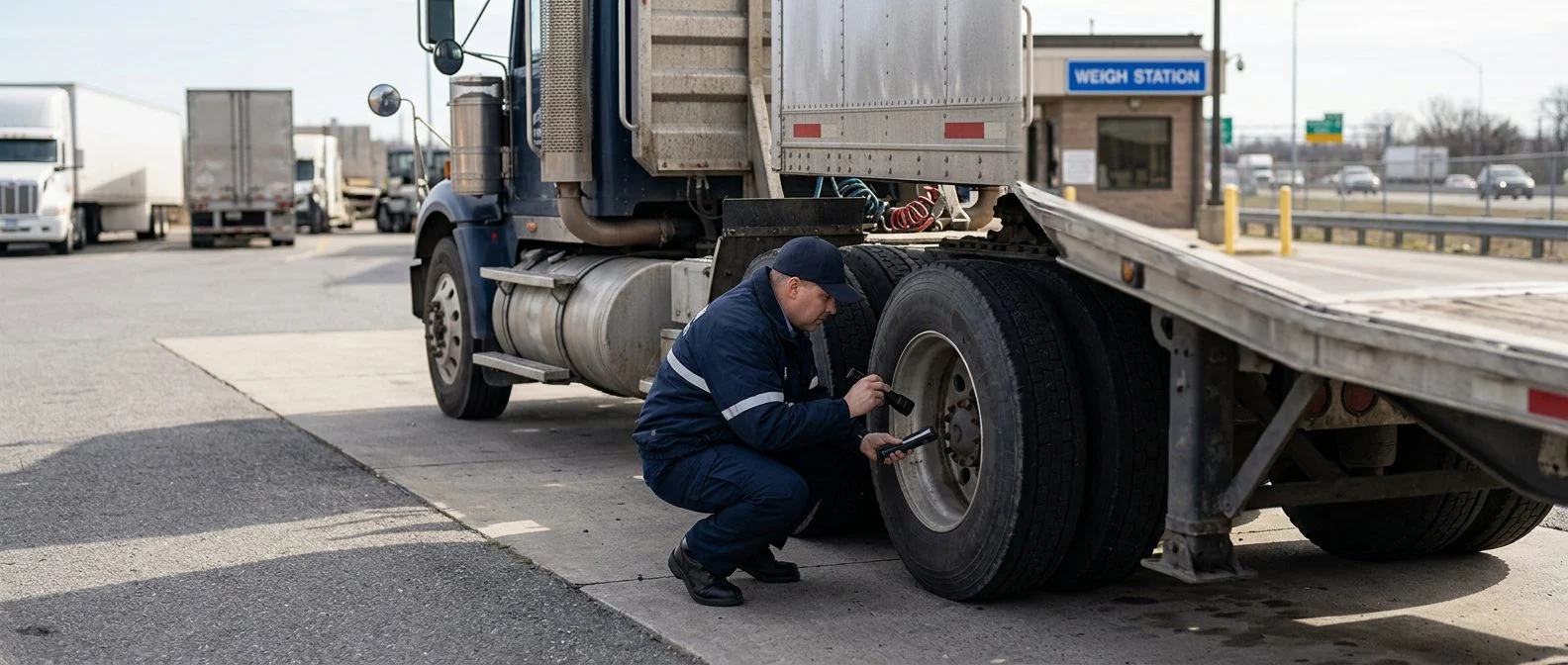
- Poor maintenance. Brakes, tires, or lights were not kept in safe condition.
- Hours-of-service violations. The driver drove past federal limits, or the records were false.
The Georgia Department of Driver Services summarizes state traffic laws (Georgia Department of Driver Services).
Federal rules also bar false reports about duty status. No driver or motor carrier may make a false report in connection with a duty status (49 C.F.R. § 395.8). A false log can matter a great deal in these cases.
The Four Elements You Must Prove
Duty is the legal obligation to avoid harming others. Georgia law says that when the law requires a person to refrain from an act that may injure another, the injured party may recover for breach of that duty if damage follows (O.C.G.A. § 51-1-6).
Breach is a failure to meet that duty. Speeding, distraction, and ignoring a required rest period are examples. Federal hours-of-service rules set clear limits. Under federal hours-of-service rules, except as provided in paragraphs (b) through (x) of 49 C.F.R. § 395.1, a driver of a property-carrying commercial motor vehicle may not drive after 14 consecutive hours following 10 consecutive hours off duty, and may drive a total of 11 hours in that period (49 C.F.R. § 395.3).
Causation links the breach to the crash. The breach must have caused the crash and the injuries, not something unrelated. Crash evidence and medical records often carry this link.
Damages are the real losses. Georgia law says damages generally compensate for an injury that can be estimated in money; if an injury is small or the mitigating circumstances are strong, only nominal damages are given (O.C.G.A. § 51-12-4). Necessary expenses from an injury are a legitimate part of the damages estimate (O.C.G.A. § 51-12-7).
Evidence is easiest to gather while memories and records are fresh.
How Georgia’s Fault Rules and Deadlines Affect Your Claim
Your own share of fault can reduce what you recover. A high enough share can bar recovery altogether. The trier of fact sets the injured person’s percentage of fault, and the judge reduces damages in proportion to it (O.C.G.A. § 51-12-33). A plaintiff who is 50 percent or more responsible cannot receive any damages (O.C.G.A. § 51-12-33).
Timing is the other hard rule. Georgia’s statute says actions for injuries to the person must be brought within two years after the right of action accrues (O.C.G.A. § 9-3-33). The statute begins with “except as otherwise provided,” so exceptions can apply. Check your date early.
An insurance claim is not the same as a lawsuit. A lawsuit is a court case that must be filed before the deadline. Keep that deadline in view while any insurance talks are underway.
Evidence That Helps Prove a Trucking Negligence Case
The strongest proof often sits with the trucking company. Motor carriers must keep records of duty status and supporting documents for at least six months from the date of receipt (49 C.F.R. § 395.8). Driver qualification files must be kept while the driver works for the carrier and for three years after, except as provided in paragraph (d) of this section, which allows certain records to be removed three years after the date of execution (49 C.F.R. § 391.51). Because these records are kept for set periods, asking for them early can help preserve evidence.
Evidence from the scene matters too. Keep photos of the vehicles and roadway, names of witnesses, dashcam footage, and the police report. Save every medical record and bill. Fuel and toll receipts can show a route and timing. Write down your own account of the crash soon after it happens, while the details are clear.
A written request asking the company to keep its records is a common early step.
Not sure what your next step is?
Talk it through with our team — the first consultation is free, confidential, and carries no obligation.
Steps to File a Lawsuit Against a Trucking Company
Learning how to sue a trucking company for negligence means moving through a set sequence. Each case moves at its own pace.
- Gather the facts. Collect the crash details, treatment records, and a list of everyone who may be responsible.
- Decide between settlement talks and filing. Talks can run alongside a case, but the lawsuit must be filed before the deadline in Georgia’s injury statute.
- File a complaint. The complaint names the defendants and states the negligence claims in the proper Georgia court.
- Exchange evidence. Both sides trade documents, answer written questions, and take depositions of the driver and company representatives.
- Reach resolution. Many cases settle. Others go to trial. The timeline varies with each case.
Costs, Fees, and What Compensation May Cover
Compensation can include medical bills and other necessary expenses from the injury (O.C.G.A. § 51-12-7). The damages rules described above also shape what a claim can recover.
T. Madden & Associates, P.C. handles these cases on a no fee unless we win basis, but the client may still be responsible for court costs and case expenses.
Talk With Our Team About Your Truck Crash
If you were hurt in a truck crash, or you’re worried about a family member who was, you may be facing pain, bills, and questions you didn’t expect. Our team can talk through what happened and which options may apply. Terance Madden is the responsible lawyer for this page.
Frequently Asked Questions
Can you sue a trucking company in Georgia?
Yes. You can sue when a driver’s or the company’s negligence caused your injuries.
How long do you have to sue?
Georgia generally allows two years after the right of action accrues for injuries to the person.
What if I was partly at fault?
Georgia reduces damages by your share of fault. A plaintiff who is 50 percent or more responsible for the injury or damages claimed is not entitled to receive any damages (O.C.G.A. § 51-12-33(g)).
Can hours-of-service violations be part of a claim?
Yes, they can be part of a negligence claim, because federal driving-time limits set clear rules for drivers.
If a truck crash has you weighing your next step, a free first consultation with our team is confidential and carries no obligation to continue. Reach us through the T. Madden & Associates contact page. The firm has offices in Jonesboro, Atlanta, Decatur, Macon, and Augusta.
Steps to take after a truck crash
Get medical care
Some injuries from large truck collisions are not obvious right away. A prompt medical evaluation protects your health and creates an important record.
Document the scene
Photos of the vehicles, the roadway, visible injuries and any skid marks can help preserve details that may be lost later.
Keep your records
Save police reports, bills, pay stubs and letters from insurers. Organized records make it easier to explain what happened to your losses.
Talk to a lawyer before major statements
Trucking companies and their insurers often move quickly. Speaking with our team before giving a recorded statement or signing anything helps you understand your options.
How our firm works with you
Plain-language answers
We explain the process in terms you can understand, so you know what to expect at each stage of your case.
Available 24/7
Call any time to talk about a truck crash. Calls that come in after hours are answered by our team.
Lawyers who take your calls
Our lawyers, Terance Madden and Shenia Madden, along with our support staff, focus on keeping you informed and supported.
No fees unless there is a recovery
Our fee comes from a recovery in your case. You may still be responsible for court costs and case expenses, which we will explain before you decide.
Important: Be careful with the trucking company's insurer
An adjuster for the trucking company may contact you soon after a crash. Before you give a recorded statement, sign a release or accept a settlement offer, speak with a lawyer about what you are being asked to do.