

Car Accident Lawyer | Georgia
Is Georgia a No-Fault State? Get Clear Answers After Your Crash
T. Madden & Associates, P.C. has represented people hurt in Georgia car and truck wrecks since 1999. Here is what the question means for you.
About Our Firm
1999
Serving Georgia injury clients since
5
Offices: Jonesboro, Atlanta, Decatur, Macon and Augusta
Free
First consultation, confidential and without obligation
By Terance Madden · Published October 20, 2026
Is Georgia a no-fault state for car accidents? No. Georgia is an at-fault state, so the driver who caused the crash is generally responsible for the injuries and property damage that follow. That one rule shapes who pays, how partial fault is treated, and which deadlines apply.
This page explains each point in plain language. If you were hurt in a crash, or you are helping someone who was, the fault question can feel confusing. The sections below walk through it step by step.
Short Answer: Georgia Is an At-Fault State
If another driver ran a red light and hit your car, the claim usually goes to that driver and that driver’s liability insurer.
This answer matters because it shapes every other step. It affects who pays your medical bills and car repairs, whether you can recover money if you were partly responsible, and how quickly you need to act. Many people assume their own insurance will simply cover everything. In an at-fault system, the claim often runs in a different direction.
The sections ahead explain the mechanics. You’ll see how fault is decided, how partial fault reduces an award, what insurance Georgia drivers must carry, and how long you have to file. Each point ties back to the state law that sets it.
If you were hurt in a Georgia crash and aren't sure who pays, you don't have to sort out fault alone; our team can talk it through in a free, confidential first consultation. Talk it through with our team — the first consultation is free, confidential, and carries no obligation.

What No-Fault Insurance Means and How It Differs From Georgia’s System
A no-fault system starts with your own insurer, while an at-fault system starts with the driver who caused the crash.
In a no-fault system, your own policy is the main source of payment for certain losses, no matter who caused the crash. Georgia doesn’t work that way. Here, the question of who caused the harm drives the claim.
| Question | No-fault system | Georgia (at-fault) |
|---|---|---|
| Who starts the claim? | Usually your own insurer | Usually the at-fault driver’s insurer |
| What drives payment? | Certain losses, regardless of fault | Who caused the crash and how much fault each person has |
| Where does the money usually come from? | Your own policy for certain losses | The responsible driver’s liability coverage, after fault is decided |
You may have heard that Georgia is “no-fault” from a friend or a news story. That idea is wrong for Georgia. The rules that matter for your crash are Georgia’s rules. Once you know which system applies, the next question is who is at fault.
How Fault Is Decided in a Georgia Car Accident
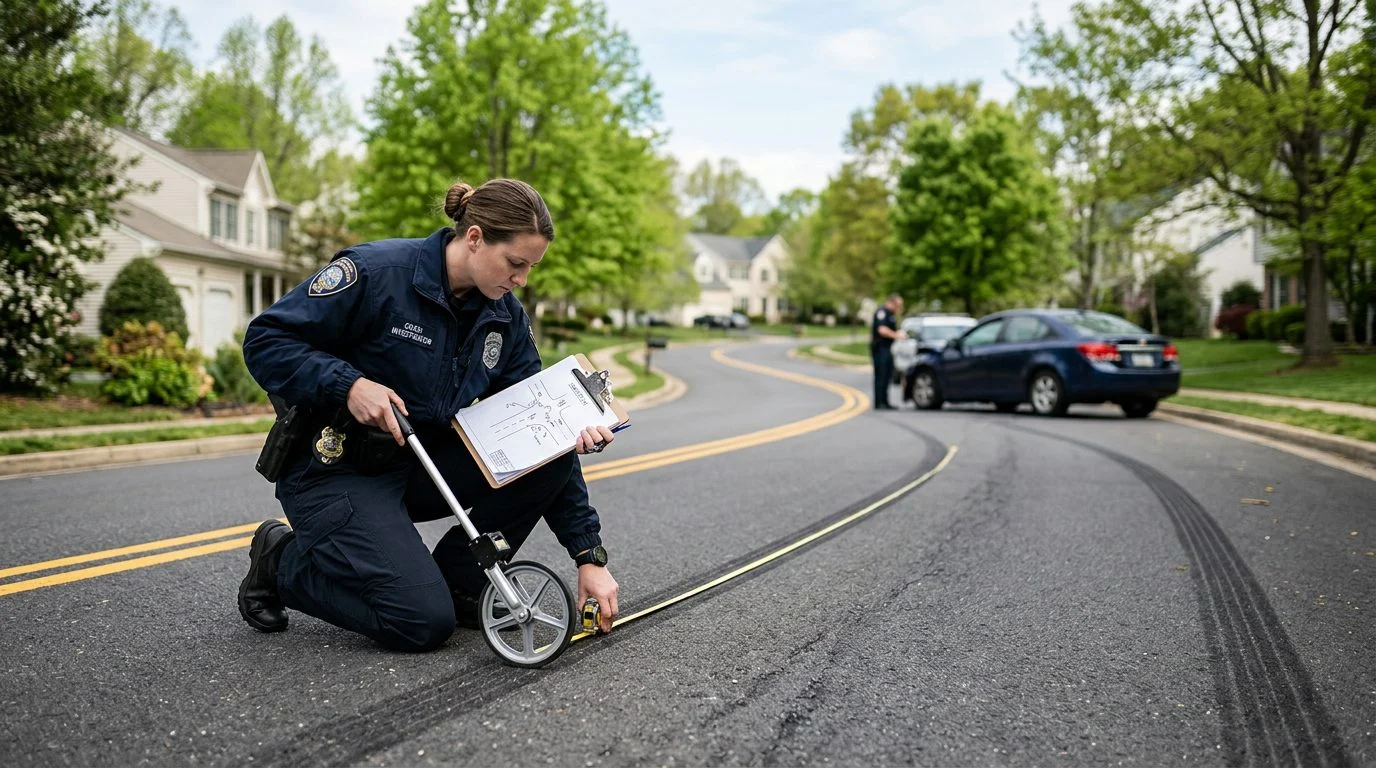
Fault is decided from the facts of the crash. Those facts include traffic rules, how each driver acted, road and weather conditions, witness statements, photos, and vehicle damage.
The police or crash report is one of the first records an insurer or lawyer reviews. It can help show what happened at the scene, but it isn’t the only evidence. Witness names, photos taken soon after the crash, and the damage to each vehicle all help build a clear account.
Georgia law also looks beyond the two drivers. Under O.C.G.A. § 51-12-33, the trier of fact must consider the fault of all persons or entities who contributed to the alleged injury or damages, whether or not they were, or could have been, named as a party to the suit. That can include people who were never sued, but their fault is considered only if the plaintiff entered into a settlement agreement with them or if a defending party gives notice not later than 120 days prior to the date of trial that they were wholly or partially at fault.
Be careful about what you say early on. A common mistake is talking to the other side’s insurer before you understand your options. Anything you say about how the crash happened can later be used when fault is weighed. Stick to facts you know for certain, and don’t guess at details you can’t confirm.
Georgia’s Modified Comparative Fault Rule and the 50 Percent Bar
Georgia lets you recover damages even if you were partly at fault, as long as you are less than 50 percent responsible, but your award shrinks by your share of fault (O.C.G.A. § 51-12-33). If you are 50 percent or more responsible, you cannot recover damages under this rule.
This is called modified comparative fault, or shared fault. Under O.C.G.A. § 51-12-33, the judge “shall reduce the amount of damages otherwise awarded to the plaintiff in proportion to his or her percentage of fault.” The same statute says a plaintiff “shall not be entitled to receive any damages if the plaintiff is 50 percent or more responsible.”
Here is a hypothetical to show the math. Suppose a jury sets total damages at $100,000 and finds you 20 percent at fault. Your award drops by $20,000, to $80,000. If your share were 50 percent instead, you would receive nothing. Under O.C.G.A. § 51-12-33, when an injured person is partly responsible, the judge reduces the damages awarded in proportion to that person’s percentage of fault. At 50 percent, the bar applies. This example is not a prediction of any real case.
Georgia also divides damages among the people who are liable. Under the same statute, each person’s share is their own liability and is not a joint liability. Fault percentages are often disputed, so the facts of each crash matter.
Minimum Auto Insurance Requirements and Uninsured Motorist Coverage
Liability limits can be lower than the cost of a serious injury. When the at-fault driver carries limited coverage, the money available for a claim may be limited too. That is one reason the at-fault driver’s coverage is only part of the picture.
Your own policy can matter, too. Under O.C.G.A. § 33-7-11, an automobile liability policy issued or delivered in Georgia must include uninsured motorist coverage for an insured’s bodily injury, loss of consortium or death, and for injury to or destruction of an insured’s property, sustained from the owner or operator of an uninsured motor vehicle, within limits exclusive of interests and costs that the insured may choose under the statute, unless the insured rejects that coverage in writing. O.C.G.A. § 33-7-11 reads: “(a)(1) No automobile liability policy or motor vehicle liability policy shall be issued or delivered in this state to the owner of such vehicle or shall be issued or delivered by any insurer licensed in this state upon any motor vehicle then principally garaged or principally used in this state unless it contains an endorsement or provisions undertaking to pay the insured damages for bodily injury, loss of consortium or death of an insured, or for injury to or destruction of property of an insured under the named insured’s policy sustained from the owner or operator of an uninsured motor vehicle, within limits exclusive of interests and costs which at the option of the insured shall be.” That coverage can apply when the at-fault driver has no insurance. Check your own policy’s declarations page to see which coverages you carry and their limits.
Filing Deadlines: The Georgia Statute of Limitations for Injury Claims
For most injury claims, Georgia gives two years to file suit. Under O.C.G.A. § 9-3-33, actions for injuries to the person “shall be brought within two years after the right of action accrues,” except for actions for injuries to the person involving loss of consortium, which shall be brought within four years after the right of action accrues.
The same statute gives loss of consortium claims four years. Property damage works differently.
Missing a deadline can bar a claim entirely. Don’t wait until the last months to learn your options, because that time is hard to get back. The statute also opens with the words “except as otherwise provided,” so other rules can change the timing. Whether a deadline applies to your case depends on the facts.
Not sure what your next step is?
Talk it through with our team — the first consultation is free, confidential, and carries no obligation.
Damages Questions After a Crash in Georgia
After a crash, injured people often seek money for medical bills, lost income, and pain and suffering. What a claim can include depends on the facts of your injuries and your losses.
Medical bills have a limit under Georgia law. Under O.C.G.A. § 51-12-1.1, medical special damages are “limited to the reasonable value of medically necessary care, treatment, or services.” That means the amount of the bill itself does not decide the claim. The fact-finder decides what is reasonable and necessary.
Punitive damages are different. Under O.C.G.A. § 51-12-5.1, they are awarded “not as compensation to a plaintiff but solely to punish, penalize, or deter a defendant.” In a tort case outside the statute’s special subsections, the maximum is $250,000.
Frequently Asked Questions About Fault and Insurance in Georgia
Is Georgia a no-fault state for car accidents?
No. Georgia is an at-fault state, so the driver who caused the crash is generally responsible for the damages.
If I was partly at fault, can I still recover?
Possibly. Under O.C.G.A. § 51-12-33, your award is reduced by your share of fault, and you cannot recover if you are 50 percent or more responsible.
How long do I have to file?
For most injury claims, the deadline is two years under O.C.G.A. § 9-3-33.
Key Takeaways
- Georgia is an at-fault state, so the driver who caused the crash is generally responsible for the damages.
- Modified comparative fault lets you recover with a reduction, but a share of 50 percent or more bars recovery (O.C.G.A. § 51-12-33; Quynn v. Hulsey, 310 Ga. 473 (2020)).
- The two-year injury deadline is the one most people need to know first.
Fault drives the claim in Georgia, so the facts of your crash matter from the start. Is Georgia a no-fault state for car accidents? No, and that answer shapes everything that follows.
Talk Through Your Crash With T. Madden & Associates, P.C.
You may be dealing with pain, a damaged car, a rental bill, or an adjuster who keeps calling. You may also be helping a family member through a crash they did not choose. Deciding whether to give a recorded statement, or how to respond to a fault percentage that doesn’t match what you remember, can feel overwhelming.
If that sounds familiar, you don’t have to sort out fault on your own. Our team can talk through your crash in a free, confidential first consultation, with no obligation to continue. You can also start a free case evaluation through our contact page.

Disclaimer and Responsible Lawyer
This page is general information, not legal advice. Reading it does not create an attorney-client relationship.
Terance Madden is the responsible lawyer for T. Madden & Associates, P.C. The firm has been in practice since 1999, with offices in Jonesboro, Atlanta, Decatur, Macon, and Augusta. Contact details are on the contact page.
Results depend on the facts of each case, and no particular outcome is promised.
How We Can Help
Plain-language answers
We explain how Georgia's rules may apply to your crash in terms you can understand.
Organized case details
Our team helps you gather the crash report, medical records and insurance correspondence.
Support from our staff
Our assistants and office staff help keep your questions, appointments and paperwork on track.
Fees only if there is a recovery
You pay no attorney fees unless there is a recovery. You may still be responsible for court costs and case expenses.
Before You Speak With an Insurer
Adjusters may ask for recorded statements or quick settlements soon after a crash. Speak with a lawyer first so you understand what you are agreeing to.
Questions to Bring to Your Free Consultation
Where and when did the crash happen?
The location and time help us understand the setting of your wreck.
What documents do you have?
Police reports, photos, repair estimates and medical bills all help tell the story.
Have you spoken with an insurer?
Tell us about any calls, letters or offers you have received so far.
How are you feeling now?
Describe your injuries, treatment and any time you have missed from work.