

Truck Accident Lawyer, Georgia
Hurt in an Overloaded Truck Crash?
T. Madden & Associates, P.C., led by attorney Terance Madden, has represented injured people in Georgia since 1999. We help clients in Clayton County, Atlanta, Decatur, Macon and Augusta look into who may be responsible for an overloaded truck crash.
Our Firm at a Glance
1999
Year our practice began
5
Georgia offices: Jonesboro, Atlanta, Decatur, Macon, Augusta
24/7
Phone availability
By Terance Madden · Published October 28, 2026
If an overweight or oversize truck crashed into you or someone you love, more than one party may be responsible. An overloaded truck crash lawyer in Georgia looks beyond the driver to the trucking company, the shipper, and others whose choices played a part.
What an Overweight or Oversize Load Crash Is
An overweight or oversize load crash is a collision with a truck carrying cargo beyond legal weight or size limits. Overweight means the total weight, or the weight on one axle, is too high. Oversize means the load is too wide, too tall, or too long for standard roads.
Some heavy or large loads move under state permits. Those permits often set the route, travel hours, and escort requirements.
Extra weight changes how a truck handles. Braking distances grow. A high load raises rollover risk on curves and ramps. A wide load takes up more of the lane, and a tall load can strike a low bridge.
Common crash patterns include rollovers, load shifts onto traffic, bridge strikes, and rear-end impacts after longer braking distances. This guide is written for injured drivers, passengers, pedestrians, motorcyclists, and families of people who died.
If an overweight truck or oversize load changed your life or a loved one's, you don't have to work out who is responsible alone, and our team is ready to listen. Talk it through with our team — the first consultation is free, confidential, and carries no obligation.

Who Can Be Held Responsible
More than one party can share responsibility. The right defendants depend on what went wrong.
- The driver, for speed, following distance, route choices, or ignoring permit conditions.
- The motor carrier, the company operating the truck. Federal rules require the carrier to make sure drivers follow the rules that apply to them (49 C.F.R. § 390.11).
- The shipper or loader, whose weight placement or cargo securement contributed.
- The permit holder or broker, who arranged the move and set the route or schedule.
- Escort operators, whose warnings or positioning failed.
A road, bridge, or clearance problem can also involve a city or the State. Those claims have special notice rules, covered below.
Legal Claims That Apply in Georgia
Most of these cases start with negligence. Georgia law defines ordinary negligence as the absence of the care an ordinarily prudent person would use under similar circumstances (Georgia negligence definition).
Other claims may also apply:
- Negligent hiring or supervision against a carrier that put an unqualified driver or an unsafe truck on the road.
- Liability for a worker’s conduct. Georgia law makes a person liable for torts a servant commits within the scope of the business (O.C.G.A. § 51-2-2). This can reach a trucking company for its driver’s on-the-job conduct.
- Negligent loading or securement against shippers and loaders. Federal rules require cargo to be firmly immobilized or secured by structures of adequate strength, dunnage or dunnage bags, shoring bars, tiedowns, or a combination of these, and the aggregate working load limit of tiedowns must be at least one-half times the weight of the article or group of articles (49 C.F.R. § 393.106).
- Broker claims.
If a crash causes a death, Georgia law lets a surviving spouse, or children if there is no spouse, recover the full value of the decedent’s life, as shown by the evidence (O.C.G.A. § 51-4-2). The personal representative may also recover funeral, medical, and other necessary expenses when death results from criminal or other negligence (O.C.G.A. § 51-4-5).
Evidence That Shows What Happened
The most useful records show what the truck carried, where it was allowed to go, and whether the driver was rested. Ask for them early, because records can be lost.
- Permit documents: approved routes, travel windows, and escort requirements.
- Load records: bills of lading, weight tickets, scale records, and manifests showing actual weights and dimensions.
- Driver logs: except for private motor carriers of passengers (nonbusiness), carriers must require drivers to record duty status, and must install and require electronic logging devices (ELDs) (no later than December 18, 2017) unless the section allows manual duty-status records instead of an ELD for a driver operating a commercial motor vehicle (49 C.F.R. § 395.8). Dispatch messages add context.
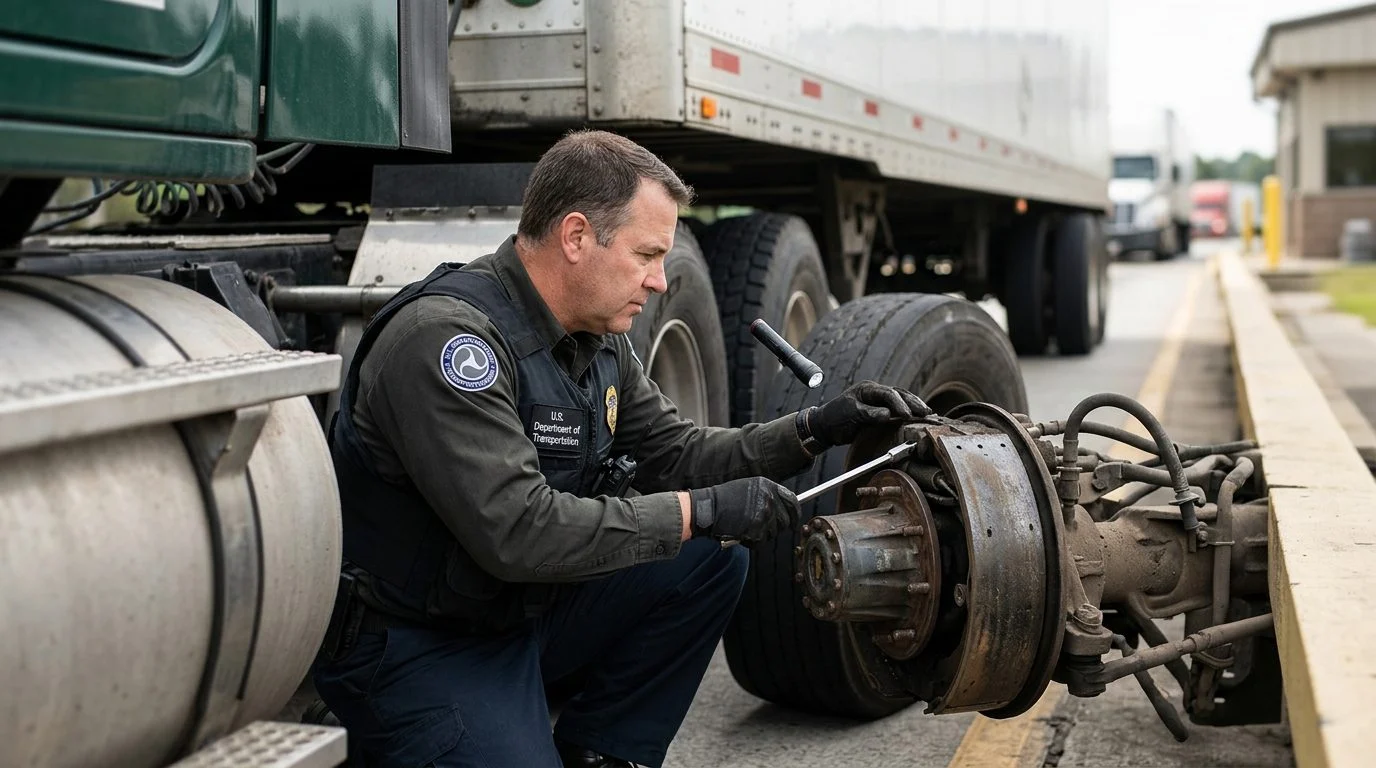
- Maintenance records: brake, tire, and steering repairs.
- Scene evidence: photos, dashcam or traffic camera video, police reports, and witness names.
The Georgia Department of Public Safety lists driver error, inadequate rest, defective brakes, and defective steering as common contributing factors in commercial truck crashes (Georgia DPS truck crash fact sheet). These are good places to start a review.
Georgia Deadlines and Fault Rules
Georgia generally gives two years to file a personal injury lawsuit (§ 9-3-33 as quoted by a Georgia appellate opinion). Keep that date in mind from the first day.
- For a claim against a municipal corporation, the written claim must be presented to the city’s governing authority within six months of the event and must give the time and place of the injury and its extent, to the degree practicable, including the specific amount of monetary damages sought, and the negligence that caused the injury (O.C.G.A. § 36-33-5).
- For tort claims against the State of Georgia, written notice of the claim must be given within 12 months of the date the loss was discovered or should have been discovered, and a lawsuit may not be filed until the Department of Administrative Services denies the claim or more than 90 days pass without action, whichever occurs first (O.C.G.A. § 50-21-26).
Georgia also uses a shared-fault rule. A person who is 50 percent or more responsible recovers no damages (O.C.G.A. § 51-12-33). Each defendant pays only its own share, not joint liability (same statute). Insurers often argue the injured person shared the blame. Clear records often answer that argument.
How a Claim Typically Moves Forward
A claim usually moves from a first review of the facts to records requests, negotiation, and, if needed, a lawsuit.
- First consultation. The first consultation is free, confidential, and carries no obligation to continue. Bring any crash report, photos, and medical papers you have.
- Preservation letters. Letters go to the carrier, shipper, and permit holder asking them to keep records. Requests for public crash and permit records follow.
- Investigation. The load, route, and driver records are reviewed. Medical records document the injuries.
- Demand and negotiation. Once the losses are documented, the claim is presented to insurers.
- Lawsuit if needed. If the claim is not resolved fairly, a suit is filed within Georgia’s deadlines.
Timelines vary with the injuries, the number of responsible parties, and whether the case goes to court. No particular result can be predicted.
Not sure what your next step is?
Talk it through with our team — the first consultation is free, confidential, and carries no obligation.
Why Work With T. Madden & Associates, P.C. and What It Costs
T. Madden & Associates, P.C. is a Georgia personal injury firm in practice since 1999. Attorney Terance Madden leads the firm, which has offices in Jonesboro, Atlanta, Decatur, Macon, and Augusta.
Our lawyers, including Terance Madden and Shenia Madden, and our team of assistants and office staff handle car and truck wrecks, motorcycle and e-bike crashes, slip and falls, nursing home abuse, medical malpractice, negligent security, and wrongful death cases. Truck crash claims, including overloaded truck cases, fall within that work.
The firm works on a no-fee-unless-we-win basis, but you may still be responsible for court costs and case expenses.
Frequently Asked Questions
Can you sue a trucking company if its truck hits you?
Often, yes. Claims can name the driver, the carrier, and others whose conduct contributed to the crash.
Do I have to prove a permit rule was broken?
What should I do first after an overloaded truck crash?
Get medical care, keep records of treatment and expenses, and save photos and paperwork. Be careful about recorded statements to insurers before you talk with a lawyer.
Does the firm charge for a first consultation?
The first consultation is free, confidential, and carries no obligation to continue.
Can a family sue after a fatal overloaded truck crash in Georgia?
Yes. A surviving spouse, or children if there is no spouse, may recover the full value of the decedent’s life, as shown by the evidence.
If an overweight truck or oversize load changed your life or a loved one’s, you don’t have to work out who is responsible alone. Our team at T. Madden & Associates, P.C. is ready to hear what happened, so contact our team when you’re ready.
Responsible lawyer: Terance Madden, T. Madden & Associates, P.C. This page offers general information, not legal advice. Contact the firm through its contact page.
What to Expect When You Contact Us
Free, confidential first consultation
Your first consultation is free, confidential and comes with no obligation to continue.
No fee unless there is a recovery
Our fee is paid only if there is a recovery. You may still be responsible for court costs and case expenses.
Lawyers and staff who answer your questions
Our team, including attorneys Terance Madden and Shenia Madden, works to explain your options in plain language.
Reach us around the clock
Call us at any hour to start a case evaluation and tell us what happened.
Be Careful With Insurers
Before you give a recorded statement to an insurance company or sign any release, talk with a lawyer about what you are being asked to say and sign.
Parties a Truck Crash Claim May Involve
The truck driver
Claims can examine the conduct of the driver at the time of the crash, including how the load was handled.
The trucking company
Claims may name the carrier that operated the truck and the business that dispatched it.
Loading and shipping parties
Those who loaded, weighed or arranged the cargo may be part of a claim when overloading contributed to the crash.
Maintenance and other contractors
Companies that inspected, repaired or equipped the truck may be included when their work played a role.