

Truck Accidents | Georgia
When the Trucking Company Blames Others, Who Pays?
T. Madden & Associates, P.C. has represented people hurt in Georgia since 1999. Trucking companies often point fingers at someone else. We help you look past that answer and focus on what happened.
Serving Injured Georgians
1999
Years representing injured people
5
Georgia offices: Jonesboro, Atlanta, Decatur, Macon, Augusta
24/7
Call us any time
By Terance Madden · Published October 28, 2026
When a truck crashes, the trucking company or its insurer often says someone else caused it. That someone may be another driver, a road problem, or the injured person. In Georgia, that claim is not the final word. Georgia law splits fault among everyone whose negligence contributed to the crash, and each share changes what an injured person can recover.
This page explains how that split works. It also covers the records that often show where fault really lands. For an overview of truck claims in Georgia, read our truck accident guide.
Why the Trucking Company Points at the Other Driver
A trucking company that blames another driver is making an argument about fault. It is not a final finding. The claim has to answer that argument with the crash facts, the police report, and the company’s own records.
Companies often point to another motorist, a road condition, or the injured person. The goal is to move blame away from the truck. Insurers may make the same argument early, before anyone has reviewed the evidence.
You should expect this argument and be ready to test it. Georgia law gives that test a clear framework. The sections below explain how fault is split, what your own share can do to a claim, and which records tend to matter most.
If the trucking company is pointing at the other driver, you may still have a claim worth reviewing, and we can go over the crash facts and records with you in a free first consultation. Talk it through with our team — the first consultation is free, confidential, and carries no obligation.

How Georgia Apportions Fault Among Everyone Responsible
Georgia divides fault among every person or entity whose negligence contributed to the injury. Under O.C.G.A. § 51-12-33, the trier of fact, usually a jury, decides each party’s percentage of fault. The judge then reduces the injured person’s damages by that person’s own share.
Each person found liable pays only its own apportioned share. Those damages are not joint liability, and they are not subject to contribution. In plain terms, a trucking company pays its own percentage, not the other driver’s percentage.
The statute also says the trier of fact must consider everyone who contributed to the injury. That is true even if a person was never named in the lawsuit. A defendant can also give notice that a nonparty was at fault. That notice must come no later than 120 days before trial. It must be filed as a pleading in the action that designates the nonparty by setting forth the nonparty’s name and last known address, or the best identification of the nonparty which is possible under the circumstances, together with a brief statement of the basis for believing the nonparty to be at fault. This is why a company may point at someone who was never sued.
The 50 Percent Rule and Your Own Share of Fault
If you are 50 percent or more responsible for your own injury, Georgia bars your recovery (O.C.G.A. § 51-12-33; Quynn v. Hulsey (2020)). Under O.C.G.A. § 51-12-33, the judge shall reduce the amount of damages otherwise awarded to the plaintiff in proportion to his or her percentage of fault.
The bar appears in O.C.G.A. § 51-12-33. It says a plaintiff who is 50 percent or more responsible for the injury “shall not be entitled to receive any damages.”
A separate rule asks a different question. Under O.C.G.A. § 51-11-7, if you could have avoided the harm with ordinary care, you cannot recover. If you could not, the defendant is not excused just because you contributed in some way.
Here is a round-number illustration, not a prediction. Suppose total damages are $100,000, and the injured person is found 20 percent at fault. The award would drop by $20,000, leaving $80,000. Every claim differs, and the outcome of any case depends on the facts.
The Company’s Own Negligence Is Judged Separately
A trucking company answers for its driver’s work. It can also answer for its own choices. Under O.C.G.A. § 51-2-2, every person is liable for torts committed by a servant in the prosecution and within the scope of the business.
Georgia also allows claims about the company’s own decisions. In Quynn v. Hulsey (2020), the Georgia Supreme Court addressed whether an employer that admits responsibility for its driver can still face these company-level claims.
These claims ask a separate question. They ask whether the company’s own choices helped cause the crash, apart from whether the other motorist was careless. A company that blames another driver still has to explain how it hired, trained, and supervised its driver.
Records That Often Decide Where Fault Lands
The records that most often shape the fault split are duty-status logs, electronic logging device data, driver qualification files, and maintenance records. Federal rules require carriers to keep many of them.
Under 49 CFR 395.8, a driver must record duty status for each 24-hour period. Under 49 C.F.R. § 395.8(e)(1), no driver or motor carrier may make a false report in connection with a duty status. An electronic logging device automatically records items such as date, time, location, engine hours, and vehicle miles, under 49 CFR 395.26. When a truck is moving, the device also records intermediate entries if no status change occurred in the prior hour.
Driver qualification files must be kept under 49 CFR 391.51 for as long as the driver works for the carrier, and for three years after, except that certain records may be removed from the file three years after the date of execution. Inspection, repair, and maintenance records must be kept under 49 CFR 396.3 for one year, and for six months after the vehicle leaves the carrier’s control.
Those retention periods matter. Records can be discarded on schedule, so ask for them early. A gap between the logs and what the company reports can bear on the fault question. FMCSA publishes guidance on which drug and alcohol tests are required, including testing after an accident.
Keep your own records too. Save photos, the police report number, medical records, and wage records.
When Punitive Damages Enter the Picture
Punitive damages in Georgia require clear and convincing evidence of serious misconduct. Under O.C.G.A. § 51-12-5.1, the conduct must show willful misconduct, malice, fraud, wantonness, oppression, or an entire want of care that raises a presumption of conscious indifference to consequences.
Punitive damages are not meant to pay the injured person back. The statute says they are awarded solely to punish, penalize, or deter the defendant. For tort actions outside the statute’s subsections (e) and (f), the award is capped at $250,000.
A claim that a company knowingly ignored safety risks may raise this question. Punitive damages are not part of every truck case. Whether they apply depends on the facts.
Not sure what your next step is?
Talk it through with our team — the first consultation is free, confidential, and carries no obligation.
When a Part Failure Is the Real Cause
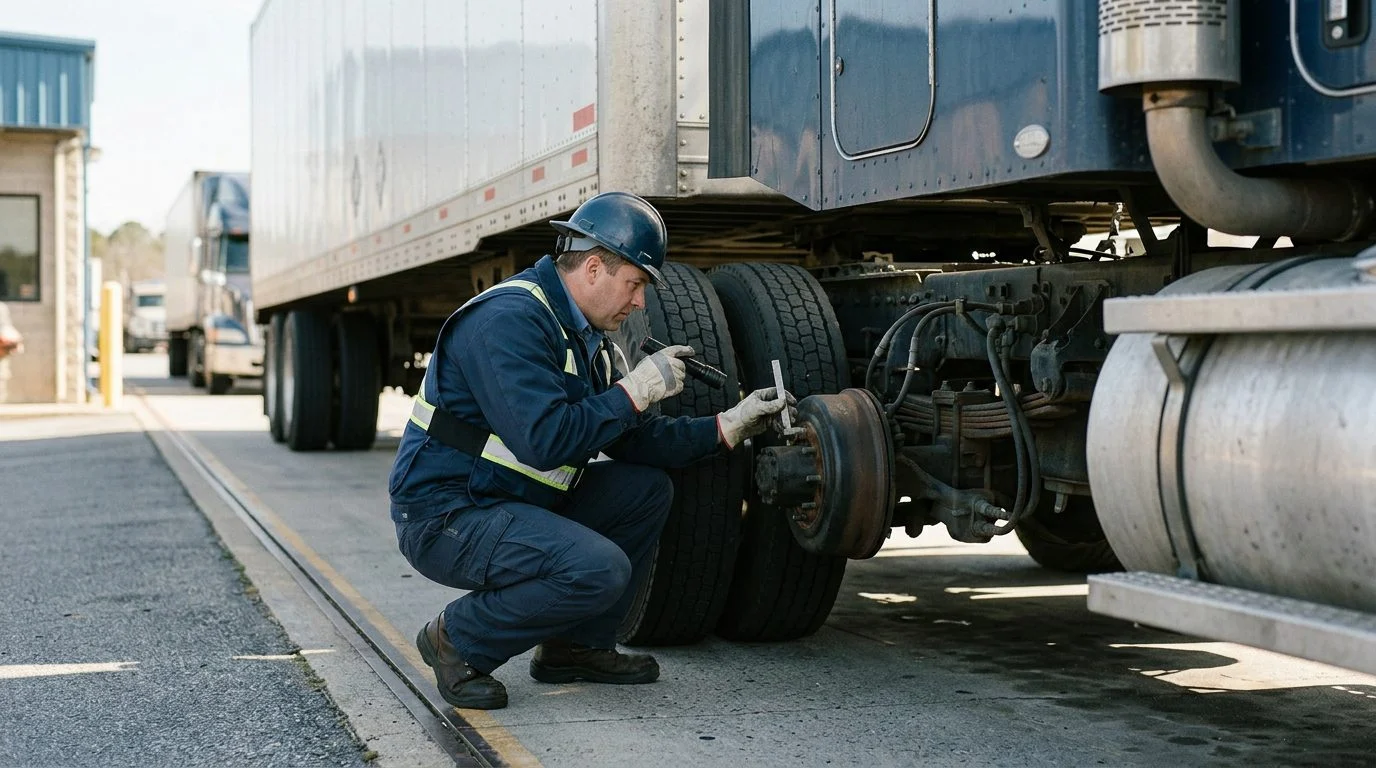
A company may blame the driver when the real trigger was a failed part. A tire blowout is one example. A failure like that can change who is responsible. It can point toward the carrier, a repair shop, or a parts maker.
Federal rules set basic equipment standards. Under 49 CFR 393.75, no motor vehicle shall be operated on a tire that is flat or has an audible leak. Front tires on a truck or truck tractor must have a tread groove depth of at least 4/32 of an inch. Under 49 CFR 396.3, parts must be kept in safe and proper operating condition at all times.
Review the equipment history before assuming the driver caused the crash. For how tire and parts claims are handled in Georgia, see our tire blowout and parts maker lawsuit guide.
How Fault Findings Affect Medical Bills, Wages, and Liens
The fault split changes how much an injured person can recover. That is why the full damages picture matters before you accept any settlement offer.
Under O.C.G.A. § 51-12-2, general damages are presumed to flow from a tortious act and need no proof of an amount. Special damages, such as bills and lost income, must be proved. Under O.C.G.A. § 51-12-1.1, medical expenses are limited to the reasonable value of medically necessary care.
Lost income needs its own documentation. See lost wages in a truck accident claim. See Medicaid and Medicare liens in a truck accident claim.
Talk to T. Madden & Associates About Your Crash
When the trucking company says the other driver caused the wreck, you face a real decision. You must decide whether to pursue the claim and who should review the records.
Can a trucking company blame another driver in Georgia?
Yes, a company can make that argument. The claim is then tested under Georgia’s fault rules.
Is there a 50 percent rule for truck crashes?
Yes. Under O.C.G.A. § 51-12-33, a plaintiff who is 50 percent or more responsible cannot receive damages.
When can punitive damages apply?
Only when clear and convincing evidence shows the conduct described in O.C.G.A. § 51-12-5.1.
If the trucking company is pointing at the other driver, you can contact T. Madden & Associates, P.C. for a free first consultation. It is confidential and carries no obligation to continue. The firm handles these cases on a no-fee-unless-we-win basis, but you may still be responsible for court costs and case expenses. Share the crash details and any records you have. The firm then reviews how Georgia’s fault rules may apply to your claim. You can start a free case evaluation at any time.
This page is general information, not legal advice. Terance Madden is the responsible lawyer for this page at T. Madden & Associates, P.C. The firm has practiced since 1999 and has offices in Jonesboro, Atlanta, Decatur, Macon, and Augusta. Contact the firm through its contact page. No outcome can be promised for any crash.
How We Approach a Blame-Shifting Defense
We Look Past the First Answer
An early claim that someone else caused the crash is not the end of the story. We examine the facts behind it.
We Help Preserve the Evidence
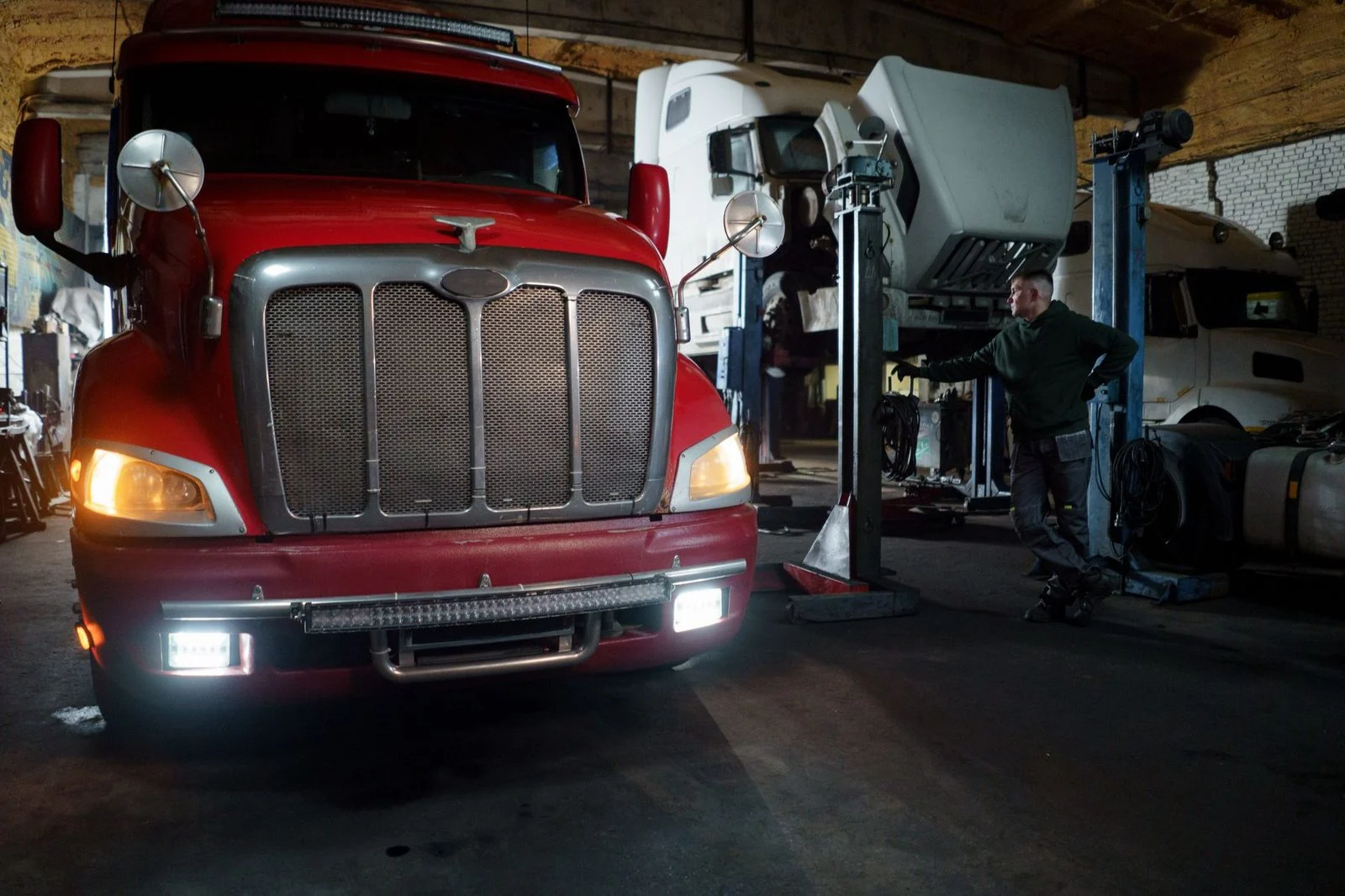
Driver logs, maintenance records, dashcam footage and crash reports can change how a crash is understood. Our team works to keep them in view.
Our Attorneys Stay Involved
Terance Madden and Shenia Madden work directly with each client, from the first call through the case.
You Get Clear Answers
We explain the process in plain language so you can make informed decisions about your case.
No Fee Unless There Is a Recovery
Our fee is contingent: you pay nothing unless there is a recovery. You may still be responsible for court costs and case expenses, whatever the outcome. Your first consultation is free, confidential and without obligation.
Common Ways Companies Shift the Blame
Blaming the Other Driver
The company may argue that a passenger vehicle, another truck or a pedestrian caused the collision.
Blaming a Maintenance Vendor
Brakes, tires or lights may be blamed on an outside shop instead of the carrier's own oversight.
Blaming the Driver Alone
A company may describe the driver as acting on their own, even when training, scheduling or dispatch pressure played a role.
Blaming Road or Weather
Conditions may be cited to suggest the crash was unavoidable, even when visibility, signage or planning were factors.