

Truck Accidents · Georgia
Truck Crash Evidence in Georgia: What to Keep Before It Disappears
Trucking companies control much of the proof after a wreck. Learn which records, photos and documents matter most, and how T. Madden & Associates, P.C. has helped injured Georgians since 1999.
Serving Georgia Since 1999
1999
Year the firm began practice
5
Georgia offices: Jonesboro, Atlanta, Decatur, Macon, Augusta
24/7
Phone line available around the clock
By Terance Madden · Published November 2, 2026
What Evidence Should Be Preserved After a Georgia Truck Crash, Such as Electronic Logging Device Data, Dashcam Footage, and Driver Logs?
The most time-sensitive evidence after a Georgia truck crash includes electronic logging device (ELD) data, onboard camera footage, driver logs, inspection and maintenance records, and the truck itself. Photos and witness names help too. Most of this material sits with the trucking company and its vendors, not with the injured person, so it can disappear before a claim is filed.
Truck crash evidence preservation Georgia matters most in the first days and weeks. Each category below has its own rules and timing. For the broader picture, read our truck accident claims guide.
Not sure what evidence still exists after a truck wreck? Our team offers a free, confidential first consultation with no obligation to continue, so you don't have to sort it out alone. Talk it through with our team — the first consultation is free, confidential, and carries no obligation.

Electronic Logging Device (ELD) Data and Hours-of-Service Records
An ELD is a device that records a commercial driver’s duty status and driving time. Under federal rules, motor carriers must install ELDs and require drivers to use them, with limited exceptions. 49 C.F.R. § 395.8
An ELD automatically records the date, time, truck location, engine hours, vehicle miles, and driver identity. 49 C.F.R. § 395.26 When the truck is moving and no status change has occurred for an hour, the device adds an intermediate entry. That creates a running timeline of the hours before a crash.
49 C.F.R. § 395.8 Paragraph (e)(1) provides that no driver or motor carrier may make a false report in connection with a duty status, and paragraph (e)(2) provides that no driver or motor carrier may disable, deactivate, disengage, jam, or otherwise block or degrade a signal transmission or reception, or reengineer, reprogram, or otherwise tamper with an ELD so that the device does not accurately record and retain required data.
Supporting documents back up the logs. Examples include payroll records and settlement sheets that show pay to a driver. 49 C.F.R. § 395.11 A motor carrier need not retain more than eight supporting documents for an individual driver’s 24-hour period, but if it has more than eight, it must retain the supporting documents containing the earliest and the latest time indications among the eight retained, and a motor carrier that requires a driver to complete a paper record of duty status must maintain toll receipts for any period when the driver kept paper records of duty status. That limit is one reason a specific written request works better than a general one.
Dashcam and Onboard Camera Footage
Onboard cameras can record the road ahead and, in some systems, the driver. Footage from the minutes before a crash can show how the truck was moving and where it sat in its lane.
Many camera systems record over older clips unless someone saves them. A clip can be lost without anyone deciding to destroy it. The timing depends on the system, so early action matters.
Other video may exist too. Nearby businesses, traffic cameras, and other drivers’ dashcams may hold footage. Each keeps its own schedule, and none of it should be assumed to last.
Protect what you already have. Save phone videos in their original form with file dates intact. Keep the phone or memory card that holds them, and don’t edit or crop the original files.
Driver Qualification, Inspection, and Maintenance Files
Carriers keep several files that often matter after a crash. Each has a minimum retention period. 49 C.F.R. § 391.51
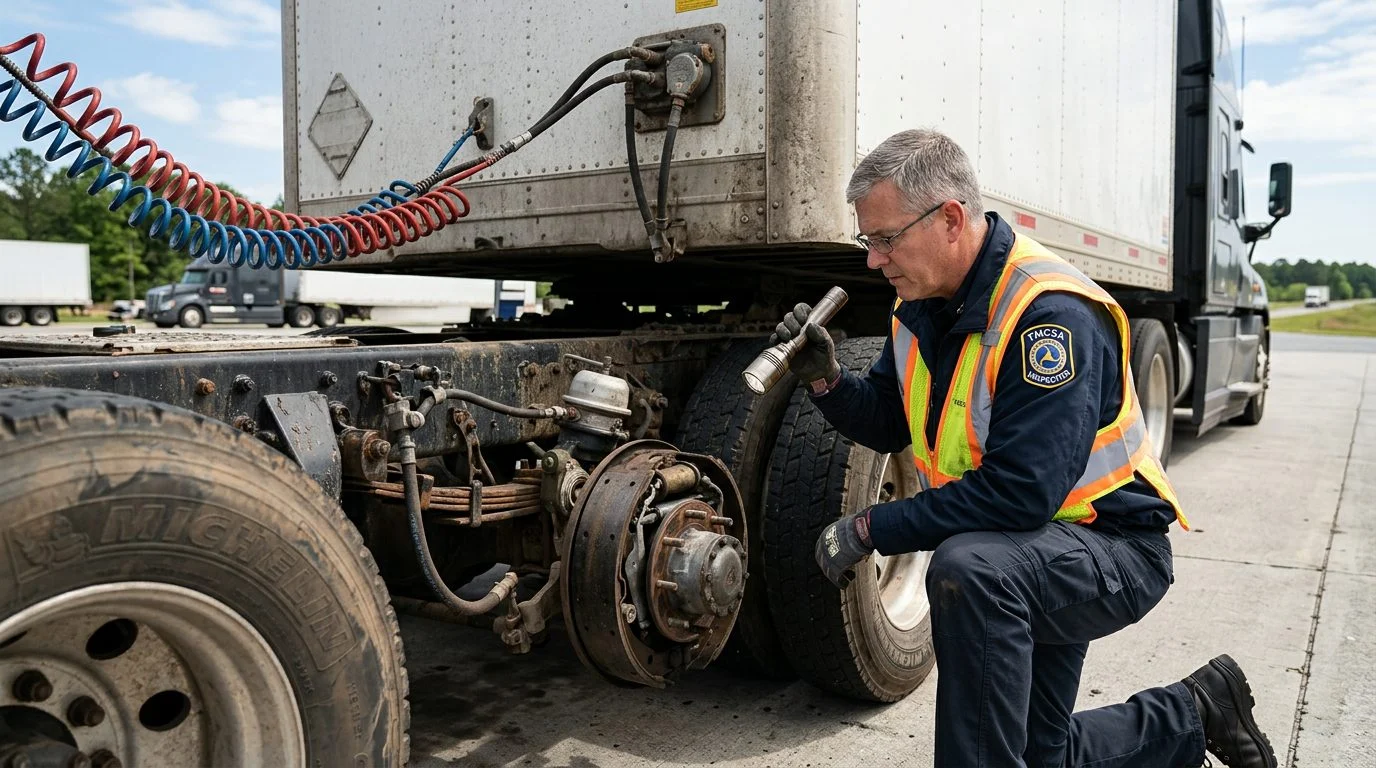
A driver vehicle inspection report, the written check of a vehicle at the end of a workday, must be kept for three months from the date it was prepared. 49 C.F.R. § 396.11 A periodic inspection report must be kept for fourteen months from its date. 49 C.F.R. § 396.21
These are minimums, not promises that a file will last. Damaged parts and the trailer may be repaired, sold, or scrapped in the normal course of business. A written request to keep them is one way to protect them.
Why Timing Matters: Duty to Preserve and Spoliation in Georgia
Losing or destroying evidence is called spoliation.
A preservation letter is a written notice asking the other side to keep specific records. Sending one early helps name what must be kept, such as ELD data, camera footage, and maintenance files. It can go out before a lawsuit is filed.
Georgia generally requires a personal injury lawsuit to be filed within two years after the right of action accrues, but actions for injuries to the person involving loss of consortium must be brought within four years after the right of action accrues. O.C.G.A. § 9-3-33 Georgia generally requires actions for injuries to the person to be brought within two years after the right of action accrues, except as otherwise provided in the article. A plaintiff who is 50 percent or more at fault recovers nothing. O.C.G.A. § 51-12-33
Federal crash investigations serve a different purpose. According to the National Transportation Safety Board, its accident reports determine probable causes and safety recommendations, not fault or liability. NTSB accident report summary
Preserving evidence doesn’t commit you to a claim. You can protect records while you decide what to do next.

Steps to Protect Crash Evidence and Talking With Our Team
Start with these steps:
- Save all photos and videos in their original form, with file dates intact.
- Write down the police report number and any citation information.
- Record names and phone numbers of witnesses while memories are fresh.
- Keep medical and billing records together in one folder.
- Keep copies of any letters or calls from the trucking company or its insurer.
- Avoid posting detailed accounts of the crash online.
If a passenger vehicle was also involved, our car accident guide covers that side of a claim.
Frequently asked questions
Does truck crash evidence preservation Georgia require a lawsuit first?
No. A preservation letter can be sent before any lawsuit is filed.
Can a trucking company delete dashcam footage?
Many camera systems record over older clips unless someone saves them. A written request asks the company to keep specific footage.
Terance Madden is the responsible lawyer for this page. If you’re trying to work out what evidence still exists after a truck wreck, you don’t have to sort it out alone. You can reach T. Madden & Associates, P.C. through our contact page for a free, confidential first consultation with no obligation to continue. The firm works on a no-fee-unless-we-win basis, but clients may still be responsible for court costs and case expenses. The firm has offices in Jonesboro, Atlanta, Decatur, Macon, and Augusta and has practiced since 1999.
How Our Team Helps Protect Your Claim
Written preservation requests
We can send a preservation letter to the trucking company and its insurer asking them to keep specific records, including dashcam video and electronic logs.
Attention to what could be lost
Our team focuses on the items most likely to be overwritten, deleted or repaired, so critical proof is not lost while the case is being evaluated.
Attorneys and staff working together
Our lawyers and support staff coordinate evidence gathering, medical records and witness information from the start of your case.
Plain-language updates
We explain what each piece of evidence means for your claim and answer your questions in terms you can follow.
Warning: Digital Evidence Can Be Overwritten
Many truck camera systems record over older clips unless someone saves them, and electronic logs and engine data may be routinely purged. Do not wait to ask for these records.
What to Keep After a Truck Crash
Photos and video
Keep every photo and video from the scene, your vehicle, your injuries and the truck, including images taken on your phone before the scene changes.
Medical records and bills
Save emergency room notes, follow-up visits, prescriptions, therapy records and every bill or receipt connected to the crash.
Vehicle and repair documents
Keep towing receipts, repair estimates, the damaged vehicle or its parts when possible, and any insurance correspondence about the damage.
Witness and contact details
Write down names and phone numbers for witnesses, the driver, the trucking company and the police report number.