

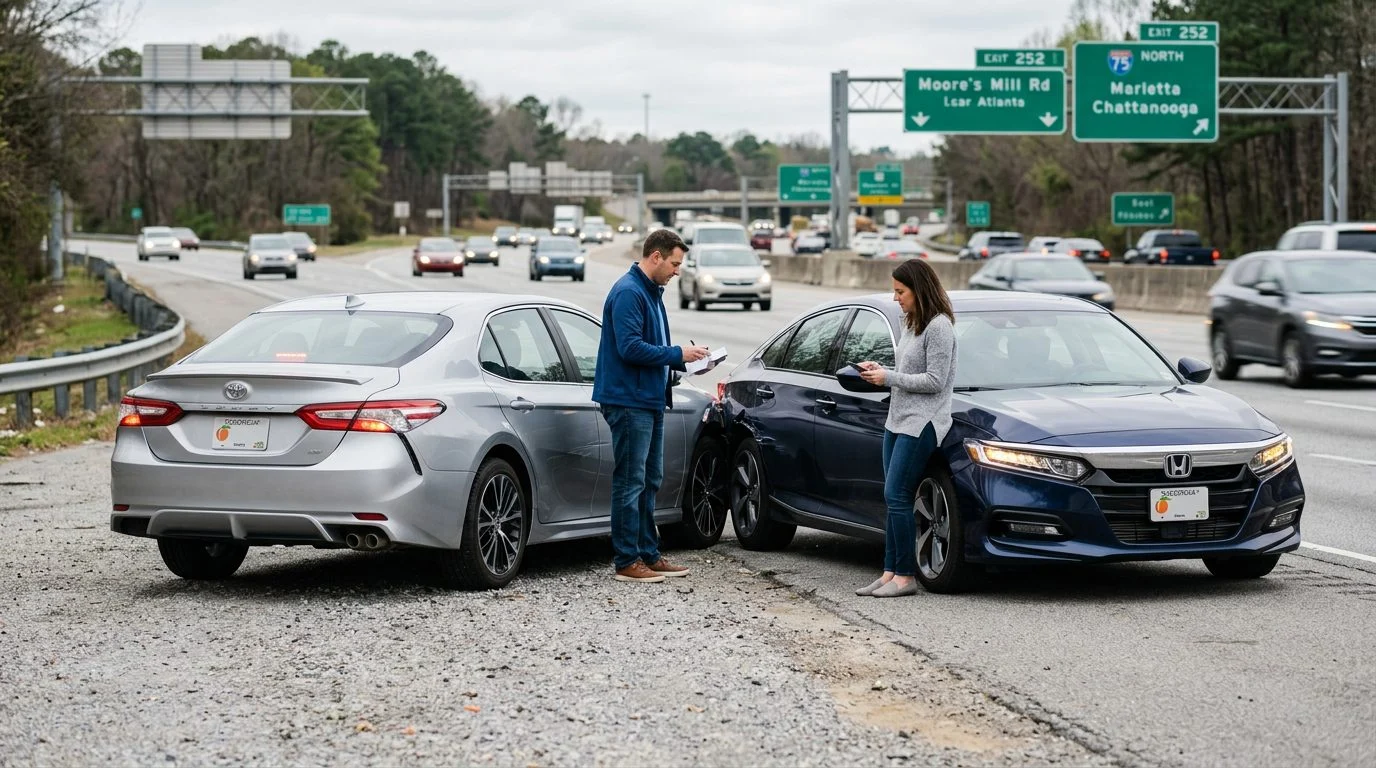
Car Accident Lawyer | Georgia
Hit While Changing Lanes? Understand Who May Be at Fault
Lane-change crashes can be hard to sort out. Here is how fault is often discussed in Georgia, and how T. Madden & Associates, P.C. can help you take the next step.
T. Madden & Associates, P.C. at a Glance
1999
Year the practice began
5
Georgia offices
24/7
Phone line available
By Terance Madden · Published October 19, 2026
Whose fault is it when changing lanes? In many Georgia lane-change crashes, the driver who moved over carries the larger share of blame. The facts of each crash decide the split, and sometimes both drivers share fault.
This guide explains how Georgia divides fault, what evidence shows who moved unsafely, and what to do after a crash. It’s written for drivers, passengers, and family members who are sorting out a crash they did not choose.
Who is at fault when a lane change causes a crash?
Usually, the driver who moved into another lane had to make sure the move was safe. Fault means failing to act with reasonable care. It isn’t simply being the car that got hit.
Two drivers can describe the same crash in very different ways. Each one remembers the lanes, the speed, and the signal in the way that helps them most. That’s why physical evidence often matters more than memory alone.
Speed, following distance, timing, and whether a signal was used all count. The key question is who had a chance to avoid the crash and didn’t take it.
If a lane change left you or someone you love hurt, you don't have to work out who is at fault alone. Talk with Terance Madden about what happened. Talk it through with our team — the first consultation is free, confidential, and carries no obligation.
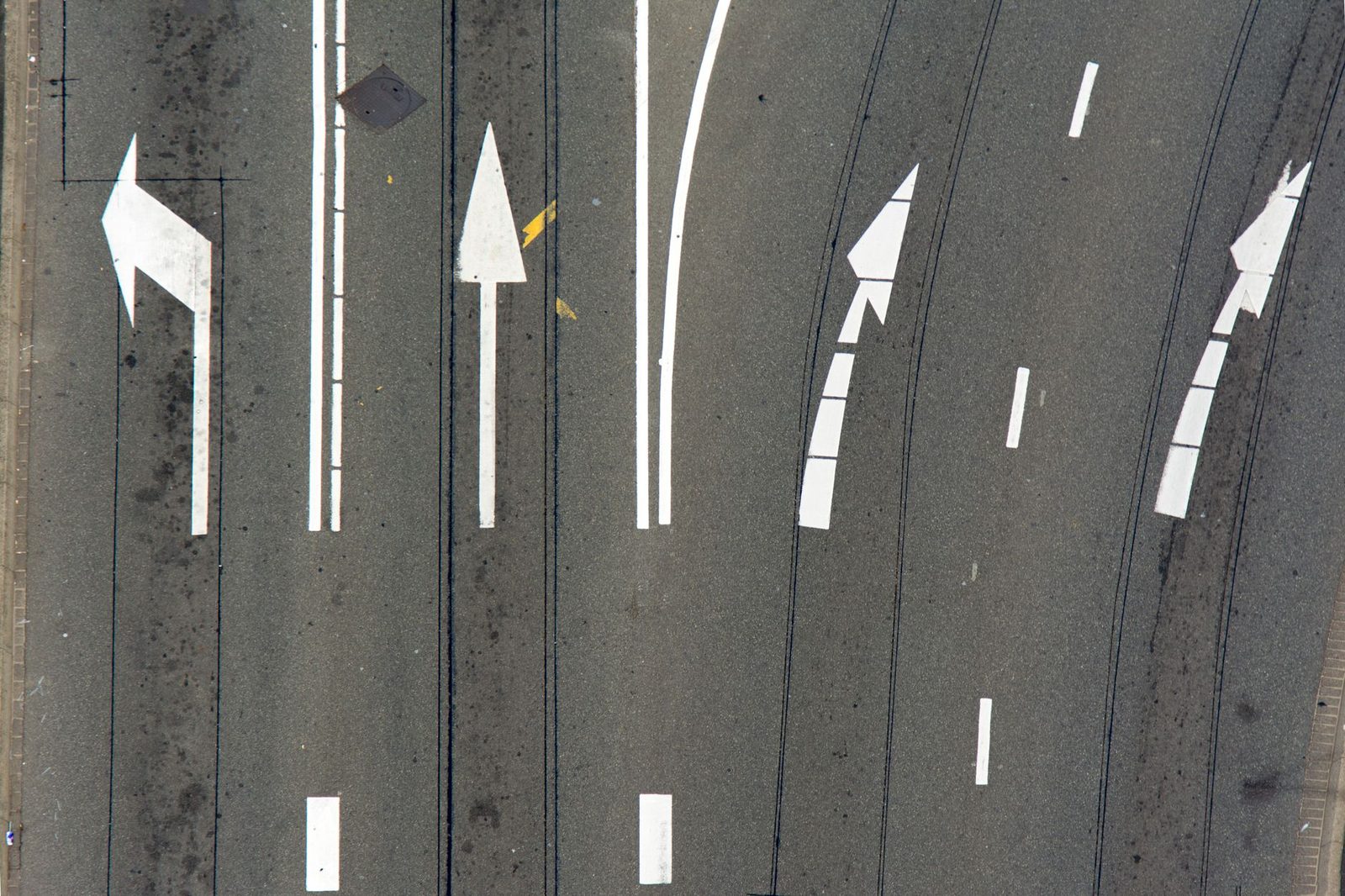
What does Georgia law expect from a driver changing lanes?
Roadside situations, such as a stopped vehicle on the shoulder, call for extra caution from every driver. Careful drivers check mirrors and blind spots, look over their shoulder, and signal before moving. Skipping those steps is the kind of move that often leads to a claim.
Georgia also has a rule about harm the injured person could have avoided. Georgia law provides that if the plaintiff by ordinary care could have avoided the consequences of the defendant’s negligence, the plaintiff is not entitled to recover (O.C.G.A. § 51-11-7). In other cases, the defendant is not relieved just because the plaintiff contributed in some way.
When is the lane-changing driver usually held responsible?
The driver who changed lanes is usually held responsible when that move caused the crash. Common examples include moving into a car in the blind spot, cutting in front of a vehicle that can’t slow in time, moving without a signal, and drifting across lane lines.
Trucks add more risk. Large blind spots on both sides and long trailers make lane changes harder to judge. Federal rules also add records.
Federal rules also say no driver may text while driving a commercial motor vehicle. See 49 C.F.R. § 392.80.
When can the other driver share the blame?
The other driver may share fault when they speed, follow too closely, or move into a gap that wasn’t there. Those actions can put part of the blame on that driver. When two drivers move into the same space at once, each may share some responsibility.
Distraction, impairment, or ignoring a signal can also add fault. A driver who sees a hazard and can avoid it may still have to act reasonably. This is why the avoidance rule above matters in lane-change cases.
The split is decided by the facts of the crash, not by which vehicle was bigger.
How does Georgia split fault, and why does evidence matter?
Georgia reduces damages by the injured person’s percentage of fault. The judge reduces the award in proportion to that percentage, as provided in O.C.G.A. § 51-12-33. The same section says the plaintiff “shall not be entitled to receive any damages if the plaintiff is 50 percent or more responsible.”
Each at-fault person pays only its own share. Under that section, damages apportioned to each person are not joint liability. This matters when a trucking company or a third driver is involved.
Useful evidence includes the police report, photos of vehicle positions and damage, dashcam or surveillance video, and witness statements. In truck crashes, ELD and other carrier records can also matter. Georgia law generally requires that actions for injuries to the person be brought within two years after the right of action accrues, as set out in O.C.G.A. § 9-3-33, but actions for injuries to the reputation must be brought within one year, and actions for injuries to the person involving loss of consortium must be brought within four years.
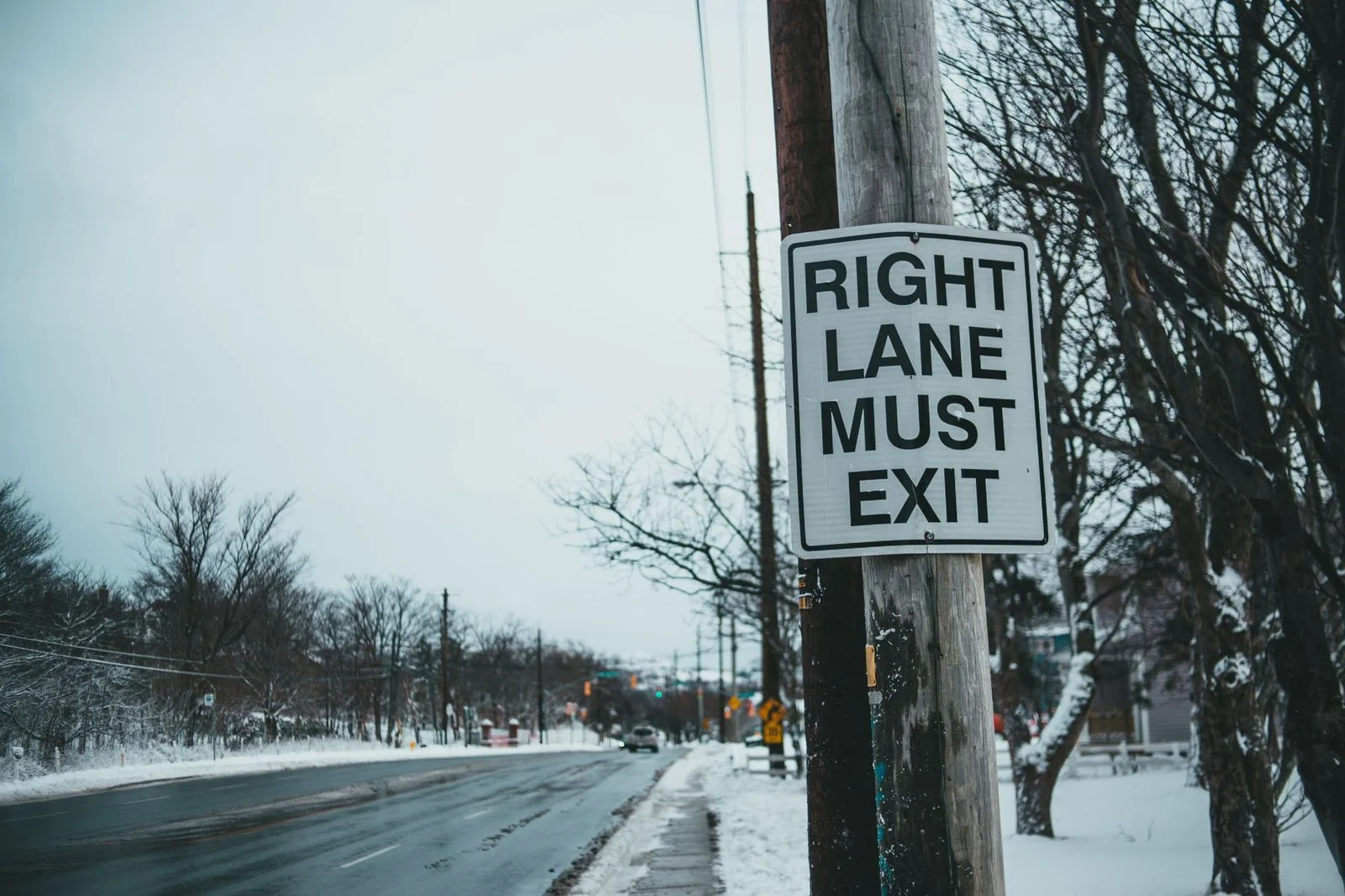
What should you do after a lane-change crash?
Early steps can shape how the claim develops. Georgia’s insurance regulator advises promptly notifying police and your insurer, collecting accident and witness information, documenting the scene, and avoiding statements about fault (Georgia auto claim tips).
Is the person changing lanes always at fault?
Not always. Usually that driver carries the larger share, but the other driver’s actions can change the split.
Can I recover money if I was partly at fault?
Georgia reduces your damages by your share of fault. Recovery is barred if you are 50 percent or more responsible (O.C.G.A. § 51-12-33; Quynn v. Hulsey, 310 Ga. 473 (2020)).
How long do I have to file a lane-change lawsuit in Georgia?
Georgia generally gives two years to file a personal injury lawsuit under O.C.G.A. § 9-3-33 (Cameron v. JMP Pizza, Inc. (2026)), but actions for injuries to the person involving loss of consortium must be brought within four years.
If a lane change left you or someone you love hurt, you don’t have to work out who is at fault alone. Talk with Terance Madden about what happened. Terance Madden offers a free, confidential first consultation, with no obligation to continue. Contact T. Madden & Associates.
This page is general information, not legal advice. T. Madden & Associates, P.C. is a Georgia personal injury firm in practice since 1999. Terance Madden is the responsible lawyer. Offices: Jonesboro, Atlanta, Decatur, Macon, and Augusta. Contact: https://www.tmaddenlaw.com/contact/
How We Approach a Lane-Change Crash
Careful Review
We look closely at the police report, photos, and the details of how the vehicles moved before and after the collision.
Support From Our Team
Our team keeps you informed and handles the paperwork and calls so you can focus on recovering.
Advocacy for Fair Compensation
We push for fair compensation for your injuries, vehicle damage, lost income, and other losses.
Attention to Your Recovery
We understand that injuries and missed work create real pressure, and we treat your situation with care.
Be Careful at the Scene
Stay calm, avoid guessing about what happened, and do not post about the crash on social media. Early statements can be used later, so speak with a lawyer before discussing fault with insurers.
Steps to Take After a Lane-Change Collision
Get Medical Care
Even if you feel fine, see a doctor promptly. Some injuries take hours or days to appear.
Document the Scene
Photograph vehicle positions, damage, road conditions, and any traffic signs or signals you can see.
Collect Witness Details
Names and phone numbers of witnesses can be important if the other driver's account differs from yours.
Contact Our Office
Call T. Madden & Associates, P.C. for a free, confidential consultation with no obligation to continue.