

E-bike crashes on private property | Georgia
Hurt in an E-Bike Crash in a Parking Lot? Talk to Our Team.
Painted lines, curbs and cracked pavement can turn a short ride into a serious crash. Here is what to know and how to protect your claim.
T. Madden & Associates, P.C.
1999
Representing Georgia injury clients since
5
Georgia offices: Jonesboro, Atlanta, Decatur, Macon, Augusta
By Terance Madden · Published November 19, 2026
Hit a pothole, a curb or a slick patch in a parking lot on your e-bike? You may have a claim. Georgia calls it premises liability, which means a claim against the owner or occupier of property for a dangerous condition on it.
The short answer: if the owner, a manager or another party in control of the lot failed to keep it reasonably safe, the injured rider may have a claim. T. Madden & Associates, P.C. can review those facts with you during a free consultation. Who pays, and how much, depends on the facts.
Hurt on Private Property in an E-Bike Crash? Here Is What Georgia Law Looks At
Georgia law asks whether the owner or occupier of the property failed to use ordinary care to keep it safe.
This reaches far past public streets. Slip and fall cases can happen in places like store and office lots, apartment and condo complexes, parking decks, and driveways and private drives that the public or tenants use.
Under O.C.G.A. § 51-3-1, an owner or occupier who invites people onto its land must use ordinary care in keeping the premises and approaches safe. If that duty fails and a rider is hurt, the owner can be held liable.
This page is for the rider who was hurt. It is also for the spouse, mother or adult daughter now handling appointments, bills and time off work.
Hurt when your e-bike hit a hazard on a lot or private property you were using? You may have a claim, and the firm can review it in a free consultation. Talk it through with our team — the first consultation is free, confidential, and carries no obligation.
What a Premises Crash Claim Can Cover
A premises claim can cover the bills, lost pay and long-term care that follow a crash. It can also reach more than one party.
Common hazards behind e-bike crashes on private property include:
- Broken or heaved pavement and potholes
- Unmarked speed bumps and curb stops
- Drainage grates and loose gravel
- Oil, water or debris on the surface
- Faded paint, missing signs and poor lighting at night
Each one can take away a rider’s balance or control in a split second.
The owner is not always the only party. Other parties may share responsibility:
- The management company that runs the lot or complex.
- A landlord. Under O.C.G.A. § 44-7-14, a landlord that has fully parted with possession is generally not responsible for a tenant’s negligence. It stays responsible for defective construction and for failing to keep the premises in repair.
- A paving, lighting or maintenance contractor whose work created the hazard. Under O.C.G.A. § 51-2-5, an employer can be liable for a contractor’s negligence in listed situations, such as when it keeps the right to direct how the work is done.
Medical bills and other necessary expenses from the injury are a legitimate part of the claim.
For head, spine and fracture injuries that need long-term care, future medical costs and lost earning ability are among the losses a claim may cover. Under O.C.G.A. § 51-12-13, the jury or judge may reduce future economic losses to present value, using a 5 percent discount rate or another rate it finds appropriate.
How the Physical Evidence Gets Built, and Why an Engineer Reads It
The physical evidence often decides a premises case, and it changes fast.
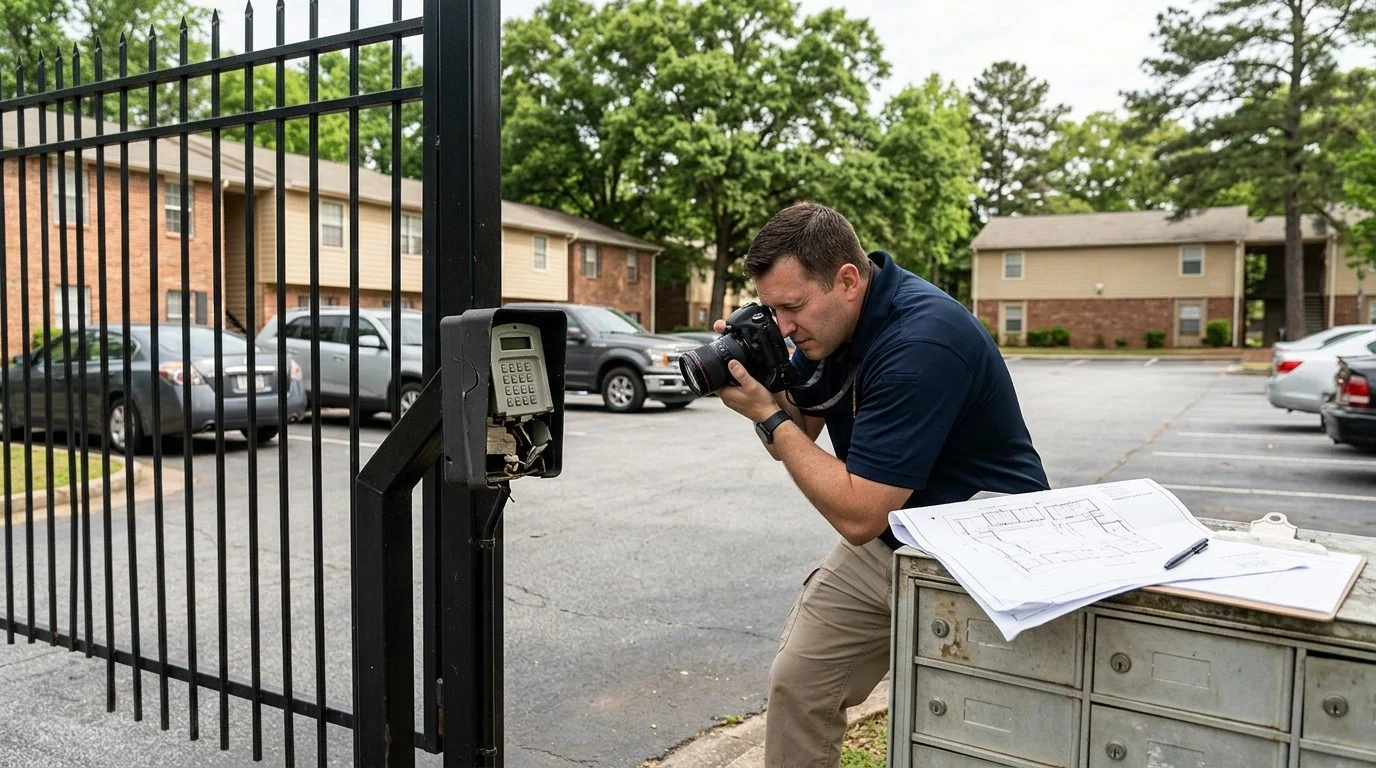
Preserve the scene first. Photos and measurements of the surface, lighting, signs and debris matter most before a repair erases them. Ask for video, incident reports, work orders and paving or lighting records. Ask about past complaints about the same spot, too.
Before law school, Terance Madden trained as an electrical engineer, so he starts by asking what the evidence shows, how the rider lost control and which records must be kept. He treats the lighting, the surface and the maintenance history as parts of one story.
In plain words, speed and surface friction decide how much grip a tire has. Visibility decides how much time a rider has to react. The same wet patch at a crawl and at full speed are two different facts. Those details point to who had the chance to fix the hazard.
T. Madden & Associates, P.C. has practiced since 1999, with offices in Jonesboro (Clayton County), Atlanta, Decatur, Macon and Augusta.
Georgia Deadlines and Fault Rules to Know Now
Most claims for injuries to the person in Georgia must be filed within two years after the right of action accrues (O.C.G.A. § 9-3-33).
Under O.C.G.A. § 9-3-33, that two-year limit covers injuries to the person. Evidence fades and witnesses move, so the clock matters from the first day.
A lot owned by a city or county can carry shorter notice rules. For a city, O.C.G.A. § 36-33-5 requires a written claim to the governing authority within six months of the event. The claim must state the time, place and extent of the injury, the negligence that caused it, and a specific dollar amount sought. For a county, O.C.G.A. § 36-11-1 requires claims within 12 months after they accrue or become payable, or they are barred; minors and others under disabilities get 12 months after the disability is removed.
Georgia also looks at fault on both sides. Under O.C.G.A. § 51-12-33, damages are reduced by the rider’s percentage of fault. A rider who is 50 percent or more responsible cannot recover any damages. Expect the other side to point at speed, lighting or helmet use. Early evidence answers those points.
The firm works on a no-fee-unless-we-win basis, but the client may still be responsible for court costs and case expenses. The first consultation is free, confidential and carries no obligation to continue.
How Big Insurance Handles Parking Lot Crash Claims, and How the Firm Responds
Big Insurance is not on your side, and its first offer is rarely what your claim is worth.
Expect these tactics:
- A quick, low first offer, made before the full injury is known.
- A recorded statement taken early, while you are still hurting.
- “Minor scrape” or “low impact” arguments that treat a real fall as if it barely mattered.
- Delays while the file sits.
- Disputes over treatment, including claims that your care was not needed or that a gap in care hurts your claim.
The response is to pursue every layer of coverage. That includes the property owner’s liability policy, the management company’s and contractor’s policies, any umbrella or excess coverage, corporate coverage, and your own uninsured or underinsured motorist (UM/UIM) coverage where it applies. The claim is valued across the full course of the injury, including future care. If a claim does not settle, the case may need to go to trial.
What to Expect After You Call
The process starts with a free consultation, then moves to evidence, negotiation and, if needed, a lawsuit.
- Free consultation. Start a free case evaluation or call. The first consultation is confidential.
- Preservation letters. The firm asks the owner, manager and contractors to keep video, records and repair history.
- Investigation. Terance Madden, who trained as an electrical engineer, reviews the surface, lighting, maintenance history and medical records.
- Demand and negotiation. The firm presents the claim to each responsible insurer.
- Suit if needed. If a fair resolution is not reached, the firm files suit and prepares for trial. Timing turns on the injuries, the evidence and the insurers involved.
If you are the spouse, mother or adult daughter handling this, you do not have to track every detail alone. The firm keeps both the injured person and the caregiver informed.
If Medicare covers the injured person, the order of payment matters. The CMS Medicare Secondary Payer overview explains that when no-fault or liability insurance is involved, that insurance pays first and Medicare pays second. Medicare may make a conditional payment, which must be repaid from a settlement, judgment or award.
Not sure what your next step is?
Talk it through with our team — the first consultation is free, confidential, and carries no obligation.
Questions People Ask About E-Bike Crashes on Private Property
Most of these questions come down to who controlled the lot and what the evidence shows.
Do I still have a claim if there was no police report?
Yes. A claim can be built from photos, video, witness information, medical records and property records.
I was going fast. Can I still recover?
Georgia reduces recovery by the rider’s share of fault and bars it at 50 percent or more (O.C.G.A. § 51-12-33; Quynn v. Hulsey (2020)). The facts decide the split.
Who pays if a management company runs the lot?
Liability can reach the owner, the manager and a contractor whose work created the hazard. Each may have its own insurance.
Can my spouse or daughter help with my claim?
Yes. They can help with appointments, bills and records, and the firm explains each step to them in plain English.
How soon should I call?
Call soon. Repairs can erase the evidence, and filing deadlines keep running.
Hurt when your e-bike hit a hazard on a lot or private property you were using? Call T. Madden & Associates, P.C. for your free, confidential consultation. Calls are answered 24/7.