

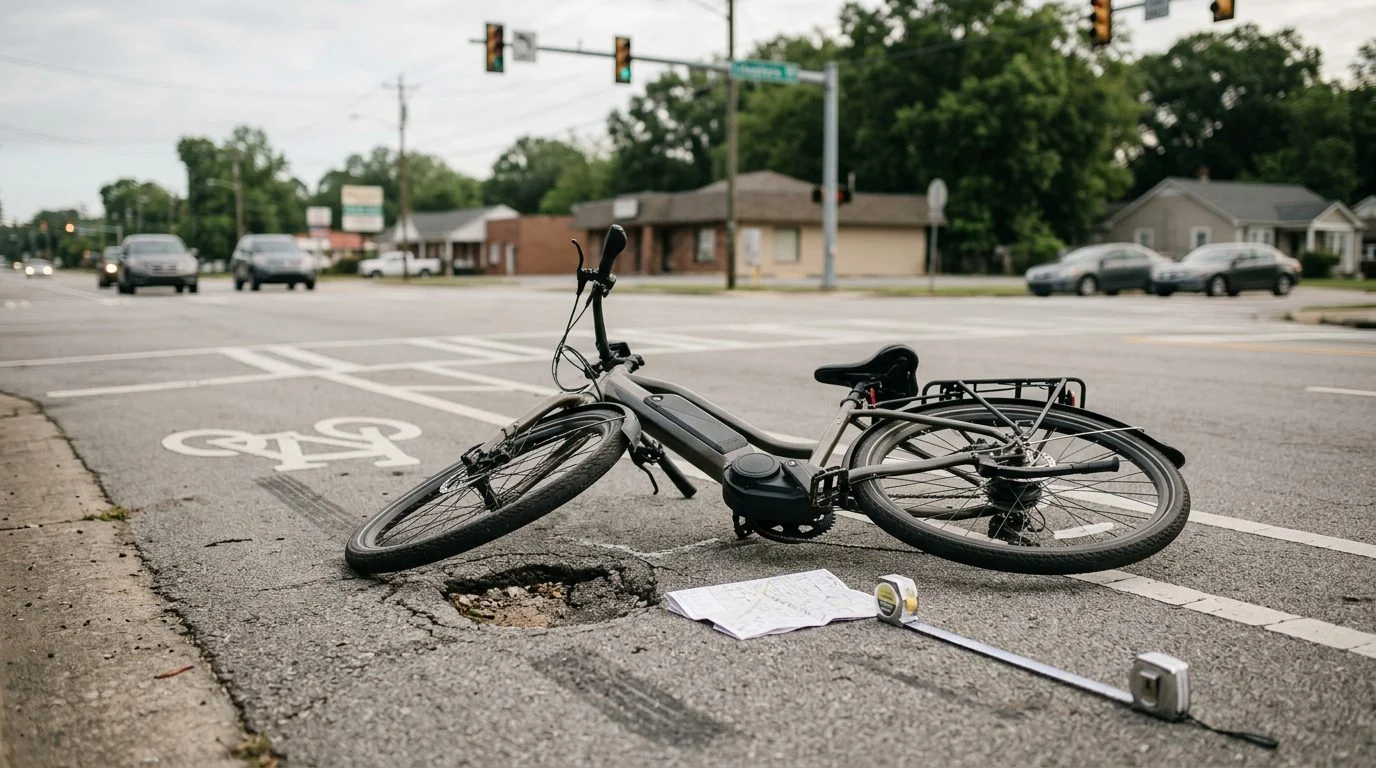
E-bike crashes in Georgia
Hurt When a Pothole Threw You Off Your E-Bike?
A pothole is a road problem, but your claim turns on who was responsible for that stretch of road. Tell us what happened and the firm will work out the next step with you.
Serving injured Georgians since 1999
1999
Year the firm began practice
5
Offices: Jonesboro, Atlanta, Decatur, Macon and Augusta
24/7
Call us any time
By Terance Madden · Published November 11, 2026
Your e-bike hit a pothole, you’re hurt, and now you’re asking who pays. That’s the right question.
When a road defect throws an e-bike rider, the rider may have a claim against whoever is responsible for that road. In Georgia, that can be a county, a city, the State, or a contractor. These claims follow stricter notice rules than a claim against a driver, and some deadlines run in months, not years.
This guide covers who can be responsible, the deadlines that apply, what evidence matters, and how the other side usually responds.
What a Road-Hazard E-Bike Claim Is, and Who It Fits
A road-hazard e-bike claim is a claim for injuries from a road defect the rider could not reasonably expect. A road defect is a hole, crack, drop-off, or broken edge in the pavement or shoulder.
A pothole, sunken pavement, or missing road edge can throw a rider hard onto the pavement. Serious injuries can follow.
This kind of claim fits riders with serious and catastrophic injuries, such as brain injury, spinal cord injury, or amputation. It also fits the family members who carry those recoveries for months.
Whether you were partly at fault is a separate question. Georgia reduces damages by a rider’s share of fault, so every crash needs a close look. The firm reviews the facts of your crash to see whether a claim exists.
If a road defect threw you or someone you love off an e-bike, you don't have to track those deadlines alone, and we can start by reviewing your crash. Talk it through with our team — the first consultation is free, confidential, and carries no obligation.
Who Can Be Responsible, and Why Government Claims Work Differently
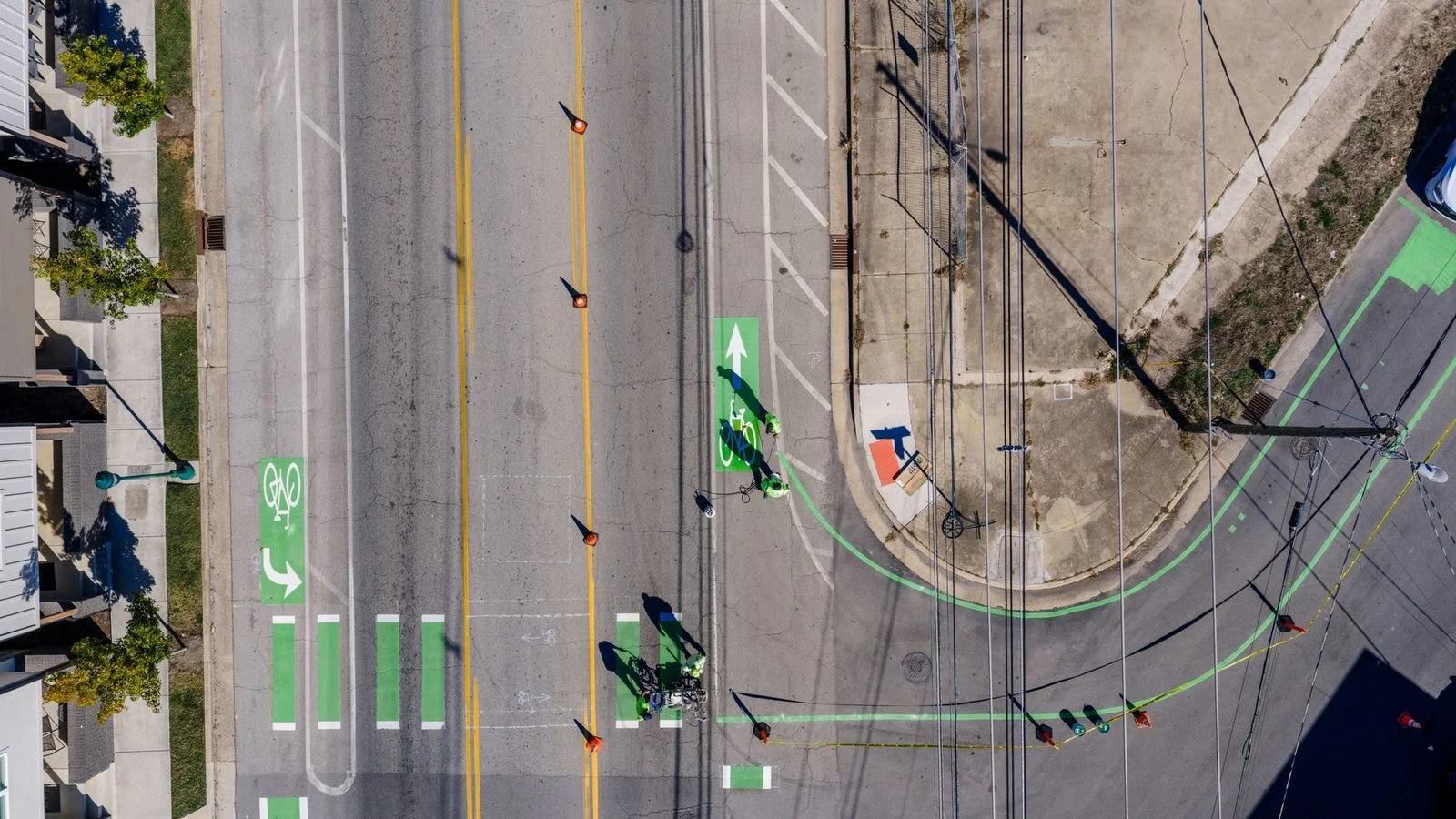
The responsible party may be a county, a city, the State of Georgia for a state route, or a private contractor or utility whose work left the hazard. Each one has its own rules.
Sovereign immunity (the government’s legal protection from lawsuits) is the first hurdle. For the State, the law waives that immunity for torts of state officers and employees acting within the scope of their duties, subject to all exceptions and limitations set forth in this article. O.C.G.A. § 50-21-23 That waiver applies only to cases filed in Georgia courts. O.C.G.A. § 50-21-23
Ante litem notice (a formal written notice of your claim, given before any lawsuit) is the next step. Each body has its own deadline:
- City: A written claim goes to the city’s governing authority within six months of the event. It must state the time, place, and extent of the injury, and the negligence that caused it. O.C.G.A. § 36-33-5
- O.C.G.A. § 36-11-1 O.C.G.A. § 36-11-1
- O.C.G.A. § 50-21-26
Contractors can answer too. An employer may be liable for a contractor’s negligence when it keeps the right to direct or control how and when the work is done. O.C.G.A. § 51-2-5 That matters when an outside crew dug up the road.
Act early. A missed notice deadline can end a claim that would otherwise be strong.
What the Claim Can Cover, and the Role of the Person Managing the Recovery
A claim can cover what the crash cost you and what it will cost later. Those losses fall into a few groups:
- Medical bills and future care, such as therapy, equipment, and home changes
- Lost wages and lost ability to earn
- Pain and suffering
- Damage to the e-bike, helmet, and gear
Georgia limits medical damages to the reasonable value of medically necessary care. O.C.G.A. § 51-12-1.1 Special damages for medical and healthcare expenses are limited to the reasonable value of medically necessary care, treatment, or services. The jury may use a 5 percent discount rate or another rate it finds right. O.C.G.A. § 51-12-13
For catastrophic injuries, care can last a lifetime. Future needs need clear medical support from doctors and therapists.
The person managing the recovery is often a spouse, a mother, or an adult daughter. That person keeps the calendar, opens the bills, and takes the calls. Their records count as much as the medical charts:
- Every receipt and bill, paid or unpaid
- Mileage to appointments and pharmacy trips
- Notes on missed work and copies of pay stubs
- A daily log of pain, sleep, and what the rider can no longer do
- Copies of every letter from an insurer or agency
The firm works with the person managing the recovery, so no question falls through the cracks.
The Evidence That Carries a Road-Hazard Claim
The strongest evidence shows the hazard, where it was, how big it was, and what the government knew. Start with what you can capture today.
Take photos and video of the hazard, close up and from a distance. Note the date, time, and direction of travel. Don’t repair or toss the e-bike, battery, or wheel. Keep the parts as they are.
Georgia’s duty to preserve evidence starts when litigation is reasonably foreseeable to the party that controls the evidence, not only after a suit is filed. Phillips v. Harmon That is why the firm sends early requests for repair logs, video, and complaint records.
Terance Madden leads T. Madden & Associates, P.C., a Georgia personal injury firm that has been in practice since 1999. He reads technical records himself. For a road defect, that means reviewing the hazard’s depth, width, and edge height, and how a wheel of a given size drops into it at a given speed. Speed changes the result. A slower rider and a faster one can hit the same hole with very different force.
Prior complaints or repeated repairs at the same spot can show the government knew about the hazard. Work orders can name the contractor who last dug into that road. A court’s view of those records depends on the facts.
How the Government’s Side Responds, and How We Answer
The other side usually slows the claim down and argues the rider should have seen the hazard. Expect these moves:
- Early requests for a recorded statement, before medical records exist
- Slow delivery of maintenance and repair records
- An “open and obvious” argument: the hole was visible, so the rider should have avoided it
- Blame on speed, gear, or the route taken
- “Low impact” arguments that say a fall at a slower speed could not cause serious injury
- Big Insurance lowball offers and disputes over treatment
An insurer’s first offer is rarely what a claim is worth. Treat early offers with caution.
Georgia reduces damages in proportion to the rider’s share of fault. A rider who is 50 percent or more responsible recovers no damages. O.C.G.A. § 51-12-33 Each liable party pays only its own share. The jury weighs the fault of everyone who contributed, even parties who were never sued.
When an injury involves more than one possible cause, an investigation may look at every party that could share responsibility, including contractors and utilities. We pursue every insurance layer that applies: liability coverage, uninsured and underinsured motorist coverage (UM/UIM) where it applies, umbrella and excess coverage (extra layers above a policy’s limits), and corporate coverage. We value the full lifetime cost of the injury and prepare the case as if it will go to trial.
How the Process Runs, Step by Step
The process starts with a free case evaluation and moves through notice, investigation, and demand. A lawsuit comes only if it’s needed.
- Case review. You share the date, place, injuries, and photos. We identify the responsible body and its deadline.
- Notice and preservation. We prepare the written notice and send letters asking that records, video, and repair logs be kept.
- Investigation. We measure the site, request records, gather medical records, and review other responsible parties.
- Demand. A city claim must state a specific dollar amount. That figure is an offer of compromise and is not binding on you if the claim is litigated. O.C.G.A. § 36-33-5
- Suit and trial preparation. A suit against the State can’t start until the Department of Administrative Services denies the claim or 90 days pass without action. O.C.G.A. § 50-21-26
Timelines vary with the facts and the body involved. You get plain English updates at each stage, with no black holes in communication.
Not sure what your next step is?
Talk it through with our team — the first consultation is free, confidential, and carries no obligation.
How the Free First Consultation Works
T. Madden & Associates, P.C. has practiced since 1999. The firm has offices in Jonesboro (Clayton County), Atlanta, Decatur, Macon, and Augusta.
Terance Madden is the responsible lawyer for this page. Shenia Madden is also a lawyer with the firm. Our team handles the calls, records, and deadlines that keep a claim on track.
We work plainly and directly. You won’t get a stack of legal terms with no explanation, and you won’t be left guessing about what comes next.
The firm works on a no-fee-unless-we-win basis. You may still be responsible for court costs and case expenses. The first consultation is free, confidential, and carries no obligation to continue.
Common Questions About Road-Hazard E-Bike Claims
Here are the questions riders and families ask most about a road-defect crash.
Can I sue the city or county for a pothole that hurt me on my e-bike?
Possibly. Notice rules and immunity decide it, so the responsible body needs to be identified early.
Under O.C.G.A. § 9-3-33, except as otherwise provided in this article, actions for injuries to the person shall be brought within two years after the right of action accrues, except for injuries to the reputation, which shall be brought within one year after the right of action accrues, and except for actions for injuries to the person involving loss of consortium, which shall be brought within four years after the right of action accrues.
Will my health insurance cover care while the claim is pending?
Your own policy decides what it pays.
What if I was partly at fault?
Georgia reduces damages by your share of fault. If you’re 50 percent or more responsible, you recover no damages (O.C.G.A. § 51-12-33; Quynn v. Hulsey (2020)).
Will I have to go to court?
Some claims resolve without a trial. The firm prepares every case as if it will go to trial.
If a road defect threw you or someone you love off an e-bike, you don’t have to track those deadlines alone. Start a free case evaluation and get a clear next step.