

E-Bike Accidents | Georgia
Hit by an uninsured driver on your e-bike? Start with a free review.
Your own policy may hold the answer, and the firm will check it with you before anyone else asks you to make a decision.
About the firm
1999
Year the firm began practicing law
5
Georgia offices: Jonesboro, Atlanta, Decatur, Macon and Augusta
24/7
Phone line for injured clients
By Terance Madden · Published November 11, 2026
A Georgia e-bike accident uninsured motorist claim can help pay for harm a driver caused, even when that driver has no insurance. If a driver with no coverage, or too little, hit you on an e-bike, your own policy may be the next step. Here is how the claim works, what to check first, and where Big Insurance will push back.
What an Uninsured Motorist Claim Is and Who It Is For
An uninsured motorist claim asks your own insurer to pay when the at-fault driver cannot. Uninsured motorist (UM) coverage pays you when the other driver has no bodily injury and property damage liability insurance, and also in the other situations where the motor vehicle is considered uninsured. Underinsured motorist (UIM) coverage pays the gap when the other driver’s policy is too small for your losses.
Georgia law requires auto liability policies to include this protection, unless a named insured rejects the coverage in writing, with limits the policyholder can choose (O.C.G.A. § 33-7-11). Three situations usually lead here:
- The at-fault driver had no insurance.
- The driver’s limits were too low to cover your losses.
- The driver fled, and no one could identify them.
This claim belongs to the injured rider, but the family around them often carries it. A spouse, parent or adult child may end up handling bills, appointments and insurer calls. A household member’s auto policy may also apply, so list every car and policy in the home.
If a driver with no insurance, too little coverage, or no traceable identity hurt you on an e-bike, you may have a claim, and the firm can review your policies at no cost. Talk it through with our team — the first consultation is free, confidential, and carries no obligation.
What the Coverage Can Pay For
UM and UIM claims can recover the losses the crash caused, up to the policy limits. Special damages are actual losses, like medical bills and lost pay, and you must prove them. General damages, like pain and suffering, are presumed to flow from the injury (O.C.G.A. § 51-12-2).
In a civil action for injury or death, medical bills are limited to the reasonable value of medically necessary care (O.C.G.A. § 51-12-1.1). Future losses can be reduced to present value, using a 5 percent rate or another rate the jury finds right (O.C.G.A. § 51-12-13). That matters when an injury lasts for years.
Claims can include:
- Past and future medical bills
- Lost wages and lost ability to earn
- Pain, suffering and loss of enjoyment of life
- Costs of ongoing care and home changes
The policy limit is the ceiling for UM or UIM payment. That limit comes from your policy, not from the firm. Your e-bike, helmet and gear may fall under a different part of your policy, so the firm checks each part.
Start a file on day one. Keep medical bills, pharmacy receipts, mileage to appointments, pay stubs, notes on missed work, and photos of the bike and the scene.
Which Policies May Apply to an E-Bike Rider
The first policies to check are your own auto policy and any auto policy in your home. Other layers may also apply:
- A policy on a vehicle you were occupying when the crash happened
- Employer coverage tied to the trip
- Umbrella or excess coverage, which adds money when a claim is large, but only if the policy or a policy endorsement affirmatively provides for it.
The at-fault driver’s liability policy is usually the first layer. UM or UIM responds when that policy is missing or too small.
Big Insurance may argue that an e-bike is not a vehicle, or call the crash “low impact.” Those arguments can change which policy gets reviewed. Georgia’s e-bike rules are explained in our Georgia e-bike laws guide.
Georgia’s modified comparative-fault rule also reduces your award by your share of fault. You recover nothing if you are 50 percent or more responsible. Each at-fault party pays only its own share (O.C.G.A. § 51-12-33).
Whether a policy applies depends on the facts of the crash and the wording of each policy.
How the Claim Works, Step by Step
A UM or UIM claim moves in five steps, and early choices shape the rest.
- Ask for the crash report number.
- Notify your own insurer in writing. List every policy that may apply, including household policies.
- Ask before any recorded statement. Insurers often request one early. Let the firm handle insurer contact so you can focus on recovery.
- Preserve the evidence. Ask that the e-bike, battery, controller and phone records be kept (Phillips v. Harmon). Don’t repair or sell them before talking to the firm.
- Demand, negotiate, and file if needed. Georgia generally gives two years to sue for injuries to the person (O.C.G.A. § 9-3-33). Don’t let that clock run while you wait.
How Big Insurance Handles These Claims, and How the Firm Responds
Big Insurance is not on your side, and its first offer is rarely what your claim is worth. Expect a quick, low number. Expect a recorded statement taken before anyone knows the full injury. Expect delays, disputes over whether treatment was needed, and “low impact” arguments meant to shrink an e-bike crash into a small one.
Georgia sets rules for formal settlement offers in motor vehicle injury cases. Certain payment and sworn insurance-disclosure deadlines must give the recipient at least 40 days (O.C.G.A. § 9-11-67.1). Don’t sign a release until someone has reviewed it.
The question of bad faith, the amount of any penalty, and reasonable attorney’s fees are decided in a separate action filed by the insured against the insurer after a judgment has been rendered against the uninsured motorist in the original tort action (O.C.G.A. § 33-7-11).
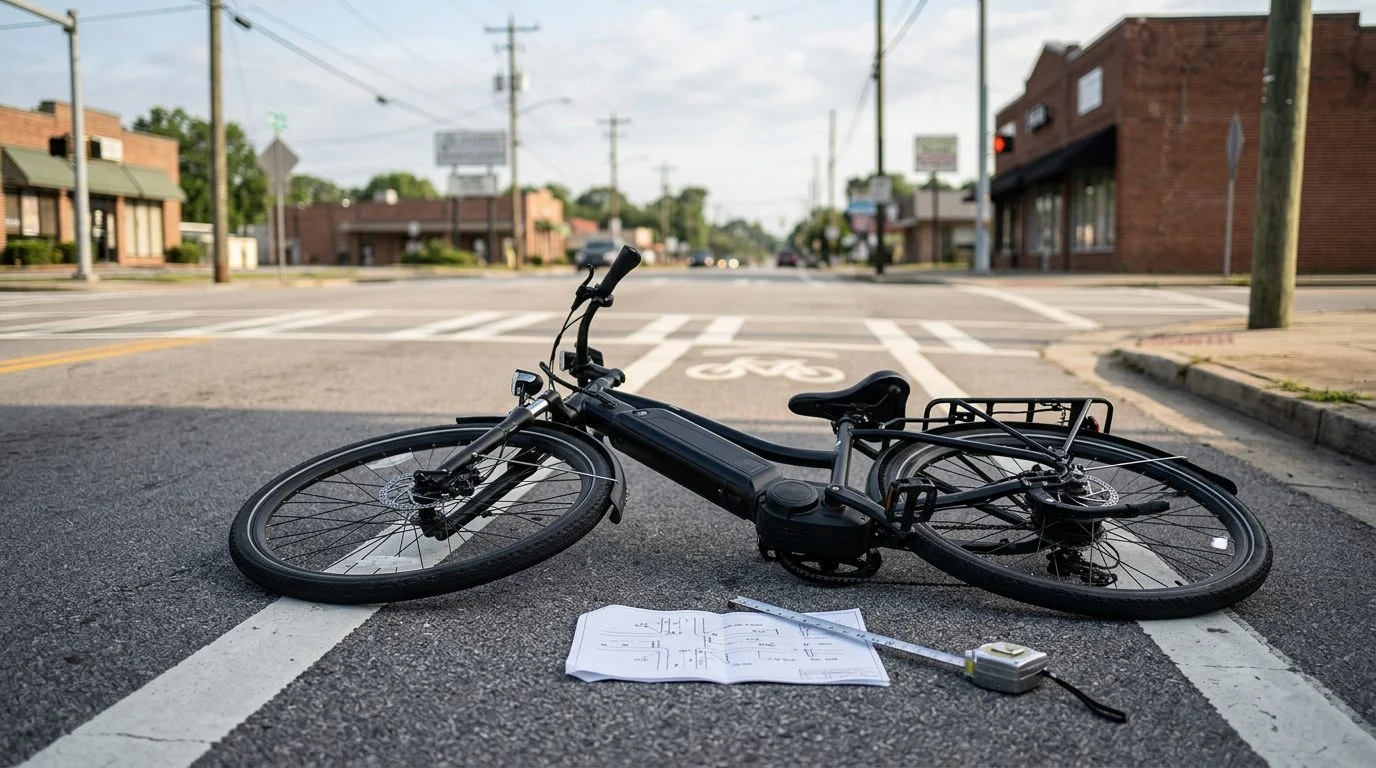
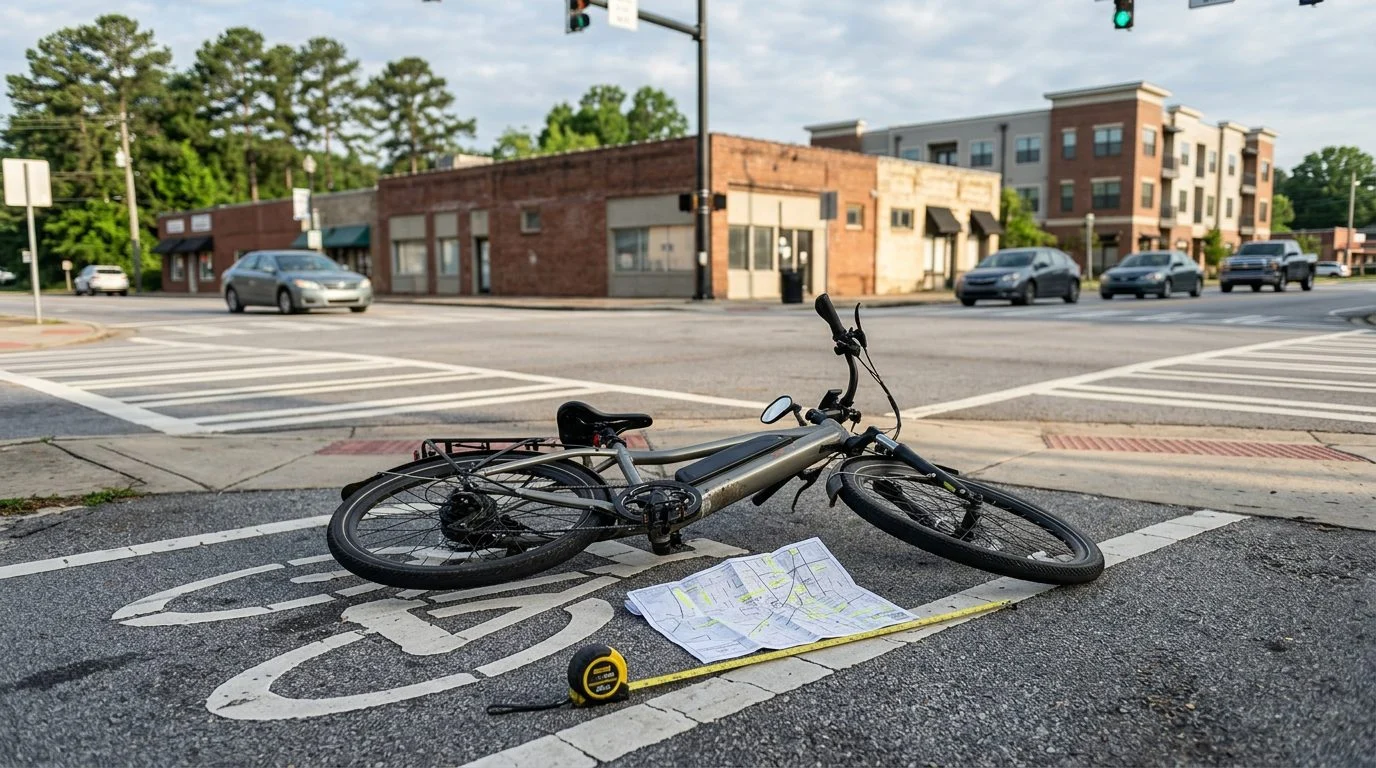
Physical evidence often decides these claims. Scene measurements, damage patterns on the bike, and battery and controller data show how the crash happened and how hard.
Uninsured Motorist Coverage in an E-Bike Claim
Terance Madden leads the firm, which has been in practice since 1999.
The firm has offices in Jonesboro, Atlanta, Decatur, Macon, and Augusta. Our team answers your questions about your claim in plain language.
The firm works on a no-fee-unless-we-win basis. You may still be responsible for court costs and case expenses.
The first consultation is free, confidential, and carries no obligation to continue.
Not sure what your next step is?
Talk it through with our team — the first consultation is free, confidential, and carries no obligation.
Questions Injured Riders and Families Ask
Here are common questions about e-bike crashes and uninsured motorist claims.
Does my car insurance cover me on an e-bike?
It may. The policy wording and the crash facts decide it, so the review comes first.
Report the crash to police right away and write down every detail you remember.
Will I have to go to court?
Some claims settle without a trial.
Can a spouse make a claim too?
A spouse’s loss of consortium claim has its own four-year period under Georgia’s injury statute (O.C.G.A. § 9-3-33).
If you’re the one juggling appointments, bills, and insurer calls after an e-bike crash, you don’t have to sort out the policies alone. Call the firm anytime, 24/7, or start a free case evaluation at our contact page.