

Fatal Crash Investigations in Georgia
Waiting on a Fatal Crash Investigation? You Don't Have to Face It Alone.
Police work through the scene, the vehicles and the witnesses before answers come together. Here is what the process involves and how to keep your family informed.
Serving Georgia families since 1999
1999
Year the firm began practicing law
5
Georgia offices, including Jonesboro and Atlanta
24/7
Call us any time
By Terance Madden · Published November 25, 2026
You came here with a hard question. How long will police take to finish the investigation of a crash that killed someone you love?
There is no fixed timeline. The scene work often moves faster than the final findings, and the pace depends on the facts of each crash.
What a fatal crash investigation involves, step by step
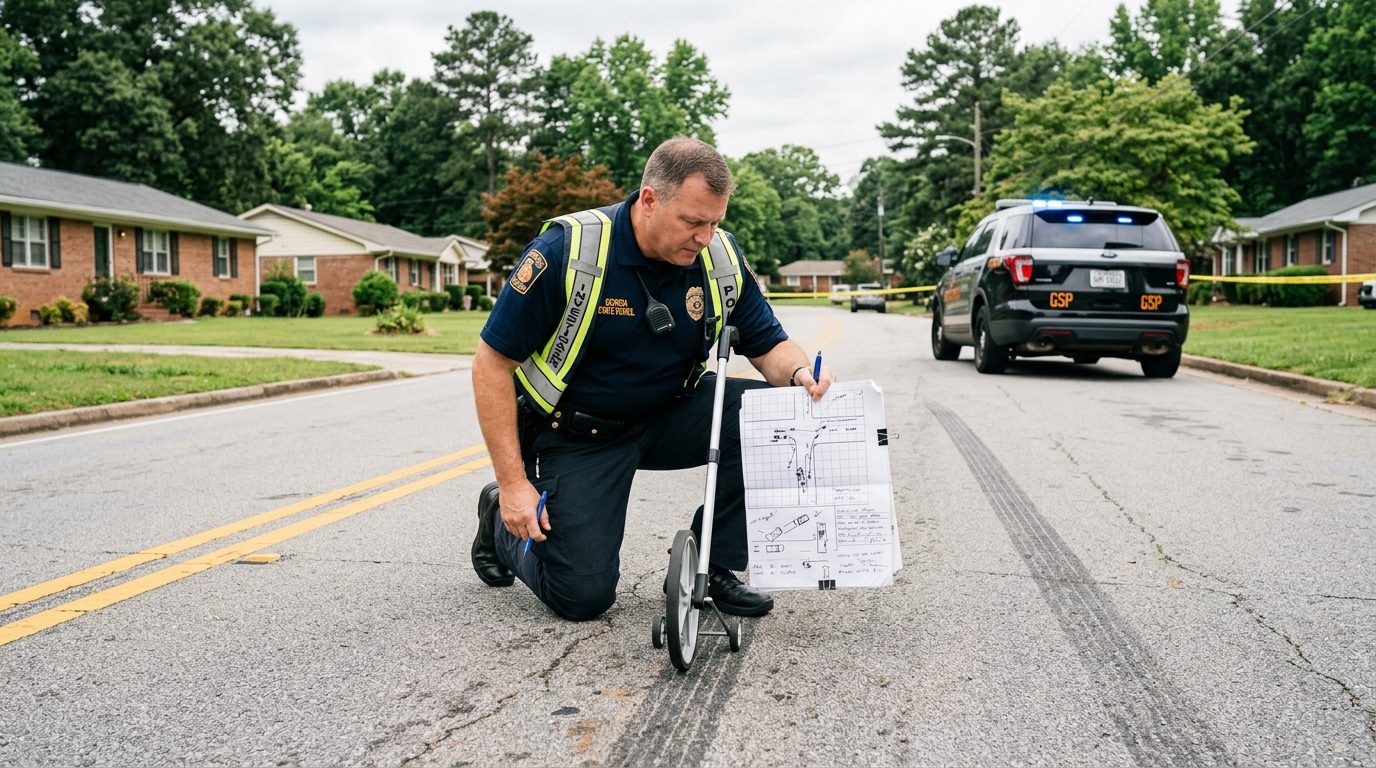
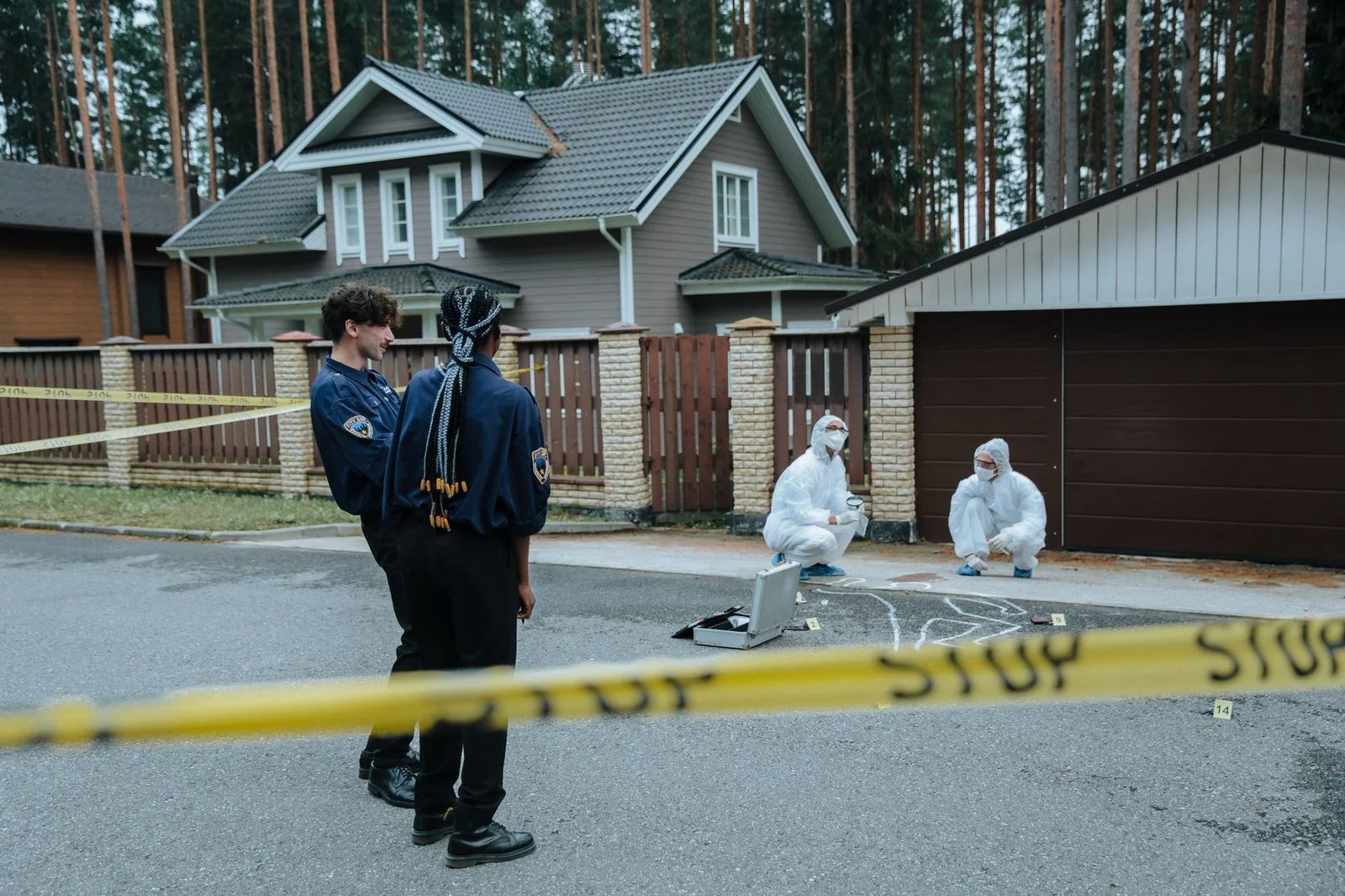
Scene work comes first, and it usually moves the fastest. Officers secure the area and start documenting it right away.
Investigators measure and photograph the roadway. They note where each vehicle stopped, look for debris and skid marks, and take statements from witnesses. Those details fade quickly, so they matter.
In serious cases, investigators may bring in crash reconstruction. That means a detailed study of speed, direction, and the order of events, built from measurements and physics. It takes longer than the scene work.
The written crash report usually comes after the scene work is done. You may need to request your own copy, so write down the report number from the start.
Not sure what your next step is?
Talk it through with our team — the first consultation is free, confidential, and carries no obligation.
How long do car crash investigations take?
The honest answer is that the time depends on the facts. No set number of days fits every crash.
A simple crash usually moves faster. One clear cause, a few vehicles, and witnesses who agree all help. A crash with many vehicles or disputed facts takes longer to sort out.
A death adds steps. The medical examiner, the official who determines cause of death, must finish that work. Toxicology tests on blood samples can wait in a lab queue, and reconstruction adds more time.
Does the police report decide who was at fault?
No. The police report records what officers found. Georgia’s Department of Public Safety crash investigation policy says troopers look at whether traffic laws were violated. It does not establish that police or insurers make the final call on civil fault. Fault in your family’s claim is a separate question.
What slows the investigation down
Autopsy and toxicology results take time, and lab queues add to the wait. Those results shape the official cause of death and the record investigators build.
Trucks carry an engine control module (ECM), a computer that logs how the vehicle was running. Many trucks also keep driver-log data. Investigators may need to download and preserve that data before it is lost.
E-bikes and other small vehicles often store little or no data. The investigation then leans on the scene, witnesses, and physical marks like scrapes, tire tracks, and paint.
Terance Madden trained as an electrical engineer, with a B.S. in Electrical Engineering, before law school. He starts a case by asking what the evidence shows, how the crash happened, and which records must be preserved. That habit matters most with ECM and driver-log data, because those records can disappear if no one asks for them in time.
How long after a crash does it need to be reported?
Georgia law requires the driver to report a crash with injury, death, or property damage of $500.00 or more right away, by the quickest means available. Inside a city, that notice goes to the local police department. Outside a city, it goes to the county sheriff or the nearest state patrol office. See O.C.G.A. § 40-6-273.
Late notice can make the scene harder to read and the record harder to build. Get the report number early and keep it with every call and letter.
Is it hard to prove a hit-and-run?
A hit-and-run usually takes longer, because investigators must first find the other vehicle and driver. Proof comes from the clues they can collect.
Investigators look for the other vehicle, traffic and business cameras, paint transfer, broken parts, debris, and witness accounts. Each clue can point to a make, model, or color.
The family can help. Write down what you remember: the time, the road, the direction of travel, and any description of the vehicle. Send that account to the investigating agency in writing, and keep a copy.
How the investigation timeline affects the insurance claim
Big Insurance is not on your family’s side. Its first offer is rarely what a claim is worth, and an early offer often arrives before the facts are known.
Expect tactics. A quick, low offer. A recorded statement requested before you have the crash report. Delays in paying bills. Disputes over whether treatment was needed. “Low impact” arguments that say the crash could not have caused serious harm.
Georgia law sets some ground rules. See O.C.G.A. § 9-11-67.1. It does not set what a claim is worth.
The response is to pursue every layer of coverage. That includes the at-fault driver’s liability policy, your uninsured and underinsured motorist (UM/UIM) coverage, any umbrella or excess policy, and corporate coverage when a business is responsible. The full lifetime cost of the loss counts. Under O.C.G.A. § 51-12-2, general damages are presumed, while special damages must be proved. Before law school, Terance Madden trained as an electrical engineer, so he starts a case by asking what the evidence shows and how the crash happened.
Not sure what your next step is?
Talk it through with our team — the first consultation is free, confidential, and carries no obligation.
While the investigation is open, keeping the family’s records
Keep one written log. It keeps the facts straight when the calls start.
The person handling those calls, often a spouse, mother, or adult daughter, should keep it. Record the crash report number, the investigator’s name, the dates of calls, medical visits, bills, and every letter from an insurer. Save photos, texts about the crash, and any phone records you can get.
Medical records need a formal request. For a deceased patient, Georgia law lists who may ask: the executor or administrator if one has been appointed, then the surviving spouse, then a surviving child, then a parent. See O.C.G.A. § 31-33-2.
A wrongful death claim is a separate step. Under O.C.G.A. § 51-4-2, a surviving spouse, or a child if there is no spouse, may recover the full value of the decedent’s life, as shown by the evidence.
Your family has carried a lot together. A clear, steady record can lighten one more load.
Waiting on the police report? Talk with us about your family’s crash
You may be waiting on answers while you hold your family together and wonder what comes next. That is a hard place to stand.
If the crash was someone else’s fault and the investigation is still open, you don’t have to sort out the crash report, the records, and the insurance calls alone. Terance Madden, the firm’s responsible lawyer, can walk through what those pieces may mean for your family. The firm has offices in Jonesboro, Atlanta, Decatur, Macon, and Augusta.
The first consultation is free, confidential, and carries no obligation to continue. Start a free case evaluation when you’re ready.

Frequently Asked Questions
How long does it take police to investigate a fatal crash?
There is no set timeline. Many fatal crash investigations take several weeks to several months, and complex cases can take longer.
Why do fatal crash investigations take so long?
Investigators measure the scene, collect vehicle data, interview witnesses, and wait on medical and lab results. Engineering analysis of crash physics and vehicle data can add months, so a thorough investigation is rarely quick.
When can the family get the crash report?
Families usually have to wait until the investigating agency finishes its work. Ask that agency how to request the report once it is available.
Should the family talk to a lawyer while the investigation is still open?
Yes, because vehicle data and video can be lost while the investigation is open. The firm’s first consultation is free, confidential, and carries no obligation to continue, and Terance Madden, who trained as an electrical engineer, starts by asking what the evidence shows.