

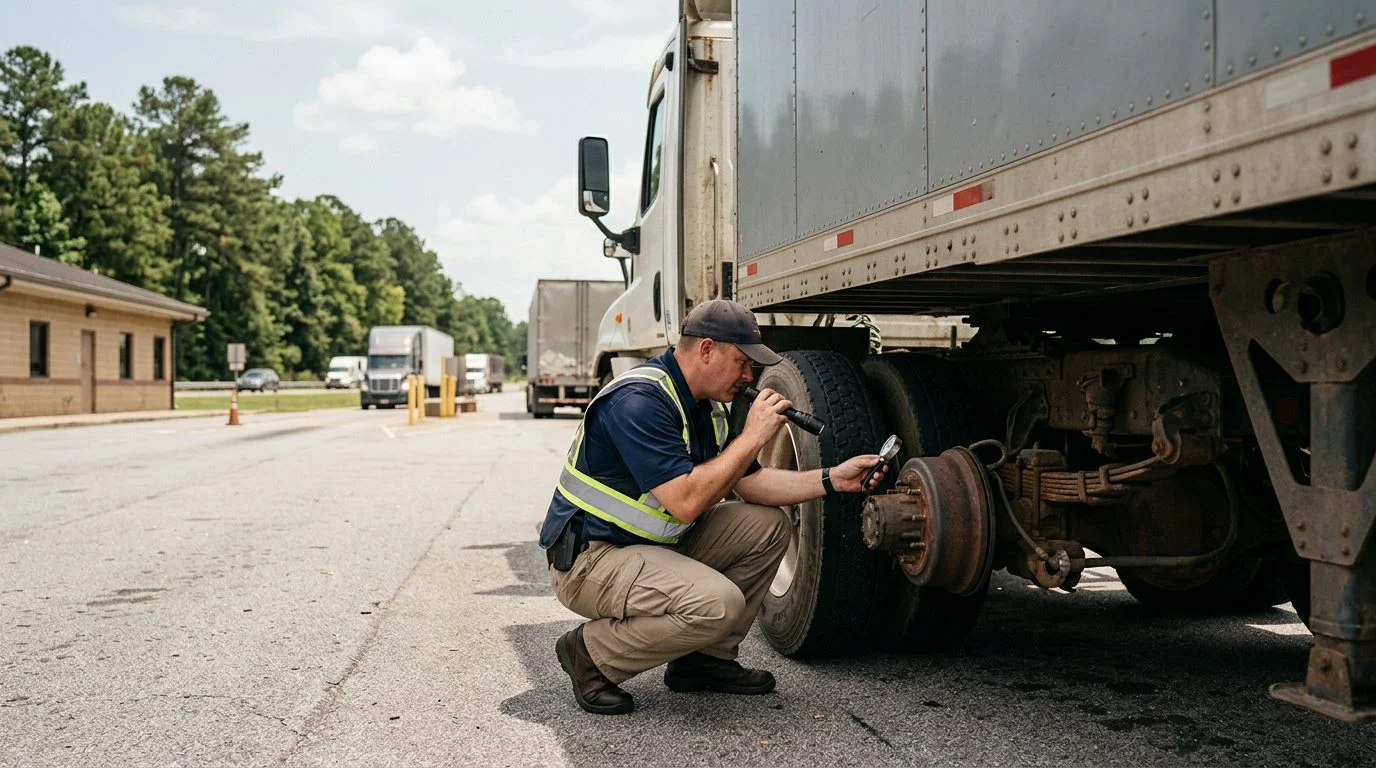
Truck crash · Georgia
Hurt in a truck crash? Think before you give a recorded statement.
The insurance adjuster on the phone may sound friendly and brief. Know what you are agreeing to before you speak on tape.
T. Madden & Associates, P.C.
1999
Practicing law since
5
Offices: Jonesboro, Atlanta, Decatur, Macon, Augusta
By Terance Madden · Published November 18, 2026
A truck crash can leave you hurt, sore and buried in phone calls. The next call may ask you to talk on the record.
Here is why that matters and what to do next.
The Short Answer: No, You Are Not Required to Give One
The request usually sounds friendly. The adjuster says the company just wants to hear your side. The call starts before you have had time to think.
It is often recorded with little warning. It can come days after the crash, while you are still on pain medicine and your head is foggy.
Anything you say on that call can be kept. It can be played back and quoted later, often out of context. Your exact words become part of the insurer’s file.
You can say no. A simple line works: “I’m not giving a statement right now. Please send your request in writing.”
Talking with our team first is the smarter move. We can review the crash, the medical picture and the truck records before anyone asks you a question on tape.
If an insurer is asking you for a recorded statement after a truck crash, you don't have to face that call alone. Reach out to T. Madden & Associates, P.C. for a free, confidential consultation. Talk it through with our team — the first consultation is free, confidential, and carries no obligation.
What a Recorded Statement Is and Why Big Insurance Wants One
A recorded statement is a taped question-and-answer session. The insurer keeps the audio and a written transcript in its claim file.
The goal is simple. Big Insurance wants your account locked in before the full picture exists. That means before the medical records arrive, before the truck’s data is pulled and before a doctor says what your care will cost.
The questions sound easy. How fast were you going? Where were you looking? Did you feel fine after? Each answer becomes a fact in the file, even when you were only guessing.
Big Insurance adjusters often ask for a statement within days of a crash. That timing matters, and it can affect how the insurer values the claim. In a truck crash, the company is already building its own file. You should not be building yours alone on a recording.
How Early Words Get Used to Shrink a Claim
Early words are how a claim gets cut down. Here are the tactics you are likely to see.
The quick low offer. An insurer’s first offer is rarely what a claim is worth. It often arrives before the full extent of your injuries is known, and it is built to close the file.
The “low impact” argument. The insurer may call the truck crash minor because the vehicle photos looked small. Serious injuries can happen even when the damage looks ordinary. A casual “it wasn’t that bad” can become the center of that argument.
The “I’m fine” problem. Many people say “I’m fine” to be polite or to avoid sounding weak. Later, those same words get used to argue the pain did not come from the crash.
Prior injuries. Questions about old back pain or past treatment are used to dispute which symptoms came from this crash. A truthful answer about the past can be twisted into a claim that the injury already existed.
Fault. Georgia uses comparative fault, which means shared fault. Under O.C.G.A. § 51-12-33, a plaintiff who is 50 percent or more responsible for the injury cannot receive any damages. A guess about your own speed can be used to push your share of the blame higher.
What to Do Instead: Handle Every Insurer Contact in Order
Decline the recorded statement, put every request in writing, and keep one file that tells the story.
- Say no to the recorded statement. Ask the insurer to send the request in writing.
- Keep a call log. Write the date, time, caller’s name, what was asked and what was said. A spouse, mother or adult daughter managing the recovery can keep this log. It gives the family one clear record of every contact.
- Keep one folder. Put medical visits, bills, photos, the crash report and every letter from the insurer in it.
- Do not sign a release or take a quick check without advice. A release can end the claim for good.
- Route insurer contact through a lawyer. That keeps your words from being used out of context.
Georgia also sets rules for written settlement offers in motor vehicle claims. A written request for clarification is not treated as a counteroffer.
The Trucking Company’s Side: Black Box Data and Its Own Negligence
The engine’s electronic control module (ECM) and any black box data can show speed, braking and hours on the road. Those facts can confirm or contradict what the driver or the company says later.
Federal post-accident testing rules also require the employer to keep records when a test is delayed past set time limits. Delays and gaps are part of the timeline.
Before law school, Terance Madden trained as an electrical engineer. Before law school, Terance Madden trained as an electrical engineer, so he starts a case by asking what the evidence shows and how the crash happened. In a truck case, he starts by asking what the data shows, how the crash happened and which records must be preserved now.
The firm calls five employer claims The Negligent Five: hiring, training, supervision, retention and entrustment. The Georgia Supreme Court has held that claims for negligent hiring, training, supervision and retention are based on the employer’s own negligent acts. In Quynn v. Hulsey, the court explained that claims for negligent hiring, training, supervision, and retention are based on the alleged negligent acts of the employer. Under Quynn v. Hulsey, negligence claims against an employer for hiring, training, supervising, or retaining a driver rest on the employer’s own alleged negligent acts. Georgia’s Court of Appeals has said an injured person may bring a claim for negligently training an employee, as stated in Beasley v. A Better Gas Co.
Every Coverage Layer Matters: Liability, UM/UIM, Umbrella, Excess and Corporate
More than one insurance policy may pay for your injuries. A first offer from one policy is not the end of the story.
- Liability coverage on the at-fault driver’s policy.
- Liability coverage carried by the trucking company.
- Umbrella and excess policies, which sit above the primary limit.
- Corporate policies the company holds for its own exposure.
- Your own uninsured and underinsured motorist (UM/UIM) coverage. UM applies when the at-fault driver has no insurance. UIM applies when the at-fault coverage is too small to pay your losses.
The firm pursues every layer that applies. It also looks at the full lifetime cost of the injury, including future care and lost work, not just the first bill. The firm prepares each case as if it may go to trial.
The firm handles these cases on a no-fee-unless-we-win basis. You may still be responsible for court costs and case expenses.
Not sure what your next step is?
Talk it through with our team — the first consultation is free, confidential, and carries no obligation.
Deadlines to Know: Notice to Your Own Insurer and Georgia’s Filing Window
Georgia generally gives two years to file a personal injury lawsuit. Under O.C.G.A. § 9-3-33, actions for injuries to the person must be brought within two years after the right of action accrues, except as otherwise provided in this article, such as one year for injuries to reputation and four years for loss of consortium. The statute also lists exceptions, so ask about your own deadline early.
Family claims after a fatal crash can follow different timing. Ask about those rules early, too.
Your own auto policy usually has a notice clause. It asks you to report a crash promptly. Read that clause now and give your insurer the notice it requires.
Waiting also makes proof harder to find. Truck records can be lost if no one asks for them early. Witnesses move, and scene details fade. That is one reason to act early.
Talk to the Firm Before You Talk to Their Insurer
If a truck crash has left you hurt and the insurer wants a statement, slow that call down.
You may now be the one handling the phone, the appointments and the bills. That is a lot to carry alone. Our team can handle insurer contact while you focus on getting better.
Before you give any recorded statement, start with a free case evaluation. The first consultation is free, confidential and comes with no obligation to continue.
Terance Madden is the responsible lawyer for this page. He has been in practice since 1999, with offices in Jonesboro, Atlanta, Decatur, Macon and Augusta.
Frequently Asked Questions
Do I have to give a recorded statement to the trucking company’s insurer after a truck crash in Georgia?
Big Insurance adjusters often ask for a recorded statement early, while the facts are still unclear.
Why is a recorded statement risky after a truck crash?
Your words can be picked apart later. Off-hand answers about your pain, your prior health, or how fast you were going can be used to argue the crash was minor or your injuries were not caused by it.
Should I talk to a lawyer before I speak with the trucking company’s insurer?
Yes. The insurer works for its own side, and a lawyer can handle those calls for you. T. Madden & Associates, P.C. offers a free, confidential first consultation with no obligation to continue, so call if you were hurt in a truck crash that someone else caused.
Can a lawyer handle the insurance calls for me after a truck crash?
In most cases, yes. Terance Madden, the firm’s responsible lawyer, trained as an electrical engineer, so he can help review truck data, such as the engine control module (ECM) and driver logs, that may show what the truck was doing before the crash.
Related practice areas
- E-Bike Accident Lawyer in Georgia
- E-Bike Accident Lawyer in Clayton County
- Who Else Is Liable in a Battery Fire If the Maker Is Gone?