

Motorcycle and E-Bike Injuries in Georgia
Hurt in a Bike Crash? Get Checked Now, Then Call Us.
Adrenaline can hide serious injuries, so a doctor's exam comes first. Our team helps Georgia riders understand what to do next.
About T. Madden & Associates, P.C.
Since 1999
Representing injured people in Georgia
Free
First consultation, confidential and with no obligation
24/7
Call us any time
By Terance Madden · Published November 13, 2026
You’re sore, your bike is on the pavement, and you’re wondering if the hospital is overkill. Should I go to the hospital after a bike accident? Yes. Get medical care the same day, even if you feel fine.
Some injuries don’t show their full effect right away. This guide covers why, what to do at the scene, the Georgia deadlines that apply, and how the insurance industry responds to riders who wait.
The Short Answer: Yes, Get Checked Even If You Feel Fine
Go to an emergency room or urgent care clinic the same day. Feeling okay at the scene isn’t the same as being okay. Adrenaline is strong after a crash, and it can hide pain for a while.
Tell the doctor exactly how the crash happened. Say whether you hit the ground, hit your head, or were thrown from the bike. Those details help the doctor decide which tests to run.
A medical visit also creates a record. The chart shows what you reported, what the doctor found, and the date and time you were seen. That record links your injuries to the crash. Without it, the other side can argue your injury came from something else, or came later.
Waiting creates the same problem. A gap between the crash and your first visit gives the other side a reason to question how serious the injury was. Get seen early, then keep every follow-up the doctor sets.
If someone you love is still sore after a bike crash, and you're the one juggling the bills and appointments, you don't have to work out the next steps alone. Talk it through with our team — the first consultation is free, confidential, and carries no obligation.

Injuries That Hide After a Bike Crash
Many serious bike crash injuries don’t look serious at the scene. These are the ones that tend to surface later.
Head and brain injuries. A concussion is a brain injury caused by a blow or a hard jolt. Headache, confusion, nausea and memory trouble can show up after the crash, not right away. Mention any of them to your doctor, even if they seem small.
Internal bleeding. Bleeding inside the body can happen without an open wound. Vital signs such as pulse and blood pressure can look normal for a time. A rider who looks fine still needs a medical check.
Spinal injuries. Numbness, tingling or weakness in an arm or leg is a reason to get seen right away. Don’t write it off as a bruise or a stiff back.
Road rash. Road rash is more than a scrape. Asphalt and gravel can push dirt and debris into the skin. Infection is a real risk, and deeper tissue can be hurt too.
Broken bones. A fracture can change your work, your sleep and your daily routine for a long stretch. Follow the treatment plan the doctor gives you, and keep the paperwork.
What to Do at the Scene and at the Hospital
Get checked, report the crash, and keep your statements short and factual. Georgia law puts specific duties on the driver who hit you, and you should know them.
Georgia law requires the driver of a vehicle in a crash with injury to notify police immediately. Inside a city, that means the local police. Outside one, it means the county sheriff or the nearest state patrol office. If the other driver doesn’t make that call, make it yourself or ask a bystander to. O.C.G.A. § 40-6-273
Your checklist:
- Check for injuries before you move. Ask first responders to check your head, neck and back.
- Get the other driver’s name, address, registration number and insurance details.
- Photograph the bike, the vehicles, the road and your injuries.
- Tell the doctor every symptom, even minor ones, and ask that each one go in the chart.
- Don’t argue fault at the scene. Don’t give a recorded statement (a taped interview an insurer may use later) before talking with a lawyer.
Write down what happened while it’s fresh. Names, times and street names fade fast.
Hit-and-Run Crashes and Who Is at Fault
A hit-and-run driver can still leave you with a claim. Fault comes down to the facts of what each person did.
Next, check your own auto policy. Georgia law requires auto liability policies to include uninsured motorist coverage (UM) unless the named insured rejects it in writing.
Fault examples include a driver who failed to yield, a car door opened into your path, or a road hazard. The other side may look for any fault on your side, so be ready for that.
Georgia uses comparative fault (shared fault). Your damages are reduced by your share of fault. If you are 50 percent or more responsible, you can’t recover any damages. O.C.G.A. § 51-12-33
Georgia’s avoidance rule works differently. If you could have avoided the harm with ordinary care, you can’t recover for it. The rule has limits. O.C.G.A. § 51-11-7
How Long You Have to Report and File
Georgia gives most injury lawsuits two years. Report the crash to police immediately, as covered above, and tell your own insurer promptly. Delays make a crash harder to prove.
Georgia’s main injury deadline is two years after the right of action accrues (the legal point when your claim starts). O.C.G.A. § 9-3-33 The statute begins with “except as otherwise provided,” so other deadlines can apply in some cases. Check the clock early.
A spouse’s claim for loss of consortium (the loss of a partner’s companionship and support) has four years under the same statute.
Keep every medical bill, receipt and work record from day one. Missing paper is hard to replace, and gaps in paper help the other side.
How Big Insurance Uses a Gap in Treatment
Big Insurance often uses a gap in treatment to argue your injury isn’t serious. Big Insurance means the insurance industry as a whole, and the insurer is not on your side.
Expect a few familiar tactics:
- A low first offer, made before anyone knows the full medical picture.
- A request for a recorded statement, often early in the process.
- Delays, which can wear down someone who needs money now.
- Disputes over treatment, such as calling tests or visits unnecessary.
- A “low impact” argument, which says the crash looked minor, so the injury must be minor.
An insurer’s first offer is rarely what a claim is worth. The response is to build the full medical record and pursue every coverage layer. That includes liability coverage from the at-fault driver, your own UM coverage, any corporate or employer policy that applies, and any umbrella or excess policy (extra liability coverage above a standard policy, or coverage that starts above another policy’s limit), though the required UM coverage excludes umbrella or excess liability policies unless the policy or a policy endorsement affirmatively provides for them. The firm also looks at the full lifetime cost of the injury and prepares the claim as if it may go to trial.
Georgia law separates special damages (provable costs like medical bills and lost pay) from general damages (losses the law presumes flow from the wrong). Special damages must be proved. O.C.G.A. § 51-12-2
If a provider treats you under a letter of protection (a promise to be paid from any settlement), that letter and the itemized charges can be requested as evidence. O.C.G.A. § 51-12-1.1 Some providers may also file a lien, which is a claim against your settlement for unpaid care.
Not sure what your next step is?
Talk it through with our team — the first consultation is free, confidential, and carries no obligation.
Evidence That Shows How the Crash Happened
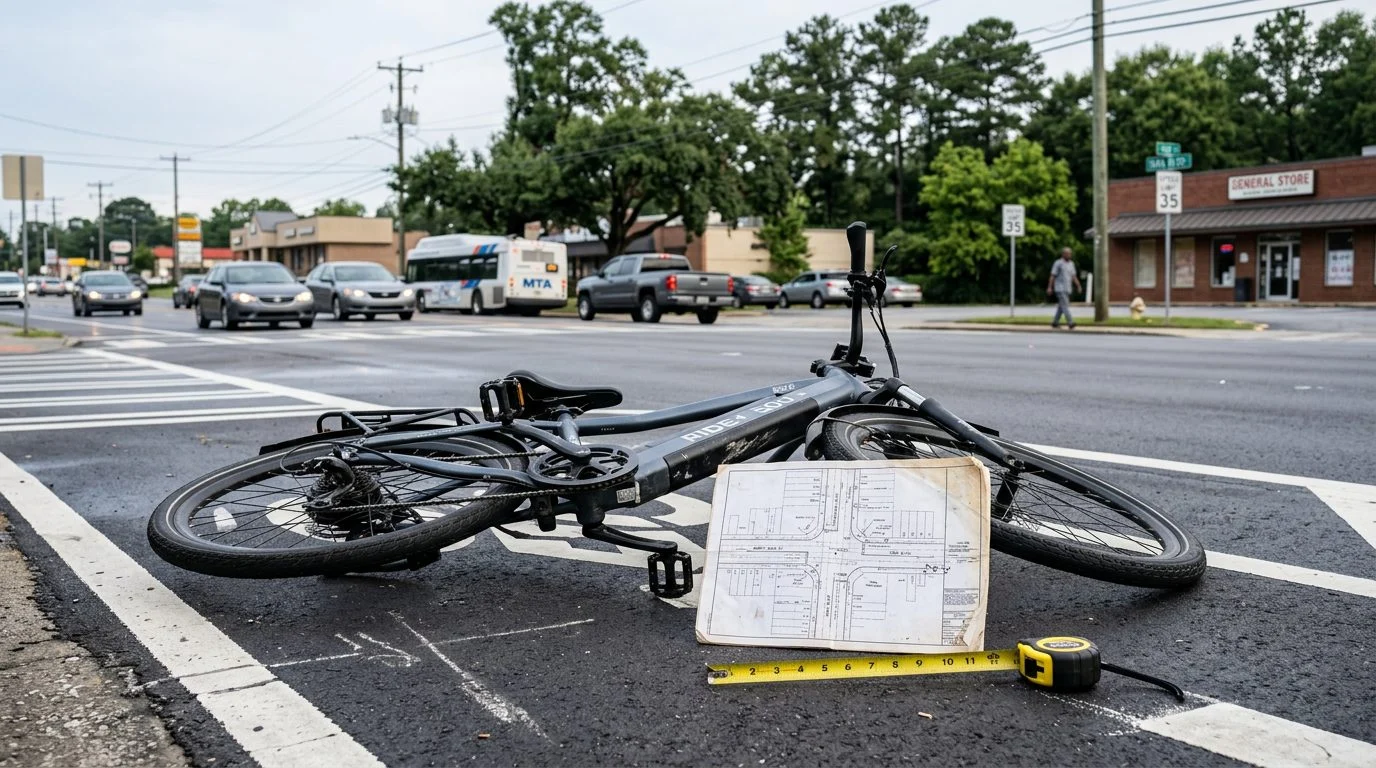
The bike, its parts, the photos and the medical chart are the evidence that shows what happened. On an e-bike, the battery, brakes and wiring can matter a great deal. A brake that failed or a repair that was done wrong can point to a maker, a repair shop or a parts seller. Each of those may carry its own insurance, which can mean more coverage for your claim. Keep the bike as it is, and don’t repair, sell or toss it until a lawyer has seen it.
He starts a case by asking what the evidence shows and how the crash happened. For a bike or e-bike, that means reading how a brake, a battery or an impact connects to the injuries in the chart, and which records must be preserved before they’re lost.
If You Are Managing Someone Else’s Recovery
If you’re managing a family member’s recovery, Georgia law may let you request their medical records. If your family member named you in an advance directive for health care, a psychiatric advance directive, or a durable power of attorney for health care, you can make a written request for a complete and current copy of the chart. The provider must furnish it within 30 days of receiving the request, with a HIPAA authorization (the federal health privacy form) and a signed written authorization, unless the provider reasonably determines that disclosure to the patient would be detrimental to the patient’s physical or mental health; in that case it may refuse to furnish the record to the patient, but upon written request by the patient, the record must be furnished to any other provider the patient designates. O.C.G.A. § 31-33-2
You may be the one at the bedside, paying bills and deciding whether to ask for a second opinion or more tests. That’s a heavy job, and you’re doing it in the middle of something your family didn’t choose. Write down what the care team tells you, and keep the papers in one place.
The firm, in practice since 1999, has offices in Jonesboro, Atlanta, Decatur, Macon and Augusta. It works on a no-fee-unless-we-win basis, but you may still be responsible for court costs and case expenses. Your first consultation is free and confidential, with no obligation to continue.
If you’re carrying this for someone you love, start with a free case evaluation and talk through what the crash may mean for them.
Frequently Asked Questions
Should I go to the hospital after a bike accident?
Yes. Get checked by a doctor even if you feel fine, because head, neck and internal injuries can take hours or days to show symptoms.
Why should I see a doctor if I don’t feel hurt?
Adrenaline can hide pain right after a crash. A medical record made soon after the crash also documents what your injuries are, which matters if you later need to show what the crash caused.
What if a driver caused the crash and then left the scene?
You may have a claim against that driver, so tell the medical team exactly how the crash happened. Keep your bike, helmet and clothing, and write down everything you remember while it is fresh.
Should I talk to the other driver’s insurance company before I see a doctor?
Not before you get medical care. Big Insurance adjusters may ask for a recorded statement and push a quick offer, and a first offer is rarely what a claim is worth. T. Madden & Associates, P.C. offers a free, confidential first consultation with no obligation to continue.