

Georgia E-Bike Crash Guidance for Parents
Your Teen Was Hurt in an E-Bike Crash. Here's What to Do Next.
A calm, step-by-step plan for Georgia parents facing medical bills, insurance calls and questions about who pays.
Where the firm works
1999
In practice since
5
Georgia offices
24/7
Call us anytime
By Terance Madden · Published November 13, 2026
Your teen was hit while riding an e-bike, and now you’re juggling doctors, school and insurance calls. Your family has real legal options in Georgia. The first steps are protecting the proof and not signing anything until a lawyer has looked at it.
This page covers what the parent running a teen’s recovery needs to know: who holds the claim, how the time limits work, which insurance layers may pay, and how Big Insurance tends to respond.
Your teen was hurt. Here is what the family can do first.
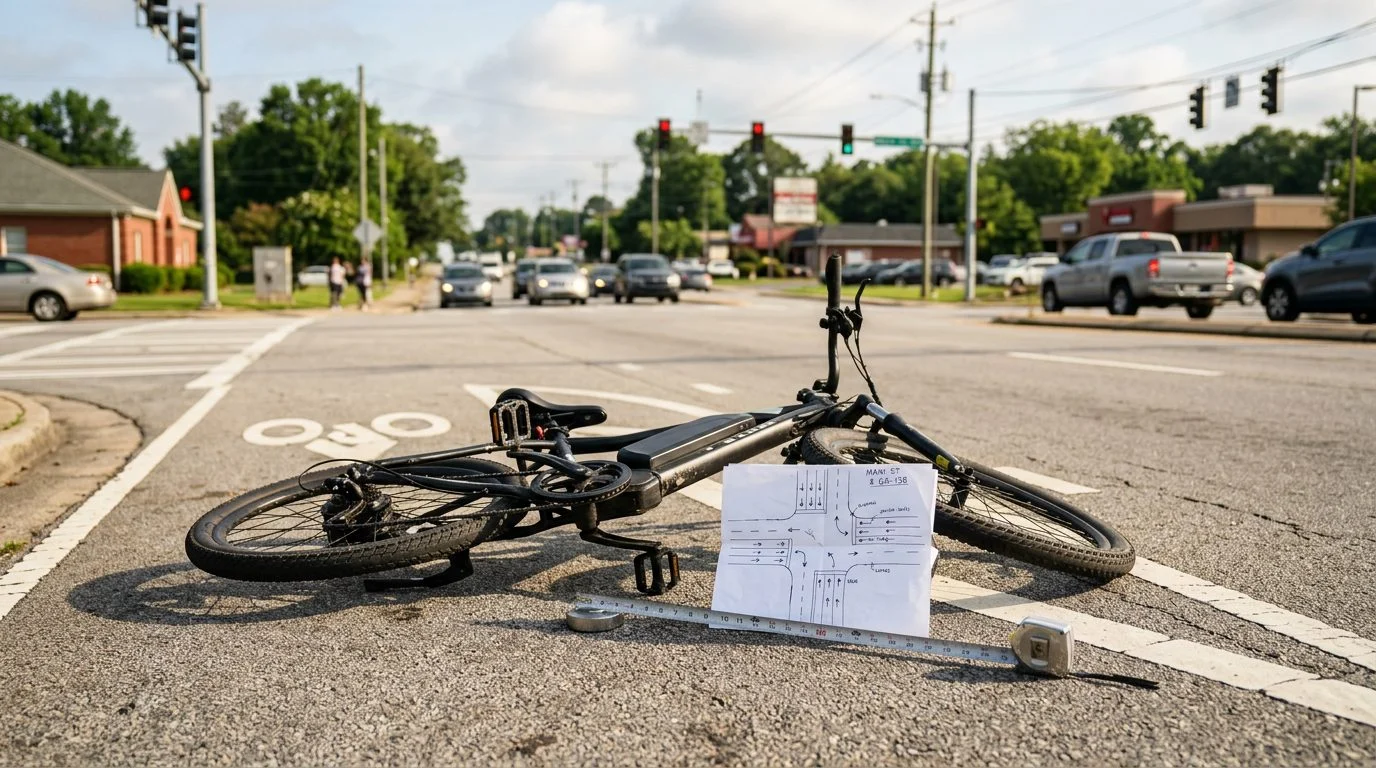
Start by protecting the proof. Keep every medical record, bill and receipt in one place. Take photos of the e-bike, the scene and any damage to the bike’s parts.
Write down the names of witnesses and any police officer who responded, along with the report number. Save texts and social media posts about the ride. The other side may ask for them later.
Keep a simple log of symptoms, missed school days and appointments. Memory fades fast. A log shows how the injury changes over time, and a teen’s recovery can last months.
Be careful with phone calls. An insurance adjuster may ask for a recorded statement early, often within days of the crash. Your teen may be scared, sore or on medication. A quick answer can be used later to shrink the claim. Politely say a lawyer will call back.
If your teen was hurt in an e-bike crash that someone else caused, you may have a claim, and our team can walk your family through it at a free, confidential first consultation. Talk it through with our team — the first consultation is free, confidential, and carries no obligation.

Who holds the claim for a child in Georgia
A child’s crash case often has more than one part. A claim is your legal request for money to repay the harm the crash caused.
The first part is the teen’s own injury: the pain, the fear, the lost activities and any long-term effects. The law calls these general damages, which the law presumes flow from a harmful act and do not need a dollar amount proved. Special damages are different. They are actual losses, like hospital bills, therapy and medication, and they must be proved.
Georgia law also says special damages for medical and healthcare expenses from an injury are recoverable only as provided in this Code section, and are limited to the reasonable value of medically necessary care, treatment, or services. Rides to appointments and other costs the family pays can belong in that count.
The person running the recovery has to track both parts. Keep the bills, the mileage and the notes together. That picture is what the case is built on.
Time limits: the clock and what it means for a minor
Georgia generally gives two years to file an injury lawsuit, and that clock is the one to watch. Under O.C.G.A. § 9-3-33, actions for injuries to the person must be brought within two years after the right of action accrues.
A teen’s own timing works differently. Under O.C.G.A. § 9-3-90, a person under 18 when the claim arises gets the same time to sue after turning 18 that other people get. The statute also has exceptions.
Do not plan around a future birthday. The exceptions are the kind of detail a lawyer should check against your teen’s facts.
Waiting for a final medical picture can use up months. An early look at the facts is the best way to keep that clock under control.
Who may be responsible, and every insurance layer that may pay
More than one party may share responsibility, and more than one insurance policy may pay. The driver who turned across the teen’s path, passed too close or opened a door is the first place to look. In some cases, the party responsible for a dangerous road condition may also share fault.
The at-fault driver’s liability coverage is the first layer. Your family’s own auto policy may be the second. Georgia auto policies may include an uninsured motorist endorsement that can pay for bodily injury from an uninsured or underinsured driver. A named insured can reject that coverage in writing, and the policy’s terms decide whether it applies.
Umbrella and excess policies can add a layer above basic limits. Household policies may also apply. The firm checks each layer, because one policy rarely tells the whole story.
Before law school, Terance Madden trained as an electrical engineer, so he starts a case by asking what the evidence shows and how the crash happened. He starts an e-bike case the way an engineer starts a problem: what does the evidence show, how did the crash happen, and which records must be preserved right away. For e-bike crashes, that can mean the battery, controller and brakes, the speed and sight lines at the scene, and whether a part failed.
How the other side may argue the teen’s own choices
Georgia reduces a claim by the injured person’s share of fault. It bars recovery entirely at 50 percent or more. Under O.C.G.A. § 51-12-33, the fact-finder (the jury, or the judge if there is no jury) sets the injured person’s percentage of fault. The judge then reduces the award by that percentage. At 50 percent or more, the injured person cannot receive any damages.
Expect the other side to point at helmets, lights, riding on a road instead of a path, and speed. Those points are arguments, not verdicts. Each one has to be checked against the facts.
The same statute says the fact-finder must consider everyone who contributed to the harm. That includes people who were never named in the suit. A teen’s choice is not the same as a crash the driver caused, and the evidence should show which is which.
Crash physics answers guesses with measurements. Speed, distance, sight lines and reaction time can show what a driver could have seen and when. That is the kind of proof that moves an argument off opinion and onto evidence.
What Big Insurance will do, and how the family responds
Big Insurance is not on your family’s side. A first offer is rarely what a claim is worth.
Expect a quick, low offer made before the full medical picture is known. Expect a recorded statement request, records requests that take time to complete, and disputes over whether a treatment was needed. Expect a “low impact” argument that says a bike at low speed could not cause real harm. These are tactics, and they are predictable.
When an offer to settle an injury claim from a motor vehicle collision is prepared with a lawyer’s help, Georgia requires it to be in writing from the time a cause of action accrues until the filing of an answer by the named defendant (or, with multiple named defendants, until all of them have filed their initial answers or been found in default). It must spell out its material terms, including a payment date at least 40 days after receipt (O.C.G.A. § 9-11-67.1). The recipient may ask for written clarification about releases, liens and medical bills.
Georgia also limits medical expense damages to the reasonable value of medically necessary care. The fact-finder decides that amount (O.C.G.A. § 51-12-1.1). Records and treatment decisions matter here.
The response is to pursue every coverage layer, track the teen’s needs over time and prepare the case as if it will go to trial. A settlement that ignores future care does not cover the full cost of the injury.
Not sure what your next step is?
Talk it through with our team — the first consultation is free, confidential, and carries no obligation.
Costs, and a clear next step for your family
The firm works on a no-fee-unless-we-win basis, but the client may still be responsible for court costs and case expenses.
The firm has practiced since 1999 and works from offices in Jonesboro, Atlanta, Decatur, Macon and Augusta. Terance Madden leads the firm, and our team handles the paperwork, the calls and the deadlines.
If your teen was hurt in an e-bike crash that someone else caused, you may have a claim. Our team can walk your family through the options, the deadlines and the insurance layers in a free case evaluation. The first consultation is free, confidential and comes with no obligation to continue.
Frequently Asked Questions
What should I do first if my teen was hurt in an e-bike crash in Georgia?
Get your teen medical care right away, even if the injuries look minor. Keep the e-bike, its battery and charger, and every photo, bill, and record, then call T. Madden & Associates, P.C. for a free, confidential first consultation with no obligation to continue.
Can a parent file a claim for a teen hurt in an e-bike crash in Georgia?
In most cases, a parent brings a minor child’s injury claim on the child’s behalf. A lawyer can explain who may be responsible, such as a driver or a property owner, and what the crash has cost your family.
Who pays for a teen’s medical bills after an e-bike crash?
Coverage depends on who caused the crash and which policies apply, including the at-fault party’s liability insurance (coverage that pays for harm a policyholder causes) and your family’s own uninsured motorist coverage. Big Insurance often makes a low first offer, and that offer is rarely what a claim is worth.
How long does a family have to file a claim after a teen’s e-bike crash in Georgia?
Georgia’s statute of limitations, the legal deadline to file a lawsuit, is generally two years from the date of injury, but a minor’s situation can differ and other deadlines may apply. Do not wait to get the timing checked.