

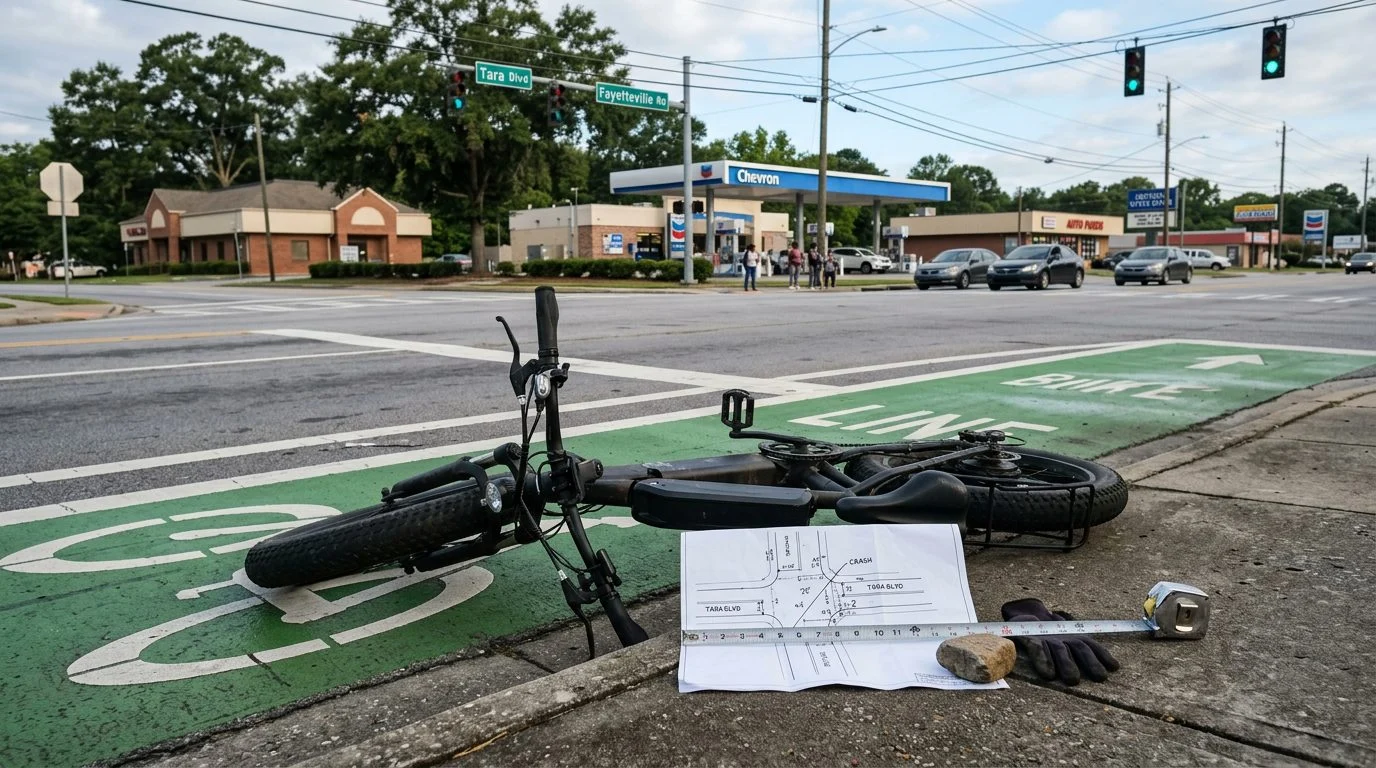
E-Bike Crash Injuries | Georgia
Hospital Bills After an E-Bike Crash? Know Where the Money Can Come From
Bills can pile up while you recover. Here is how families in Georgia pay them and what to do before you sign anything.
T. Madden & Associates, P.C.
1999
Year the firm began practice
5
Georgia offices, including Jonesboro and Atlanta
By Terance Madden · Published November 21, 2026
Who Pays Hospital Bills After an E-Bike Crash in Georgia?
A crash on an e-bike can leave a family holding hospital bills before anyone has said who pays them. That is a lot to carry at once.
Who pays hospital bills after an e-bike crash in Georgia? After an e-bike crash, your health insurance is often the first bill to be paid. Whether other coverage joins in depends on who caused the crash.
Not sure what your next step is?
Talk it through with our team — the first consultation is free, confidential, and carries no obligation.
Hospital Bills Usually Come From Several Sources, in a Set Order
Hospital bills usually get paid from several sources, one layer at a time. Each layer has its own paperwork and its own timing, so missing one step can slow the next.
- Health insurance. This is usually where the bills start.
- Medical payments coverage on a household car policy, if one applies.
- Liability insurance, the coverage that pays for harm an at-fault person causes. It is pursued through a claim or a settlement.
- Uninsured or underinsured motorist coverage, which is your own policy’s coverage for a driver with no insurance or not enough.
Which source pays first depends on the facts of the crash and the policies involved. A bike crash with no car changes this list. We cover that case later on this page.
Health Insurance Is Often Where the Bills Start
Your health plan is usually the first place the hospital bills go. That includes emergency room care, hospital stays, and follow-up treatment, all subject to the plan’s terms.
A health plan may later ask to be repaid from a settlement or judgment. Plans set their own rules, so read every letter they send.
Georgia law also looks at what your plan actually pays. Under Georgia’s medical expense rules, when the injured person has health insurance, the evidence includes both the amounts charged and the amounts actually needed to satisfy those charges under the insurance contract.
If the rider has Medicare, another layer applies. Under CMS Medicare secondary payer rules, when a person entitled to Medicare is in a crash or other situation where no-fault or liability insurance is involved, that insurance pays primary for the related health care services claimed.
Keep these three things:
- Every insurance card.
- Every bill and letter, in one folder.
- The explanation-of-benefits statements, which show what the plan paid and what it did not.
If you are the one keeping that folder, you are running the paperwork side of this recovery. A clean folder makes every later step easier.
Medical Payments Coverage on a Car Policy
Medical payments coverage, often called MedPay, is an optional add-on to many car insurance policies. It pays some medical bills for people the policy covers, up to the policy’s limit. It usually pays without asking who caused the crash.
Whether it reaches a bike rider depends on the policy’s wording and on who the policy covers. Check the declarations page, the summary that lists your coverages and limits. Then read the coverage terms.
Expect it to cover only part of the bills. The limit is often modest against a serious injury. That is why the other layers matter.
Ask early whether any household car policy carries this coverage. Don’t let a bill go unpaid while you search through paperwork. Call the hospital and the insurer about the status of each bill.
When a Driver Caused the Crash: The At-Fault Party’s Liability Insurance
When a car or truck driver caused the crash, that driver’s liability insurance is often the main source for an injury claim. A claim is a demand for money based on the other person’s fault. It rests on proving the driver’s negligence, meaning careless conduct that caused the harm.
Time matters. Georgia’s two-year filing deadline generally requires an injury lawsuit to be filed within two years after the right of action accrues. Waiting can narrow your options.
Fault can be shared. Under Georgia’s fault apportionment law, the judge reduces damages by the injured person’s share of fault. If the injured person is 50 percent or more responsible, that person may receive no damages.
More than one layer can be involved. These include the driver’s liability policy, an umbrella policy (extra coverage above the usual limits), an excess policy (coverage that starts when another limit runs out), and corporate coverage if a company’s vehicle was involved. Georgia auto policies must also include uninsured motorist provisions, under Georgia’s uninsured motorist law.
The Insurance Calls: What Big Insurance Will Try
Big Insurance is not on the injured rider’s side. A first offer is rarely what a claim is worth. The firm has represented people hurt in crashes and other injuries since 1999.
Expect these tactics. Big Insurance often opens with a low offer, hoping you’ll take it before you know the full injury. It may ask for a recorded statement early, while you’re still in pain and the doctors aren’t finished. Payments and decisions get delayed. Treatment gets disputed as unneeded or unrelated to the crash. And a favorite line is the “low impact” argument: the bike or car wasn’t moving fast enough to hurt anyone.
Here is the response. The firm pursues every coverage layer: liability, uninsured and underinsured motorist, umbrella, excess, and corporate. It looks at the lifetime cost of the injury, not just the bills so far. The firm builds each case with a trial in mind.
Georgia law separates two kinds of damages. Under Georgia’s damages rules, general damages, such as pain and suffering, are those the law presumes flow from a wrongful act. Special damages, such as bills and lost wages, must be proved.
The “too minor” argument deserves a real answer. Terance Madden holds a B.S. in Electrical Engineering, and he reads crash evidence the way an engineer does. Delta-V, the change in speed during impact, helps show how much force a rider’s body took.
Not sure what your next step is?
Talk it through with our team — the first consultation is free, confidential, and carries no obligation.
When No Car Was Involved: Road Defects and Battery Failures
If no car was involved, the claim may run against a different party. A defective road or a defective product can cause a bike crash, and each has its own rules.
A pothole or other road defect can lead to a claim against the government that maintains the road. For a claim against a city, Georgia’s city claim notice law requires a written claim to the city’s governing authority within six months of the event. State and other government claims follow their own notice rules.
A bike or battery that overheats, ignites, or fails can point to its maker. Under Georgia’s product liability statute, a manufacturer can be liable to a person injured because a product was not reasonably suited to its intended use when it was sold. That kind of claim has a ten-year limit from the first sale.
Repair shops and parts suppliers can be other liable parties when a failure traces back to their work or their product. Identifying them takes the evidence.
Keep the Bike, the Battery and the Scene
Keep the bike, the battery, and the charger until a lawyer has reviewed them. Early evidence is often the most useful evidence.
- The bike, battery, and charger, unrepaired and unsold.
- Photos and video of the scene and the damage.
- The clothing and helmet.
- Names and phone numbers of anyone who saw the crash.
An engineer reads a damaged battery for heat damage, melted wiring, charger condition, certification marks, and where a fire started. Those patterns can point to a cause and to a defect.
Terance Madden trained as an electrical engineer before law school. He starts a case by asking what the evidence shows, how the crash or fire happened, and which records and data exist and must be preserved. For a battery, that means looking at the cells, the charging circuits, and the origin-and-cause trail.
Liens, Repayment, and What Comes Out of a Recovery
The money a family keeps depends on the repayment claims made against it. Health plans and Medicare may both seek repayment from a settlement.
A lien is a legal claim against money from a settlement. Some providers ask for one. Ask every provider early how it bills and whether it expects payment from a case.
Medicare’s process has its own steps. CMS conditional payment rules explain that the conditional payment letter does not give a final amount. No formal recovery demand goes out until there is a settlement, judgment, or other payment.
Unpaid bills can bring collection calls while a claim is pending. Ask providers about payment plans and billing options now, not later.
The firm offers a free first consultation. It is confidential and comes with no obligation to continue.

Your Next Step: Talking Through the Bills With the Firm
If someone you love is carrying an e-bike crash recovery, you are not the only one with questions. Right now you may be the one at the kitchen table with the hospital bills, the insurance letters, and a rider who can’t yet tell you everything.
Your family did not choose this crash. The bills are arriving before the answers do. Two guides on this site cover the next steps: caring for a loved one after an e-bike crash and e-bike claims when a car is involved. For a pothole or a burned battery, see the firm’s road defect and lithium battery fire pages.
Does health insurance pay first after an e-bike crash in Georgia?
Often, yes. Health insurance is commonly the first source families use, subject to the plan’s terms.
Can a health plan be repaid from a settlement?
It may ask to be. Read the plan’s letters and ask how repayment works before any money is paid out.
How long do I have to file an e-bike injury lawsuit in Georgia?
Georgia law generally requires an injury lawsuit within two years after the right of action accrues.
Terance Madden leads T. Madden & Associates, P.C., which has been in practice since 1999 with offices in Jonesboro, Atlanta, Decatur, Macon, and Augusta. If you are the one holding these bills, start a free case evaluation and talk through what coverage may apply.