

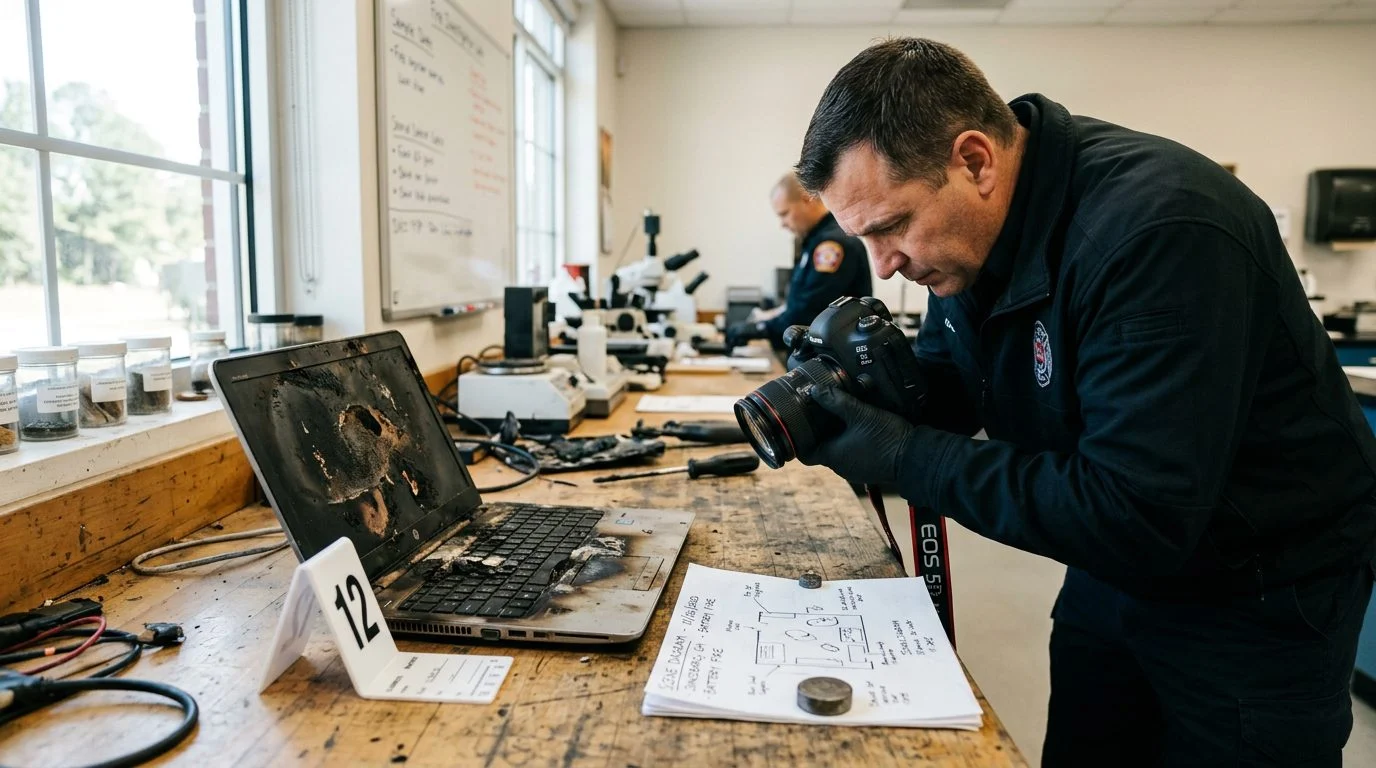
Lithium Battery Fire Lawyer, Georgia
Lithium Battery Fire in Georgia? Get Safe First, Then Talk to Us
Defective batteries and off-brand products can start fires that injure people and destroy homes. T. Madden & Associates, P.C. represents people hurt and families who lost someone in these fires.
The firm at a glance
1999
Practicing personal injury law since
5
Offices: Jonesboro, Atlanta, Decatur, Macon and Augusta
24/7
Call us anytime
By Terance Madden · Published November 14, 2026
If you’re asking what happens if a lithium battery catches fire, here’s the short answer. The battery can overheat, release toxic smoke and gas, and set nearby material on fire, often faster than people expect. The first few minutes matter most.
Below, you’ll find what happens inside a failing battery, what to do right now, and how the cause of the fire can decide who may be responsible.
The short answer: a lithium battery fire can move fast
A lithium battery fire can spread before most people finish their first phone call. That speed is why the first steps are about people, not property.
Once a cell fails badly, it heats up, vents smoke and flammable gas, and can ignite bedding, a couch, a car seat, or a garage shelf. The fire doesn’t wait for you to decide what to do.
Many families are surprised by how it started. The battery may have worked fine for months. A phone, a laptop, a scooter, or a power tool can look normal one day and fail the next. There may be no warning at all.
That’s why the first decisions matter so much. Get people out. Replace property later. Time lost in those first minutes can’t be won back.
Not sure what your next step is?
Talk it through with our team — the first consultation is free, confidential, and carries no obligation.
Thermal runaway, explained in plain words
Thermal runaway is the chain reaction that turns a hot battery into a fire. Engineers and fire investigators use the term for a cell that keeps heating itself.
Here’s how it works. A cell overheats. The heat speeds up the chemical reactions inside it. Those reactions make even more heat, and the cycle feeds itself until the cell vents, burns, or bursts.
Battery packs hold many cells packed close together. When one cell fails, it can heat the cells beside it. A small failure can become a large fire across the whole pack.
Common triggers include:
- Physical damage, such as a crushed or punctured battery
- Internal defects from manufacturing
- Overcharging, or charging with the wrong equipment
- Heat exposure, such as a battery left in a hot car
- Off-brand or mismatched chargers and packs
Why does the trigger matter? The cause helps decide who may be responsible. A failure from a design or manufacturing defect points one way. A battery damaged or charged the wrong way may point another. The physical evidence helps separate the two.
What to do if a lithium battery is on fire
Get everyone out, call 911, and keep your distance from the fire.
Start with people. Get everyone out of the room, vehicle, or home. Close doors behind you if you can do it safely. A closed door can slow the smoke.
Call 911 right away, even if the fire looks small. A battery fire can grow after it looks under control.
Don’t try to fight a fire that is spreading or throwing heavy smoke. Let the fire crew decide how to handle a battery fire on scene. They can see conditions you can’t.
Smoke from burning batteries can be toxic. Stay out of it. Anyone who breathed it should get a medical evaluation, even if they feel fine right away.
After the fire: storing and handling a damaged battery
A damaged battery should not be charged or used again.
That includes a battery that was in a fire, swelled up, or was dropped or crushed. Don’t plug it in to see if it still works. Don’t try to discharge it yourself either.
Set it aside outside, well away from the house, garage, and vehicles. Keep it away from anything that can burn.
People often ask if it’s safe to store lithium batteries in the house after a fire. The answer depends on the damage. Ask the fire department before you bring a damaged battery back inside.
Keep the evidence. Save the battery, the charger, the cord, the device or vehicle, and photos of the scene. These items may be needed later to show what failed and why. Don’t throw them out, even if they look ruined.
Write down what you saw and when. Notes made close to the event help you remember details later.
Why lithium batteries fail, including LiFePO4 batteries
Lithium-ion batteries store a lot of energy in a small space. That energy makes them useful. It’s also why a failure can be serious.
LiFePO4 (lithium iron phosphate) batteries use a different chemistry. Many sellers promote them as more stable than other lithium-ion types. That may hold true for some designs, but no battery is fire-proof. Any battery can still fail from a defect, physical damage, or misuse.
LiFePO4 packs have trade-offs. They are often heavier and store less energy for the same size. Buyers should weigh those differences. A lower-risk label doesn’t replace careful design, testing, and proper charging equipment.
If your family’s battery is LiFePO4, the same questions apply. What was the product? Who made the cells? Who sold it? Did it come with the right charger?
What the physical evidence shows after a battery fire
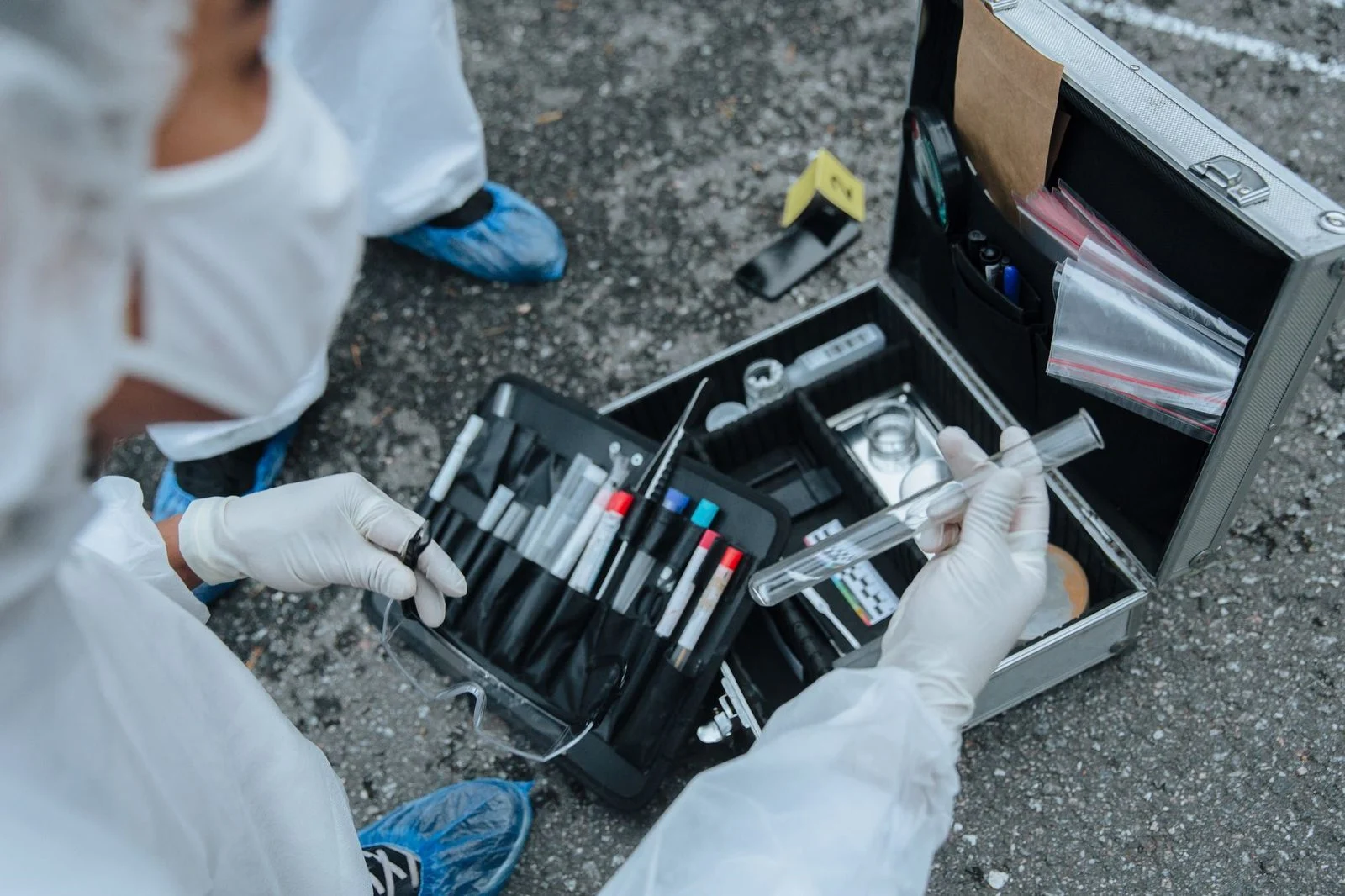
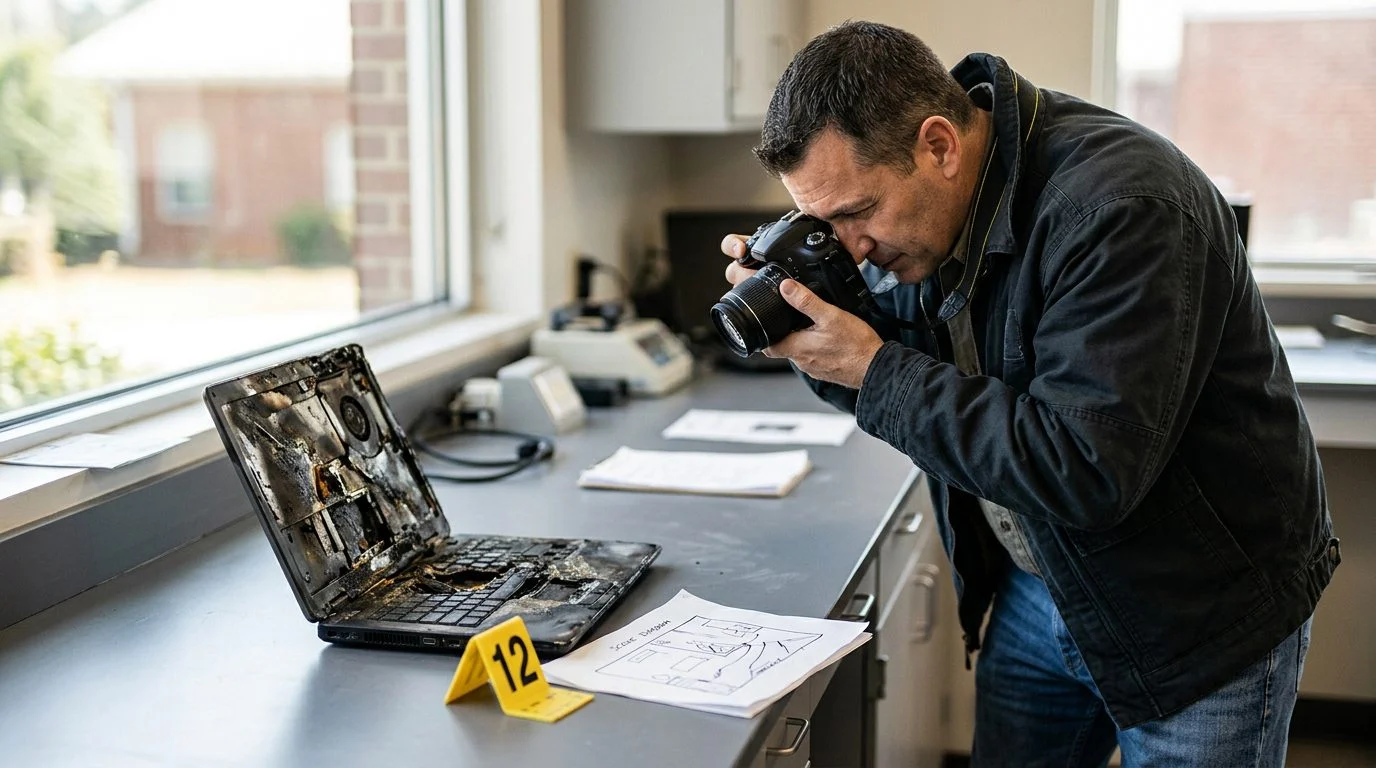
The physical evidence shows where the fire started and whether a defect played a part.
Start with the battery. Note the brand, model, and serial number. Keep the charger and cord. Note the device or vehicle the battery was in. Photograph the scene before anyone moves things. Save any damaged cells or protective circuit parts.
Device or vehicle data, when available, can show charging history and when the failure began. That timing can matter a lot.
Terance Madden holds a B.S. in Electrical Engineering and trained as an electrical engineer before law school. He looks at a battery fire the way an engineer looks at a failed system. He asks what the evidence shows, how the fire started, and which records must be preserved. He reviews the cells, the charging circuits, any certification marks, and the origin-and-cause investigation that traces where the fire began. Certification marks can show whether a product went through outside testing, which matters with off-brand products.
The goal is to separate a manufacturing or design defect from misuse. That answer shapes the claim and shapes who may be responsible.
Not sure what your next step is?
Talk it through with our team — the first consultation is free, confidential, and carries no obligation.
Who may be responsible when a lithium battery catches fire
A manufacturer of a product sold as new may be liable to any person who may use or be reasonably affected by it, if the product was not fit for its intended use when sold and that caused the injury. A claim under this rule cannot be brought more than ten years after the product’s first sale for use. Product liability means a legal claim that a product was defective and the defect caused harm.
The person must be injured because the product was not merchantable (fit to sell and fit for its intended use) when it was sold, and that condition was the direct cause of the injury. See O.C.G.A. § 51-1-11.
Time matters here too. The same statute says no action under its manufacturer-liability provision may be brought for an injury more than ten years after the product’s first sale for use or consumption, and the same limit also applies to negligence claims against a manufacturer, subject to the exceptions noted below. See O.C.G.A. § 51-1-11. For negligence claims, that limit does not apply to an action seeking to recover from a manufacturer for injuries or damages arising out of the negligence of such manufacturer in manufacturing products which cause a disease or birth defect, or arising out of conduct which manifests a willful, reckless, or wanton disregard for life or property. See O.C.G.A. § 51-1-11. See O.C.G.A. § 51-1-11.
Sellers are treated differently. Under O.C.G.A. § 51-1-11.1, a product seller is not a manufacturer and is not liable as one in a strict liability claim. Who sits in the chain, and what each one did, is part of the work.
Possible responsible parties include the battery maker, the device or e-bike maker, the seller, and makers of parts like chargers or packs. Off-brand or counterfeit products raise hard questions. Who designed the product? Who tested it? Who sold it?
Georgia also divides fault. Each liable party pays only its own share. See O.C.G.A. § 51-12-33. That’s why the cause of the fire matters so much.
The firm’s page on laptop battery fires in Georgia goes deeper on that question.
How insurance companies handle battery fire claims
Big Insurance is not on your family’s side, even when the claim looks simple.
Expect the tactics. An early, low offer often arrives before anyone knows the full cost of the injuries. A recorded statement may be requested before your family understands the harm. Requests for records can drag on for months. Some insurers argue the damage was small or the injury was minor, which can lead to a low first offer.
A first offer is rarely what a claim is worth. That’s especially true while injuries, lost work, and medical care are still unfolding.
The response is to pursue every layer of coverage that may apply. That can include the at-fault party’s liability policy, umbrella or excess policies, corporate coverage, and homeowners or renters policies where they apply. The firm works to pursue the full cost of a serious injury, including costs the victim will face in the future.
Georgia law also shapes what can be recovered. General damages are harms the law presumes flow from a wrongful act. They can be recovered without proof of an exact amount. Special damages actually flow from the act, so they must be proved. See O.C.G.A. § 51-12-2.
Medical expenses are limited to the reasonable value of medically necessary care. See O.C.G.A. § 51-12-1.1. Necessary expenses from an injury are a legitimate part of the damages estimate. See O.C.G.A. § 51-12-7.
Our team prepares each case with the possibility of trial in mind.
If someone you love was hurt in a lithium battery fire
If you’re managing your loved one’s recovery, you’re carrying a lot right now.
You may be the one at the hospital. You may be sorting paperwork, answering calls, and keeping a household running. You didn’t choose this. Nobody prepares you for a battery fire.
Maybe the battery was in a home, a car, an e-bike, or a power tool. Now you face choices about medical care, the damaged battery, the lost property, and what to say to an insurance company.
Time limits apply. Georgia’s general deadline for an injury lawsuit is two years after the right of action accrues. See O.C.G.A. § 9-3-33.
T. Madden & Associates, P.C. has been in practice since 1999. Terance Madden leads the firm, and the firm has offices in Jonesboro in Clayton County, along with Atlanta, Decatur, Macon, and Augusta. If a battery fire hurt someone you love, you can start a free case evaluation with the firm. The firm is available 24/7 by phone, and the first consultation is free, confidential, and carries no obligation to continue.
Frequently Asked Questions
What should I do first if a lithium battery catches fire?
Get everyone out, call 911, and stay out of the smoke. Lithium-ion fires can release toxic gas and can flare up again hours later, so do not go back inside.
Why do lithium batteries catch fire?
Lithium-ion batteries can overheat when cells are damaged, overcharged, or have an internal short. This can trigger thermal runaway, a chain reaction where heat builds until the battery vents, burns, or explodes.
Can I bring a claim if a defective battery started a fire?
You may have a claim if a defective product caused your injuries or a loved one’s death. A product liability claim, which is a legal claim that a product was unsafe and caused harm, can involve the maker, seller, or distributor, depending on the facts. A free first consultation with T. Madden & Associates, P.C. is confidential and comes with no obligation.
Who can be held responsible when an off-brand battery causes a fire?
Responsibility can reach beyond the brand name on the battery, including importers, sellers, and companies that sold it online. Terance Madden trained as an electrical engineer before law school, so he starts by asking what the battery and the fire scene show about how the failure happened.