

Premises liability · Georgia
Hurt on Someone Else's Property in Georgia? Here's What Makes These Cases Hard
Property owners owe visitors a duty of care, and the hard part is proving that the owner knew or should have known about the danger.
About T. Madden & Associates, P.C.
1999
Practicing law since
5
Georgia offices: Jonesboro, Atlanta, Decatur, Macon and Augusta
By Terance Madden · Published November 14, 2026
You were hurt on property someone else owns or controls, and now you’re dealing with pain, bills, and a lot of questions. Are premises liability cases hard to win? They can be, mainly because the property owner usually disputes what they knew and whether they were careless.
Short Answer: Yes, They Can Be Hard to Win
Yes. Premises liability cases can be harder to win than many other injury claims, and the fight is usually over the owner’s knowledge and care. Whether your case is hard depends on the facts of your case.
Most of the fight comes down to four questions. Was the hazard visible? Did the owner know about it, or should they have? Were you lawfully on the property? And how much of the blame will the other side try to put on you?
Hard does not mean hopeless. It means the claim needs careful proof from the start. Georgia law answers each of those questions in its own way, and the rest of this page walks through them.
Hurt on property someone else controlled and not sure what comes next? Our team can talk through what happened with you, at no cost and with no obligation to continue. Talk it through with our team — the first consultation is free, confidential, and carries no obligation.

What Premises Liability Means and How It Fits Within Personal Injury
Premises liability is a personal injury claim against the person or business that owns or controls a place where a hazard caused harm. It is one type of personal injury claim. The difference is the setting. The injury came from the condition of a building, a lot, or a walkway, not from a crash on the road.
Common settings include stores, apartment buildings, parking lots, sidewalks, and restaurants. A slip and fall is the most familiar example. A shopper slips on a wet floor with no sign, or a tenant trips on a broken step. Our slip and fall claims page covers these cases in more detail.
Lawyers also use the word “invitee.” An invitee is a person on the property for a business purpose or the owner’s benefit, like a shopper or a delivery driver. Georgia’s rules for invitees set the owner’s duty, which the next section explains.
What You Must Prove to Win a Premises Liability Case
Georgia’s negligent-security statute, O.C.G.A. § 51-3-51, applies only to injuries caused by a third person’s wrongful conduct on the owner’s or occupier’s premises. Except as provided in Code Section 51-3-54, as an invitee you must prove that the third person’s wrongful conduct was reasonably foreseeable, that your injury was a reasonably foreseeable consequence of that conduct, that the conduct was a reasonably foreseeable consequence of the third person exploiting a specific physical condition of the premises known to the owner that created a substantially greater risk, that the owner failed to exercise ordinary care to remedy or mitigate that condition and to otherwise keep the premises safe, and that this failure was a proximate cause of your injury. Under O.C.G.A. § 51-3-1, where an owner or occupier of land, by express or implied invitation, induces or leads others to come upon his premises for any lawful purpose, he is liable in damages to such persons for injuries caused by his failure to exercise ordinary care in keeping the premises and approaches safe. It says an owner who invites people onto the premises must use ordinary care in keeping the premises and approaches safe. The owner is liable for injuries caused by failing to do so. Ordinary care means the care an ordinarily prudent person would use in the same or similar circumstances (O.C.G.A. § 51-1-2).
The core elements, in plain order:
- You were lawfully on the property.
- A condition on the property was not safe.
- The owner failed to fix it or warn you.
- That failure caused your injury, and you suffered real losses because of it.
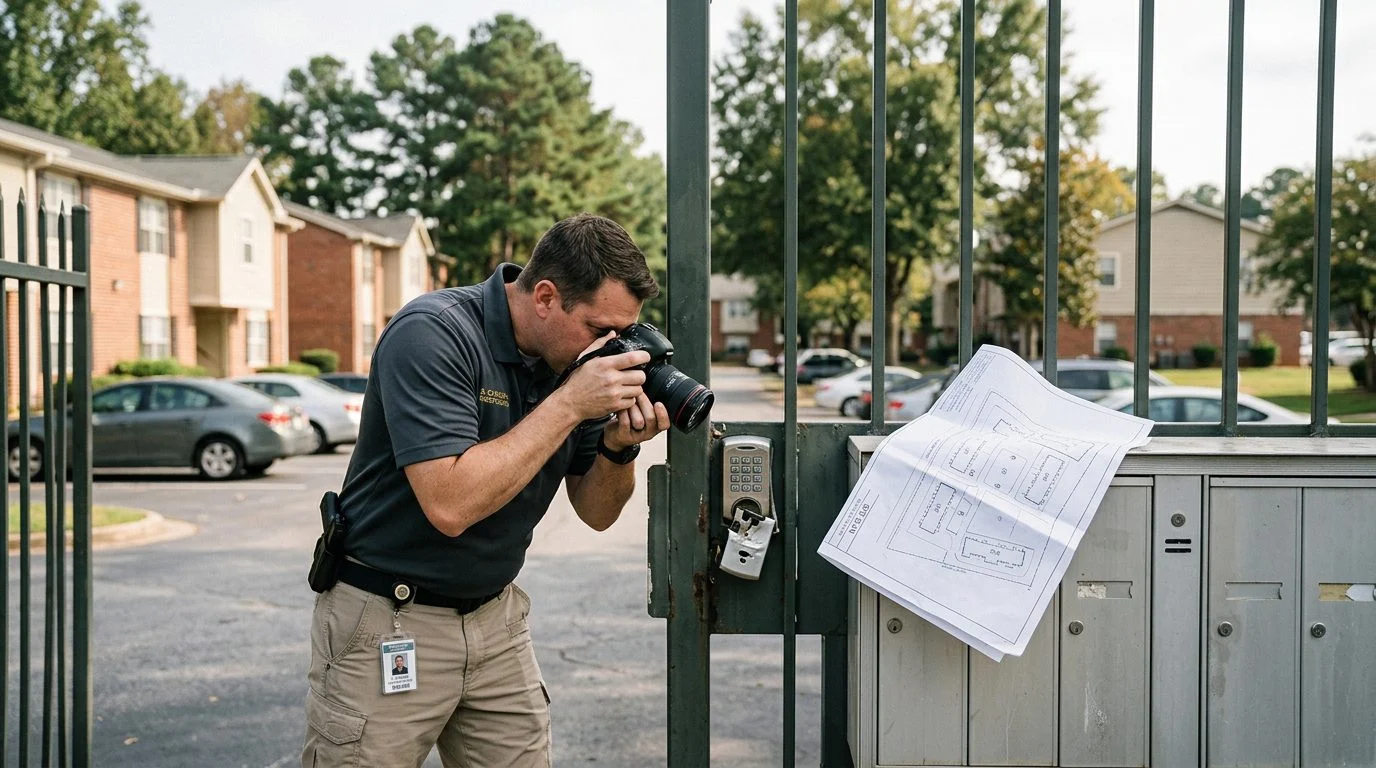
Your own records carry weight here. Photos of the spot, the time and date, witness names, the incident report, and early medical notes tie the hazard to the injury. Those are the first things the other side will test. Collect them while the scene is still fresh.
Where Premises Liability Cases Get Hard
The hard parts are visibility, notice, visitor status, and shared fault.
Visibility. Owners argue the danger was obvious and you should have seen it. An obvious hazard can still be a fight over whether the owner should have fixed it or warned people sooner.
Notice. Owners often say a spill showed up seconds before the fall. Video, cleaning logs, inspection schedules, and staff records can show how long the hazard was there. Ask for those records early, because footage is often overwritten.
Visitor status. The owner may claim you were a licensee or trespasser, not an invitee.
Shared fault. Georgia reduces your damages by your share of fault. Under O.C.G.A. § 51-12-33, the judge reduces the award in proportion to your percentage of fault. If you are 50 percent or more responsible, you can’t recover damages. The Supreme Court of Georgia quoted that bar in Quynn v. Hulsey.
Medical gaps. Treatment records set the value of the claim. Under O.C.G.A. § 51-12-1.1, medical expenses are limited to the reasonable value of medically necessary care. A long gap in treatment gives the other side an argument.
Inadequate Security and Crimes on Property
Negligent security is a premises claim where a crime on the property hurt someone because the owner did not use reasonable security. The key question is what the owner knew and what they did about it.
Under O.C.G.A. § 51-3-51, except as provided in Code Section 51-3-54, an invitee must prove that the third person’s wrongful conduct was reasonably foreseeable. Under this statute, foreseeability means a particularized warning of imminent wrongful conduct, or prior occurrences of substantially similar wrongful conduct that the owner actually knew about on the premises, on adjoining property, or within 500 yards, or prior substantially similar wrongful conduct by the same third person where the owner knew or should have known, by clear and convincing evidence, that that person was or would be on the premises and actually knew of those prior occurrences; but under O.C.G.A. § 51-3-54, an owner is not liable based on a particularized warning if it made any reasonable effort to give that information to law enforcement, and calling 9-1-1 or otherwise reporting it to law enforcement counts as a reasonable effort. The plaintiff must also prove the owner failed to exercise ordinary care to remedy or mitigate a specific, known physical condition that made the risk substantially greater, and to otherwise keep the premises safe from such wrongful conduct by a third person.
Owners are not held to a government’s standard. Under O.C.G.A. § 51-3-55, an owner does not have to use extraordinary care or take on law enforcement duties. The jury looks at the security in place, the need for more measures, whether they were practical, whether they would have prevented the injury, the owner’s and the government’s respective responsibilities, and any other relevant circumstances.
The facts that matter are plain ones: prior incidents on the property, lighting, locks, cameras, guards, and whether the owner knew about the risk and did nothing. The firm handles negligent security matters, and our negligent security page explains the claim further.
How Big Insurance Responds and What Helps Your Claim
Big Insurance is not on your side, and its first offer is rarely what your claim is worth.
Expect the tactics. A quick, low offer often arrives before you understand your injuries. A recorded statement may be requested before anyone knows what treatment you’ll need. Requests for records can slow the file. Treatment may be disputed as unnecessary. A “minor fall” argument is common, and so is the claim that the hazard was too small to matter.
The response is to pursue every layer of coverage that applies. That can include the owner’s liability policy, any umbrella or excess coverage, corporate coverage, and your own uninsured or underinsured motorist coverage where it applies. Serious injuries carry a full cost, including lifetime damages, and that cost belongs in the claim. The firm prepares every case as if it could go to trial.
Terance Madden earned a B.S. in Electrical Engineering before he went to law school. That training shapes how he works a case. He asks what the scene photos, timing, and maintenance records actually show, and how the fall or injury happened. He also identifies which records and data exist and must be preserved, such as video, inspection logs, and cleaning schedules.
Not sure what your next step is?
Talk it through with our team — the first consultation is free, confidential, and carries no obligation.
Helping the Person Managing the Recovery
If you’re managing a loved one’s recovery, start a written file today. Spouses, parents, and adult children often end up holding the medical bills, the phone calls, and the calendar. You don’t need legal training to keep good records.
Keep these:
- Photos of the hazard and the scene, taken as soon as it’s safe
- Names and phone numbers of anyone who saw the fall
- A copy of any incident report the property gave you
- Every medical bill, visit note, and prescription receipt
- A dated log of symptoms, appointments, and missed work
Before giving any recorded statement to the owner’s insurer, talk with the firm first. Georgia also sets a filing deadline. Don’t let that clock run while you wait.
The Terance Madden Foundation supports community work in the places where the firm practices.
Is a slip and fall the same as premises liability?
A slip and fall is one kind of premises liability claim, and it is the most common kind.
Does being partly at fault end my claim?
Not automatically. Georgia reduces damages by your share of fault and bars recovery at 50 percent or more (O.C.G.A. § 51-12-33; Quynn v. Hulsey (2020)).
If someone you love was hurt on property another person controlled, you don’t have to sort out these questions alone. Start a free case evaluation to talk through what happened. The initial consultation is free, confidential, and carries no obligation to continue.