

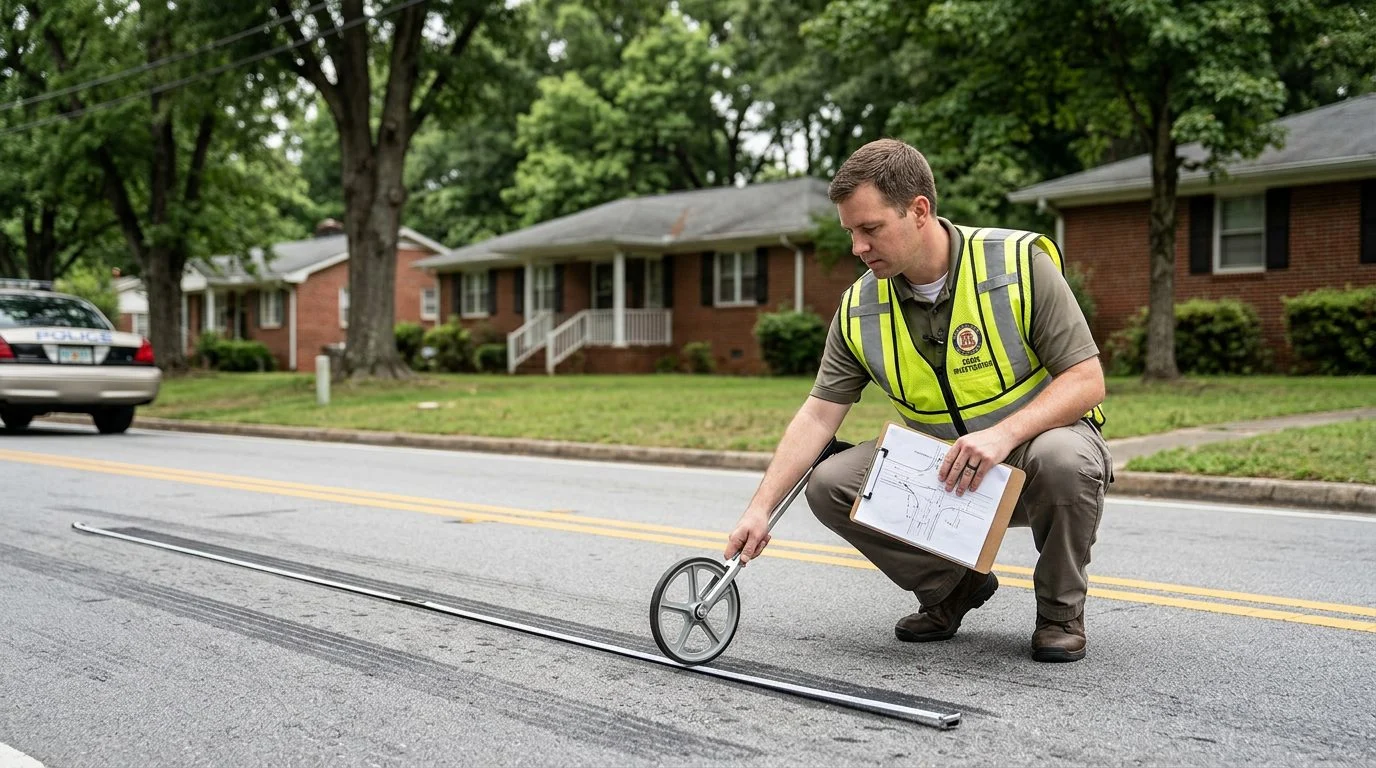
Georgia truck and car crash claims
Hurt by a truck or a car? The claim can look very different.
Here is how the evidence, the parties and the insurance picture change from one kind of crash to the other, and what to bring to your first conversation.
T. Madden & Associates, P.C.
1999
Year the firm began practice
5
Offices: Jonesboro, Atlanta, Decatur, Macon, Augusta
24/7
Call the firm any time
By Terance Madden · Published November 16, 2026
Many readers ask how a truck accident claim vs car accident claim Georgia case really differs. Both ask the same core question: who caused the crash, and what harm did it cause? The differences come from what sits behind a commercial truck, including more potentially responsible parties, more insurance policies, and federal trucking records. Here is how those differences play out in plain terms.
Why the Same Kind of Crash Can Lead to Very Different Claims in Georgia
Both claim types turn on fault. Injury claims in Georgia generally pursue the people who caused the harm, whether the other vehicle is a sedan or a tractor-trailer. Time matters in both. Under O.C.G.A. § 9-3-33, actions for injuries to the person must be brought within two years after the right of action accrues. Loss of consortium claims get four years under the same statute.
A truck crash adds layers that a passenger car crash usually doesn’t. There are four main areas to understand: who may be responsible, what federal records exist, how insurance responds, and how fault is divided. Each one shapes how a claim is built. Early evidence matters too, so the first weeks count.
Not sure what your next step is?
Talk it through with our team — the first consultation is free, confidential, and carries no obligation.
Who Can Be Held Responsible in a Truck Crash
A car crash usually involves one driver and that driver’s insurer. A truck crash can involve several more parties. These may include the driver, the motor carrier that operates the truck, the company that owns the rig, a leasing company, a company that loaded the cargo, or a contractor that maintained the truck. An employer may also answer for work-related driving by its drivers.
Which of these people or companies played a role depends on the crash itself. Identifying every possible party early matters. Each one can bring a different insurance policy and different records into the case. Some of those parties may not even be named in the lawsuit, and Georgia’s fault rules account for that, as covered below. For an overview of how these claims are built, read our truck accident guide.
Federal Trucking Rules and Records That Shape the Claim
Commercial trucks operate under federal rules, and those rules create records a typical car claim doesn’t have. Hours-of-service limits are one example. Under 49 CFR 395.3, a driver may not drive without first taking 10 consecutive hours off duty. A driver may drive 11 hours total within a 14-hour period that starts after 10 consecutive hours off duty, and, except for drivers who qualify for certain short-haul exceptions, may not drive after more than 8 hours of driving without a 30-minute break.
Electronic logging devices create another record. Under 49 CFR 395.26, the device automatically records the date, time, truck location, engine hours, and vehicle miles, along with driver and vehicle identification and motor carrier identification data, except during authorized personal use, when engine hours and vehicle miles are left blank and location is recorded with a single decimal point resolution (approximately within a 10-mile radius). It also logs driver and vehicle identification.
After a serious crash, testing rules apply too. Under 49 CFR 382.303, a crash that causes a death triggers testing of surviving drivers as soon as practicable, with or without a citation. A crash involving bodily injury that needs immediate treatment away from the scene triggers testing only if the truck driver receives a citation for a moving traffic violation within 8 hours of the crash for alcohol, or within 32 hours for controlled substances. Retention periods are short for some records. Under 49 CFR 382.401, negative controlled substance results must be kept for a minimum of one year. https://www.ecfr.gov/on/2026-10-06/title-49/section-391.51Waiting can cost you evidence.
Insurance Coverage and How Carriers Respond
A truck crash often brings more than one insurance policy into play. Federal rules also set minimum coverage for many trucks. Under 49 CFR 387.9, the minimum public liability amount is $750,000 for for-hire interstate carriage of nonhazardous property in trucks rated 10,001 pounds or more. Certain hazardous substances carried in bulk have a $5,000,000 minimum.
Georgia law also limits when you can add a motor carrier’s insurer to a lawsuit. Under O.C.G.A. § 40-1-112, the insurer may be joined only in limited situations. Examples include when a related carrier is insolvent or bankrupt, or when personal service can’t be made after reasonable diligence on the driver or the carrier.
Nothing requires you to sign the first offer. Read any release carefully before you sign. A release can close the claim for good.
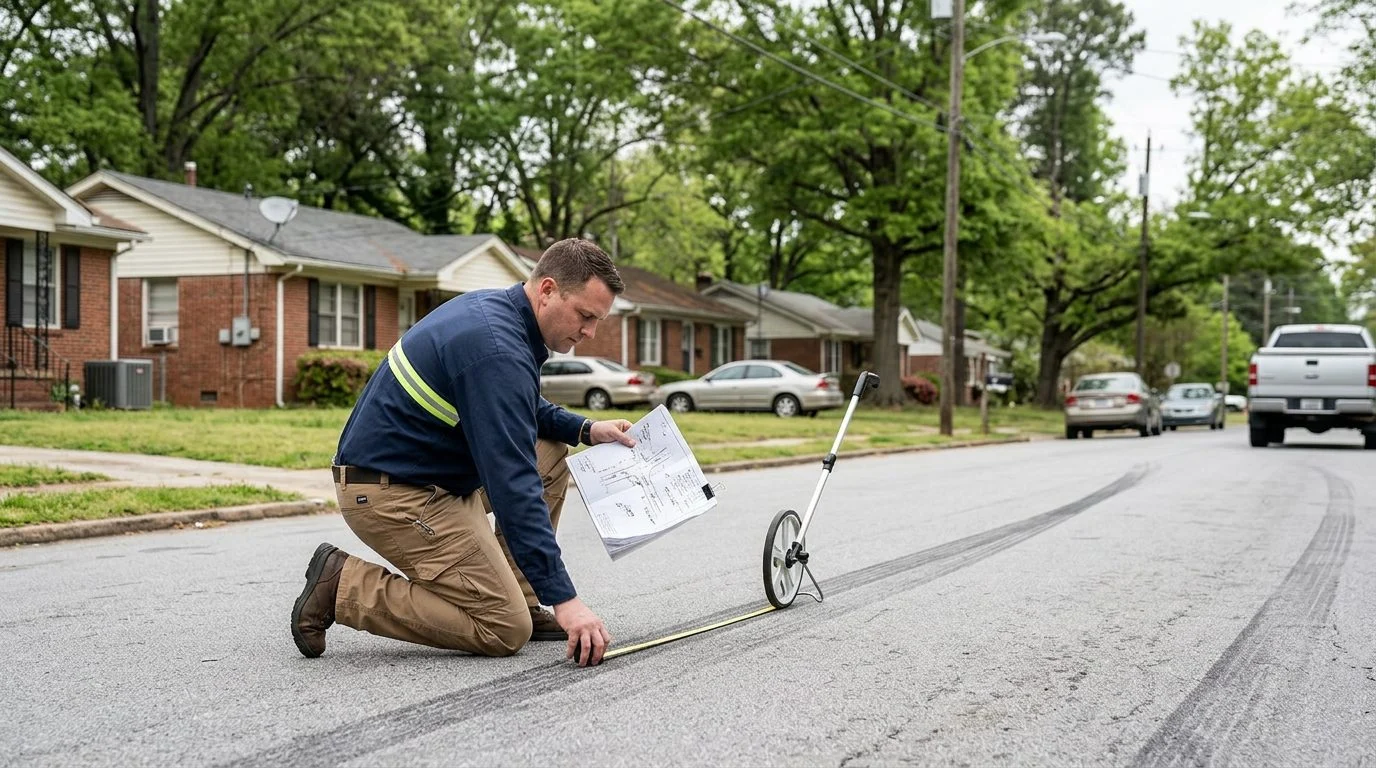
How Georgia’s Modified Comparative Negligence Applies to Both Claim Types
Georgia reduces your damages by your share of fault. You recover nothing if you are 50 percent or more responsible (O.C.G.A. § 51-12-33; Quynn v. Hulsey (2020)). Under O.C.G.A. § 51-12-33, the judge reduces damages in proportion to your fault, and the same rule covers car and truck claims.
Truck cases often involve more than one at-fault party. Under the same statute, each defendant pays its own apportioned share, not a shared joint amount. The jury also considers the fault of people who contributed to the harm, even if they were never named. A defending party can give notice, at least 120 days before trial, that a nonparty was at fault.
Insurers may look closely at the injured driver’s lane changes, following distance, or speed. They may also dispute sight lines or vehicle positions after impact. How the percentages come out depends on the facts. Protect your position at the scene. Georgia auto claim tips advise notifying police and your insurer, collecting witness information, documenting the scene, and avoiding statements about fault.
Damages, Punitive Damages, and Catastrophic Injuries
Truck crash injuries can be severe. Spinal cord injury, traumatic brain injury, and amputation can bring large medical bills, lost earning ability, and long-term care needs. Compensatory damages in these claims can include medical expenses, lost wages, pain and suffering, and future care.
Some cases may also seek punitive damages. Under O.C.G.A. § 51-12-5.1, punitive damages are not compensation. They are awarded solely to punish, penalize, or deter a defendant. In most cases that do not involve product liability, the statute caps the award at $250,000. In a tort case not arising from product liability, the cap does not apply when a defendant acted with specific intent to cause harm, or while under the influence of alcohol, drugs other than lawfully prescribed drugs administered in accordance with prescription, or any intentionally consumed glue, aerosol, or other toxic vapor, to a degree that substantially impairs judgment; the award is then unlimited only against an active tort-feasor, and such damages shall not be the liability of any other defendant.
When a crash causes a death, wrongful death rules apply. Under O.C.G.A. § 51-4-2, a surviving spouse, or children if there is no surviving spouse, may recover the full value of the decedent’s life, as shown by the evidence. A surviving spouse receives no less than one-third of that recovery.
Not sure what your next step is?
Talk it through with our team — the first consultation is free, confidential, and carries no obligation.
Filing Deadlines, Police Reports, and Which Court Hears the Case
Georgia’s general deadline for injury lawsuits is two years under O.C.G.A. § 9-3-33 (Kenneth B. Cameron v. Jmp Pizza, Inc (2026)). Waiting while you negotiate can use up that window, so learn the date early. A police report is also an early record worth requesting. It documents the scene, the parties, and initial statements. The Georgia Department of Public Safety states that the Georgia State Patrol investigates fatal and major-injury motor vehicle crashes, and that victims or family members can ask about an investigation’s status.
What is the deadline for a Georgia car or truck injury claim?
The general deadline is two years under O.C.G.A. § 9-3-33. Loss of consortium claims have four years under the same statute.
Can I recover damages if I was partly at fault?
Possibly. Your damages are reduced by your percentage of fault, and you recover nothing at 50 percent or more under O.C.G.A. § 51-12-33 (Quynn v. Hulsey (2020)).
Should I file a police report after a crash?
A police report records the scene, the parties, and early statements. It is a useful early record for any Georgia crash claim.
Talking With Terance Madden About Your Situation
If you’re reading this after a crash you didn’t choose, maybe while still hurting or while helping a family member through a loss, these questions can feel urgent. You don’t have to sort out fault, records, and deadlines alone. Terance Madden, who has practiced law since 1999, can talk through the facts of your own crash with you.
T. Madden & Associates, P.C. handles these matters on a no-fee-unless-we-win basis. You may still be responsible for court costs and case expenses. The first consultation is free, confidential, and carries no obligation to continue. To start that conversation, reach out through our contact page.
Disclaimer: This page is general information, not legal advice. Terance Madden is the responsible lawyer for T. Madden & Associates, P.C., with offices in Jonesboro (Clayton County), Atlanta, Decatur, Macon, and Augusta. Contact information is on the contact page.