

Truck Accident Claims | Georgia
Hurt in a Crash with a Georgia Trucking Company? Know the Steps Before You Talk to the Insurer
A trucking company's insurer may contact you within days. The steps you take now can shape your claim, so start with the right ones.
T. Madden & Associates, P.C.
1999
Handling Georgia injury cases since
5
Offices across Georgia
24/7
Phone line for new callers
By Terance Madden · Published November 15, 2026
A truck crash can leave you hurt, with bills piling up and an insurance adjuster calling. You need to know what comes next.
A claim against a trucking company in Georgia starts with protecting the evidence and finding every party and insurer that may owe money. Next comes a written demand, then negotiation. When an insurer’s offer falls short of what the claim is worth, the claim can move into a lawsuit.
What steps are involved in filing an insurance claim against a trucking company in Georgia?
Filing follows a clear order: protect the evidence, find every liable party and insurer, send notice, build a demand, negotiate, and sue if needed. Each step matters, because truck records can be lost and deadlines keep running.
Start with your health. Get medical care and keep every visit, bill and test result. Ask for the crash report from the investigating agency, and write down what you remember while it’s fresh.
Next, look at who may be responsible for the harm. The firm then puts the trucking company and its insurer on notice so they keep their records. Then it gathers proof and builds a demand. A “demand” is a written request that states the amount you want and what you would release in return.
If the insurer won’t pay fairly, a lawsuit may be the next step. Georgia generally gives two years after the right to sue arises to bring an injury lawsuit, under O.C.G.A. § 9-3-33.
The firm’s first consultation is free, confidential, and carries no obligation to continue. The firm works on a no-fee-unless-we-win basis, but you may still be responsible for court costs and case expenses.
If a truck crash turned your family's life upside down, you may have a claim, and you don't have to handle the insurance side alone. Reach out for a free case evaluation. Talk it through with our team — the first consultation is free, confidential, and carries no obligation.

Who can be held liable when a truck crash happens in Georgia?
The driver, the trucking company, and other companies tied to the truck can each be liable, depending on the facts. The trucking company can answer for its own choices, not just the driver’s.
The firm calls the employer’s own failures The Negligent Five. Each one is a claim about the company’s own conduct:
- Negligent hiring. An employer must use ordinary care not to hire or keep an employee it knew or should have known posed a risk of harm, under Munroe v. Universal Health Services.
- Negligent training. The Supreme Court of Georgia lists training among an employer’s own alleged negligent acts, in Quynn v. Hulsey.
- Claims for negligent hiring, training, supervision, and retention are based on the alleged negligent acts of the employer (Quynn v. Hulsey, 310 Ga. 473 (2020)).
- Negligent retention. This means keeping a driver after the company knew or should have known of a risk.
- Negligent supervision. This means failing to oversee the driver’s work and conduct.
Brake, tire, cargo and maintenance vendors can also share fault. Each may carry its own insurance, which can mean more coverage to pursue.
Georgia’s apportionment statute requires the jury to weigh the fault of everyone who contributed to the harm, whether or not they were sued, but under O.C.G.A. § 51-12-33 nonparty fault is considered only if the plaintiff settled with the nonparty or a defending party gives notice not later than 120 days prior to the date of trial that the nonparty was at fault. If you are 50 percent or more responsible, you recover no damages under the same statute.
What insurance do trucking companies need in Georgia?
Insurance limits set how much money may be available, so the policies and their limits matter from the start. Federal rules set minimum liability levels for many trucking companies, and total coverage often comes from several policies.
Look for every layer. That includes the primary liability policy, an umbrella policy, excess coverage, and corporate policies. An umbrella or excess policy sits above the primary policy and pays after its limits are used up. The first policy named is often not the whole picture.
Your own auto policy may include uninsured and underinsured motorist (UM/UIM) coverage. The state insurance regulator explains that this coverage may protect the insured and passengers when an uninsured driver causes the crash, per Georgia auto insurance resources.
Georgia also limits when you can add the trucking company’s insurer to a lawsuit. Under O.C.G.A. § 40-1-112, the insurer may be joined only in narrow cases, such as when the carrier is insolvent or bankrupt, or when service cannot be made after reasonable diligence.
What evidence should be preserved first in a Georgia truck crash claim?
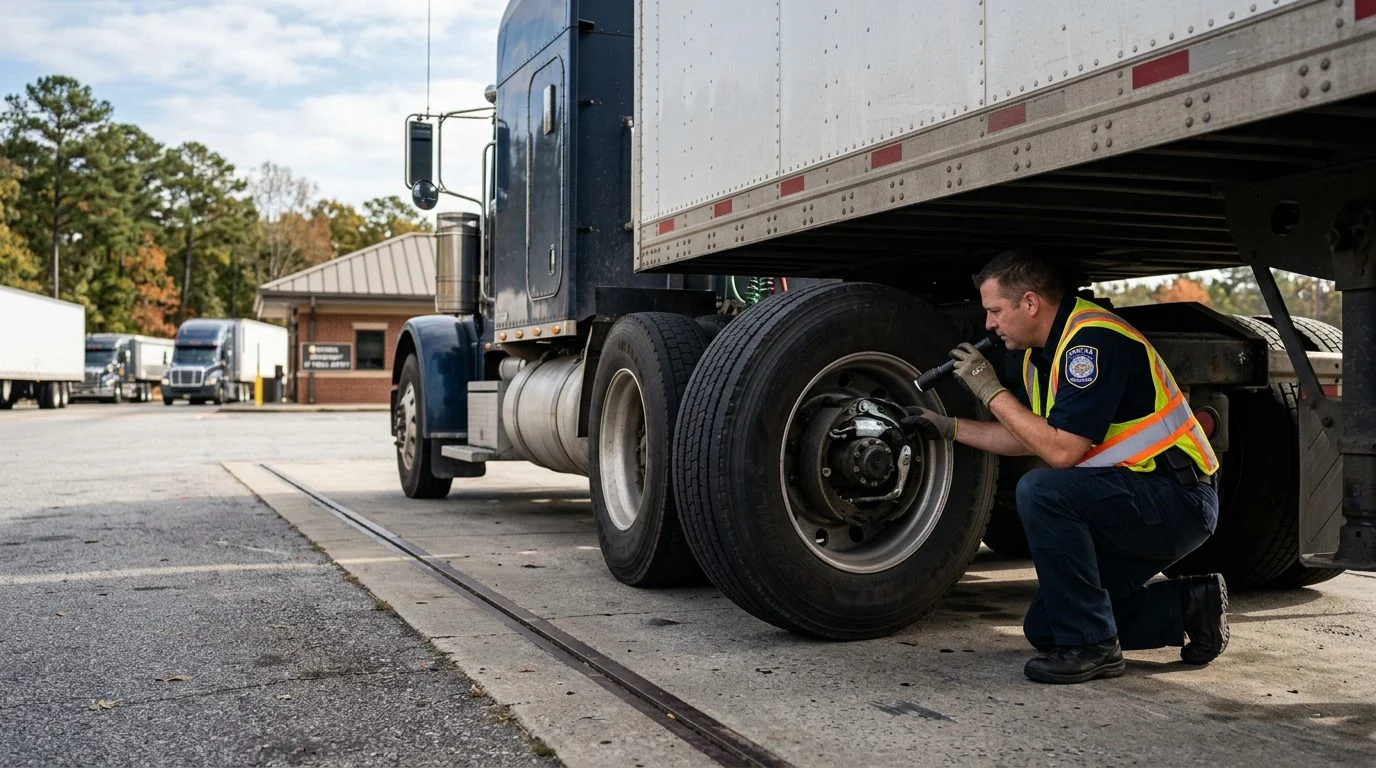
Preserve the truck’s electronic data, driver logs and maintenance records first, because they can be lost or overwritten. Keep your photos, witness names and medical records too.
The engine control module (ECM) is the truck’s onboard computer. It can record data such as speed, braking and throttle position before a crash. That data shows how the truck moved in the seconds before impact.
Driver logs record a driver’s duty status over each 24-hour period. Carriers must keep these records and supporting documents for at least six months from receipt, under 49 C.F.R. § 395.8. Logs help test whether a driver’s hours match what happened on the road.
Before law school, Terance Madden trained as an electrical engineer. When he reviews truck data, he asks what the data shows, how the crash happened and which records must be preserved. He checks whether the ECM, the logs and the maintenance files tell the same story.
How does Big Insurance usually respond to a trucking company claim?
Big Insurance usually opens with a low offer, and that first offer is rarely what a claim is worth. The insurer is not on your side, even when the call sounds friendly.
Common tactics include an early low offer, a request for a recorded statement, delays, disputes over whether your treatment was needed, and “low impact” arguments that say a big truck could not have hurt you. Each one is meant to lower the payout.
The response is to pursue every coverage layer: liability, UM/UIM, umbrella, excess and corporate coverage. The firm values the full cost of the injury over time, including future care, where the facts support it. Terance Madden starts a case by asking what the evidence shows and how the crash happened.
What should you say to the trucking company’s insurance company?
Be polite, brief and careful. Send the insurer’s questions to the firm instead of answering them alone.
A recorded statement can be used later to shape the claim. You don’t have to give one without guidance. Early remarks about pain, the crash or past health can be pulled apart later, so careful wording matters. Say what you know, not what you guess. If you don’t know, say so.
Don’t sign a release or cash a check until you understand what you’re giving up. A quick deadline from the insurer is a negotiating tactic, and you can take time to think it through.
Keep a record of every call, letter, email and bill. Write down the date, the name of the person you spoke with and what was said. Keep the envelopes and emails, too.
Not sure what your next step is?
Talk it through with our team — the first consultation is free, confidential, and carries no obligation.
How do you keep the claim moving while a loved one recovers?
Claim and recovery run on separate clocks. The person handling bills, appointments and calls needs a simple system, and the family does not have to manage the insurance side alone.
Keep one dated folder for everything. It should hold medical bills and notes, missed-work records, pay stubs, receipts for travel and prescriptions, and every letter from an insurer. Keep the bills together. Georgia limits medical expense damages to the reasonable value of medically necessary care, under O.C.G.A. § 51-12-1.1. If the injured person has health insurance, the evidence can include both the amount charged and the amount the insurance contract requires to satisfy it.
Spouses, mothers and adult daughters often run this part. You’re doing a hard job. The firm commits to plain English and clear communication, with no black holes in what you’re told.

Frequently asked questions
How long do I have to file a claim in Georgia?
Georgia generally allows two years after the right of action accrues for injury lawsuits, under O.C.G.A. § 9-3-33.
What if I was partly at fault?
Georgia reduces your damages by your share of fault. If you are 50 percent or more responsible, you recover nothing, under O.C.G.A. § 51-12-33.
If a truck crash has turned your family’s routine upside down, you may have a claim, and you don’t have to face the insurance side alone. Reach out for a free case evaluation and talk through what you’re facing.
Related practice areas
- Truck Accident Lawyer in Georgia
- Truck Accident Lawyer Lovejoy GA