

Truck Accident Lawyer | Georgia
Brake Failure Caused Your Truck Crash? Talk With Terance Madden Today
T. Madden & Associates, P.C. has represented people hurt in Georgia wrecks since 1999. Your first consultation is free, confidential, and comes with no obligation to continue.
Why people call our office
1999
Year our practice began
5
Georgia offices, including Atlanta and Macon
24/7
Phone line available any time
By Terance Madden · Published October 19, 2026
A truck that cannot stop in time may have a brake problem behind the crash. Brakes can fail because parts wore out, were adjusted wrong, were repaired badly, or never got the upkeep they needed. A truck brake failure crash lawyer looks at the equipment, the paperwork, and every party that touched the truck. T. Madden & Associates, P.C. is a Georgia personal injury firm led by attorney Terance Madden. The firm has practiced since 1999 and has offices in Jonesboro, Atlanta, Decatur, Macon and Augusta.
What a brake-related truck crash is and who this page is for
A brake-related truck crash happens when a truck cannot slow or stop in time because its brake system failed or was not kept up. Sometimes a part simply wears out. Other times, someone adjusted or repaired the brakes incorrectly.
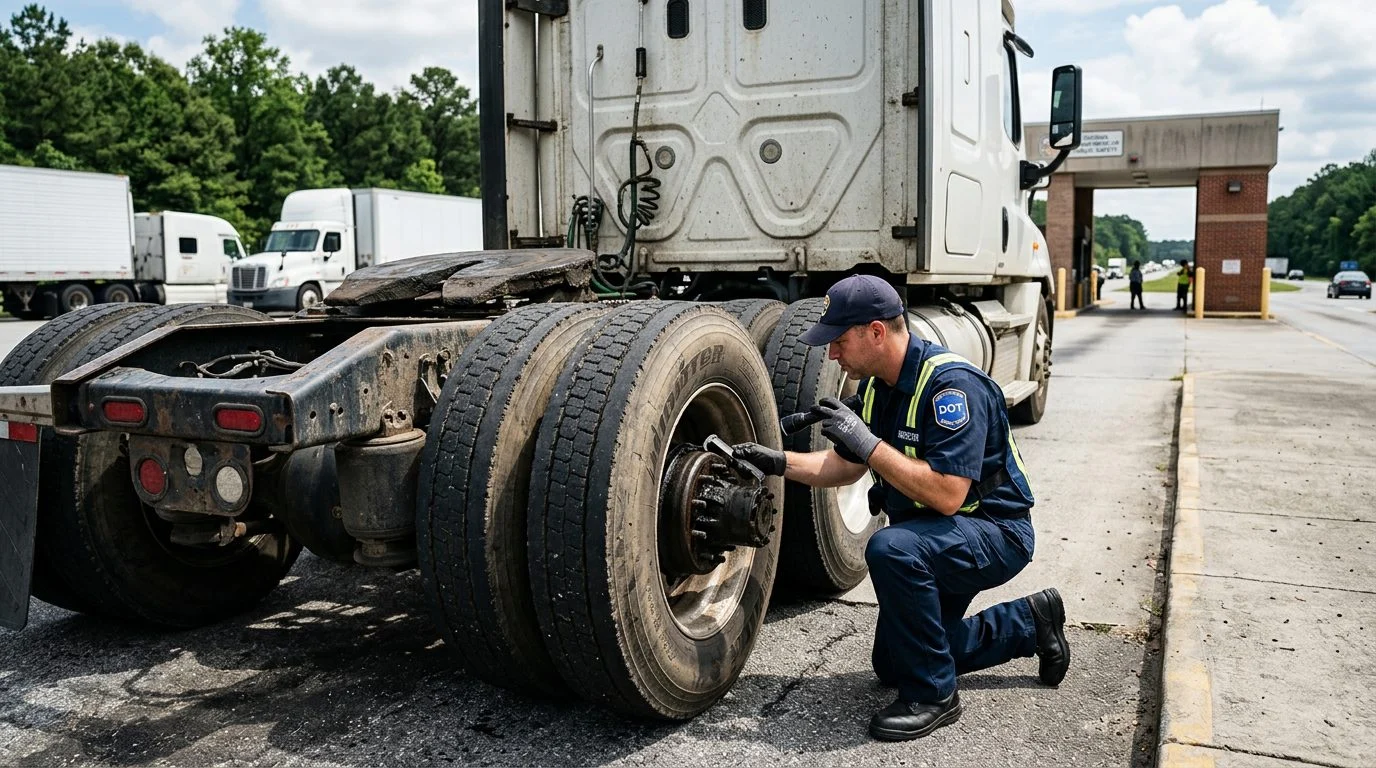
Common brake problems include:
- Worn or contaminated brake linings and pads
- Slack adjusters that are out of adjustment
- Air-system leaks that weaken braking
- Cracked or failing brake hoses
- Antilock brake system (ABS) faults
Federal rules set limits on wear. An air-braked commercial motor vehicle may not run non-steering axle linings thinner than 6.4 mm (1/4 inch) on drum brakes, or run them to the wear indicator if the lining is so marked; for disc brakes, the limit is 3.2 mm (1/8 inch). 49 C.F.R. § 393.47 sets this limit.
The key question is simple. Could the truck’s equipment or its upkeep have kept it from stopping?
This page is for Georgia drivers, passengers, pedestrians, motorcyclists, e-bike riders and families who suspect a truck’s brakes or maintenance played a part. The Georgia Department of Public Safety fact sheet lists defective brakes among common contributing factors in commercial-truck crashes. This page explains how these claims work. Every crash turns on its own facts.
If a truck's brakes or upkeep may have caused the crash that hurt you or someone you love, our team at T. Madden & Associates can review it with you and explain your options. Talk it through with our team — the first consultation is free, confidential, and carries no obligation.

Who may be responsible when brakes fail or maintenance was poor
More than one party can share responsibility. The motor carrier that runs the truck must keep it safe. Federal rules require every motor carrier to systematically inspect, repair, and maintain its vehicles, and to keep parts in safe and proper operating condition at all times (49 C.F.R. § 396.3).
Other parties may also be liable, depending on the facts:
- The repair shop that did brake work and skipped required steps
- The owner or leasing company that controlled the truck or its repairs
- The maker of a defective brake part
- The driver, if he or she ignored warning signs or drove with known brake problems
Georgia fault rules shape every claim. A jury can assign fault to everyone who contributed, even people not named in the lawsuit. Each liable party pays its own share, not a shared joint share. Under O.C.G.A. § 51-12-33, an injured person’s recovery is reduced by their own percentage of fault. A person who is 50 percent or more responsible cannot receive damages.
The records and physical evidence that connect brakes to a crash
The strongest proof is often paperwork and electronic data. These records show what was done to the brakes, when, and by whom.
- Maintenance and repair records: brake inspections, adjustments, parts invoices, and work orders. Carriers must keep these records where the truck is housed or maintained for one year, and for six months after it leaves the carrier’s control (49 C.F.R. § 396.3).
- Electronic data: Drivers’ electronic duty-status records must be kept for six months, according to FMCSA guidance on ELD records. Engine and telematics data may show speed and braking events.
- Physical evidence: photos, skid marks, dashcam or surveillance video, and the brake parts themselves.
Retention limits matter. Companies subject to this part shall retain records for the minimum retention periods provided in appendix A to this part, and after the required retention periods, the records may be destroyed at the discretion of each company’s management (49 C.F.R. § 379.3). The provisions of this part shall not be construed as excusing compliance with the lawful requirements of any other governmental body prescribing longer retention periods for any category of records. That is why early requests matter. A lawyer can ask the other side, in writing, to keep these items. Parts that are repaired, sold, or thrown away are hard to examine later. Engineers may review the brakes and crash data to show what failed and why.
What a brake failure claim can recover
A claim can seek several kinds of losses. Medical expenses are one. Under O.C.G.A. § 51-12-1.1, medical and healthcare expenses are limited to the reasonable value of medically necessary care.
Other losses may include:
- Lost wages, and lost future earnings when injuries limit work
- Pain, suffering, and loss of enjoyment of life
- Damage to a car, motorcycle, or e-bike
- Costs for ongoing treatment, rehabilitation, and daily care
Punitive damages work differently. Georgia law says they are awarded to punish, penalize, or deter a defendant, not to compensate the injured person (O.C.G.A. § 51-12-5.1). For many tort cases, the statute caps them at $250,000. The statute also sets exceptions, so a case must meet its conditions.
When a crash causes a death or a severe injury, the list of losses grows. Those cases are reviewed in detail during the consultation.
What to expect: the steps and timeline from first call to claim
Step 1: Free consultation. Your free first consultation is confidential and carries no obligation to continue. We review the crash, your injuries, and any papers you have.
Step 2: Evidence preservation. Letters go to the carrier, the repair shop, and other parties. The letters ask them to keep records, data, and brake parts.
Step 3: Investigation. Records requests, data review, and, where needed, engineering analysis of the brakes and the crash.
Step 4: Demand and negotiation. A settlement demand is prepared and presented to the responsible parties and their insurers.
Lawsuit if needed. Under O.C.G.A. § 9-3-33, “Except as otherwise provided in this article, actions for injuries to the person shall be brought within two years after the right of action accrues, except for injuries to the reputation, which shall be brought within one year after the right of action accrues, and except for actions for injuries to the person involving loss of consortium, which shall be brought within four years after the right of action accrues.” Other rules may apply to a specific case. Waiting can cost important evidence, so timing matters.
The firm works on a no-fee-unless-we-win basis. The client may still be responsible for court costs and case expenses.
Why bring a truck brake crash to T. Madden & Associates
T. Madden & Associates, P.C. is led by attorney Terance Madden and has practiced since 1999. The firm has offices in Jonesboro, Atlanta, Decatur, Macon, and Augusta. Its practice areas include truck, car, and motorcycle crashes, e-bike accidents, catastrophic injury, wrongful death, and nursing home abuse.
Our team, including assistants and office staff, supports each case with the paperwork. That work includes organizing records and keeping the file in order.
To begin, request a free case evaluation. If the crash happened recently, call us. We are available 24/7, and evidence is most at risk early on.
Not sure what your next step is?
Talk it through with our team — the first consultation is free, confidential, and carries no obligation.
Questions people ask about truck brake crashes in Georgia
These are the questions readers ask most about brake-related truck crashes.
Is the trucking company always responsible when brakes fail?
No. Responsibility depends on who maintained, repaired, or controlled the brakes, and how each party acted.
Should I keep the truck’s damaged parts?
Avoid any repair or disposal decisions until a lawyer has asked the other side to preserve them.
Can I recover if I was partly at fault?
Possibly. Georgia reduces recovery by your share of fault, and O.C.G.A. § 51-12-33 bars recovery at 50 percent or more.
How long do I have to file?
For most Georgia injury claims, the general deadline is two years under O.C.G.A. § 9-3-33. Other rules can apply.
Do I need a truck brake failure crash lawyer in Georgia?
A lawyer can request records and evidence early, when they are most at risk of being lost.
If a truck’s brakes or upkeep may have caused the crash that hurt you or a family member, and you’re deciding what to do next, reach out to T. Madden & Associates. Request a free case evaluation through our contact page and talk through your situation.
How our team approaches brake failure cases
Careful investigation
We look into who maintained, repaired, and controlled the brakes, and how each party acted before the crash.
Evidence preservation
Our team works to secure the truck, its maintenance records, and the damaged brake parts before they are lost or altered.
Focus on your recovery
We handle the paperwork and the other side so you can concentrate on medical care and getting back on your feet.
Fees explained up front
We charge no fees unless there is a recovery. Court costs and case expenses may still be your responsibility, and we will explain them before you decide.
Important: protect the evidence
Do not repair, discard, or sell the truck or its brake parts until a lawyer has had the chance to ask that they be preserved. Keep photos, ticket information, and any messages you receive from the trucking company.
Steps to take after a truck brake failure crash
Get medical care
Some injuries from a large truck crash do not show symptoms right away. A medical evaluation creates an important record of your injuries.
Document the scene
If you are able, take photos of the vehicles, the road, and any skid marks, and note the names of witnesses.
Write down what you remember
Record how the truck behaved before impact, including any warning signs or unusual sounds, while the details are still fresh.
Contact our office
Reach out for a free, confidential consultation. We will review what happened and explain your options.
Speak with Terance Madden about your truck brake failure crash
Related practice areas
- Can You Get Punitive Damages in a Georgia Truck Crash?
- Truck Driver Fatigue Crash Lawyer in Georgia