

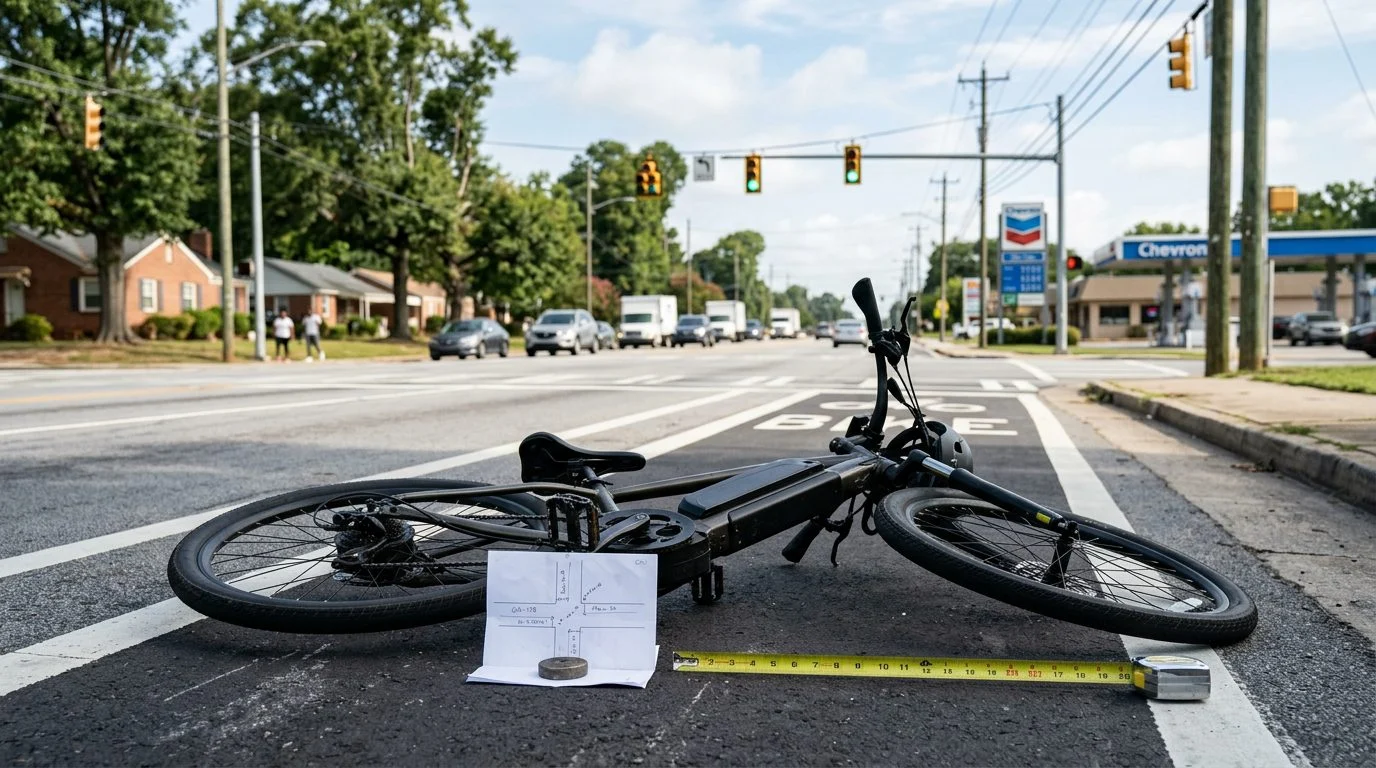
E-bike crashes | Clayton County, GA
Get the Police Report After Your E-Bike Crash in Clayton County
The report is often the first official record of what happened. Here is how to request it and what to do if it contains errors.
T. Madden & Associates, P.C.
1999
Year the firm began practicing in Georgia
5
Offices, including Jonesboro and Atlanta
24/7
Call available around the clock
By Terance Madden · Published November 13, 2026
You’re hurt, and the paperwork is piling up. The police report is the first written record of your crash, and Big Insurance will read it closely.
To get an e-bike crash police report in Clayton County, find the agency that responded, then ask its records unit for a copy. Have the report number, date, location and names ready.
Start With Safety and Medical Care After an E-Bike Crash
Get checked by a doctor the same day, even if the pain seems mild.
A rider has no frame or cage around the body. Head, face, arm, hip and leg injuries are common, along with road rash, broken bones and spinal injuries.
Some injuries show up hours or days later. Gaps in treatment give Big Insurance an easy argument, so keep every appointment.
At the scene, photograph the bike, the spot where it stopped and any damage to your helmet. Write down witness names and phone numbers. Keep the bike and helmet, and don’t repair either one until your claim is reviewed.
A family member often runs the paperwork. A spouse, mother or adult daughter can keep the appointment list, bills, insurance letters and report number in one folder.
For the bigger picture, read our e-bike claims overview.
If you're holding a report number and insurance letters after your e-bike crash, you don't have to handle the claim alone, and a free first consultation is a good place to start. Talk it through with our team — the first consultation is free, confidential, and carries no obligation.
Find Out Which Agency Responded to Your Crash
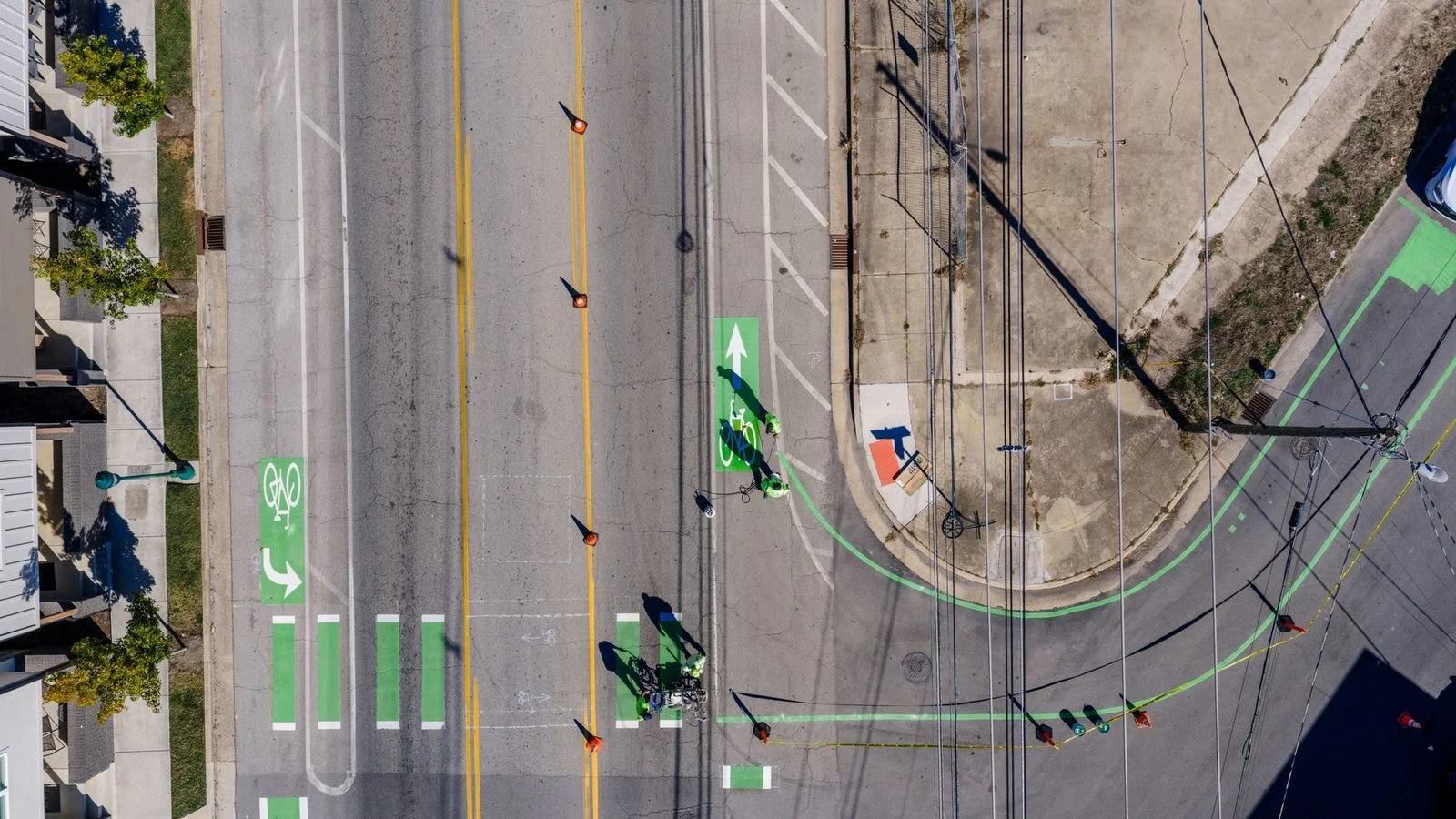
The agency that responded to the scene holds the report, and the crash location decides which agency that is.
Georgia law requires a driver in a crash that injures or kills any person, or that causes property damage to an apparent extent of $500 or more, to notify police immediately. Inside a city, that notice goes to the local police department. Outside a city, it goes to the county sheriff’s office or the nearest state patrol office, under O.C.G.A. § 40-6-273.
In Clayton County, that could mean a city police department, the Clayton County Police Department, the Clayton County Sheriff’s Office or the Georgia State Patrol. The location of the accident tells you which one to call: inside a municipality, notice goes to the local police department; outside a municipality, it goes to the county sheriff’s office or the nearest state patrol office.
Know the difference between the scene and the records. The officer’s on-scene notes start the report. The agency’s records unit keeps the final report and gives out copies. Ask the records unit for yours.
Find the report number on the card, slip or ticket the officer gave you. If you don’t have one, write down the date, time, street and officer’s name.
Steps to Request Your E-Bike Crash Report in Clayton County
Request the report from the responding agency’s records unit, using the details you wrote down.
- Gather the report number, date, time, location, names of everyone involved and the officer’s name.
- Confirm the agency using the section above.
- Ask the records unit how to request the report today. Methods change, so ask whether they take requests in person, by mail or online.
- Ask what ID they need and whether a family member can request it for you. Some agencies want written permission from the injured person.
- Ask how long processing takes before you plan around it.
- When the report arrives, check it line by line. Look at names, insurance details, the location, the diagram and any citations.
- Report errors in writing. Name the line and the mistake, send it to the agency and keep a copy.
How to Look Up an Accident Report in Georgia
Search by report number first. If you don’t have it, search by date, location or a party’s name, and expect the record may not appear right away.
A standard Georgia crash report usually lists the date, time and place, the vehicles and people involved, witness information, the officer’s narrative, a scene diagram and any citations. A crash report is the official written record a police agency makes of a crash. A citation is a ticket or charge written against a driver.
The Georgia DOT crash reporting system covers crashes on Georgia public roads and describes how crash reports are obtained.
Keep an eye on the calendar. Georgia generally gives two years to file a personal-injury lawsuit, under O.C.G.A. § 9-3-33.
What the Report Shows and What It Doesn’t
The report shows where vehicles ended up and how the officer read the scene. The officer’s view of fault is one piece of evidence, not the final word.
A scene diagram works like an engineer’s drawing. It can show distances, final rest positions, skid or gouge marks and the path each vehicle took. Those marks help show speed, space and timing when they’re measured correctly.
Terance Madden trained as an electrical engineer and holds a B.S. in Electrical Engineering before he went to law school. He starts a case by asking what the evidence shows and how the crash happened. He checks the diagram against photos and asks which records still exist and must be preserved.
Fault has its own rules. Under O.C.G.A. § 51-12-33, damages are reduced by your percentage of fault, and you recover nothing if you are 50 percent or more responsible. Each liable person pays only its own share, and the fault of a nonparty can be considered if the plaintiff entered into a settlement agreement with the nonparty or if a defending party gives notice not later than 120 days prior to the date of trial that the nonparty was wholly or partially at fault. That is why a driver, a maintenance shop or a parts vendor can each matter to your claim.
Big Insurance and the Report: Get the Report, Then Get Your Claim Ready
Big Insurance is not on your side, and its first offer is rarely what your claim is worth.
Adjusters often ask for a recorded statement early, sometimes before you’ve seen the report. Words said in a rushed call can be used later to shrink your claim.
Expect the tactics. A quick, low offer. Delays in payment. Arguments that your treatment wasn’t needed. “Low impact” or “low speed” claims that ignore how much force an e-bike rider’s body takes.
The firm’s response is to pursue every layer of coverage that may apply: the at-fault driver’s liability coverage, your own uninsured or underinsured motorist coverage, any umbrella or excess policy, and corporate coverage where a business is involved.
Georgia auto policies must contain uninsured motorist provisions, under O.C.G.A. § 33-7-11. If the driver is unknown, the law adds conditions, including physical contact unless an eyewitness other than you corroborates how the crash happened.
Injuries can affect your work and your life for years. A claim should count future care and lost income, not only the bills you have today. The firm prepares every case as if it may go to trial.
If you’re holding a report number, bills and letters from an insurer, you don’t have to sort out the claim on your own. Contact T. Madden & Associates, P.C. for a free, confidential first consultation, with no obligation to continue. Call us 24/7 or start a free case evaluation. Terance Madden, the responsible lawyer, has been in practice since 1999.
Not sure what your next step is?
Talk it through with our team — the first consultation is free, confidential, and carries no obligation.
Frequently Asked Questions
Should police be called after an e-bike crash in Clayton County?
Yes. Call 911 if anyone is hurt, and ask the responding officer to write a crash report, which records who was involved, what was seen, and what the drivers and witnesses said. A report gives you an official record of the crash from the start.
How do I get a copy of an e-bike crash police report in Clayton County?
Request it from the agency that responded, such as the Clayton County Police Department or the Clayton County Sheriff’s Office, depending on where the crash happened. Have the report number, the date, and the location ready, and expect a short wait before it is available.
Why does the police report matter after an e-bike crash?
The report is often the first written record of how the crash happened and what the officer observed. Insurance adjusters and attorneys usually review it early, so its details can shape how the claim is handled.
What should I do if the police report has a mistake?
Ask the agency in writing to review and correct the error, and keep your own photos, notes, and medical records. T. Madden & Associates, P.C. offers a free first consultation, which is confidential and comes with no obligation to continue, so you can talk through the report with the firm.