

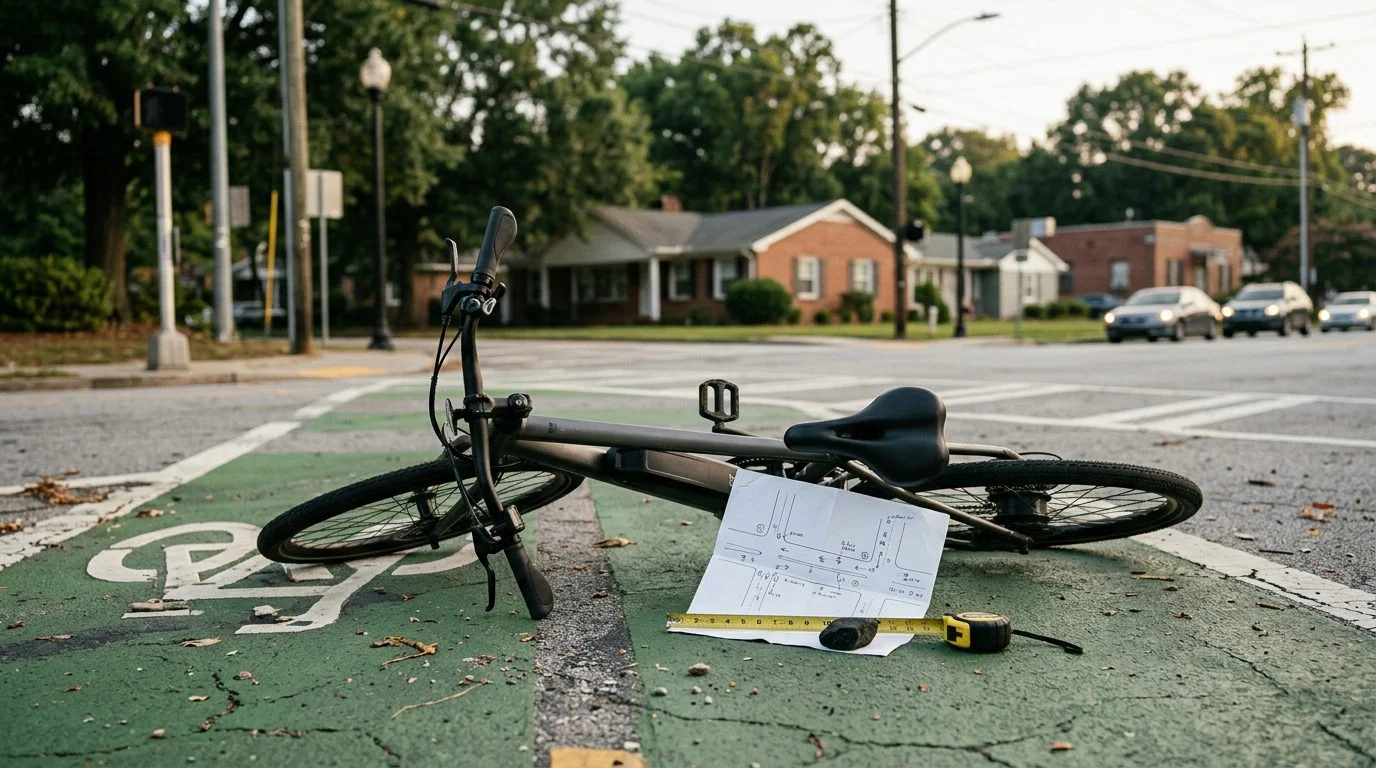
E-Bike Accident Lawyer · Georgia
Asked for a Recorded Statement After Your E-Bike Crash? Talk to Us First
An adjuster may call within days and ask you to go on the record. A few minutes of preparation can keep your words accurate and your claim on track.
Serving Injured Georgians
1999
Practicing since
5
Georgia offices
24/7
Phone line open
By Terance Madden · Published November 11, 2026
An insurance adjuster just called. They want to record you talking about your e-bike crash, and you’re still sore. Should you say yes?
Not on the spot.
Short Answer: You Do Not Have to Give One Today
You can wait. A quick recorded call is rarely in an injured rider’s interest.
Your first days after an e-bike crash should go to your health. Some injuries take days to show up, so you may not know the full picture yet. The insurer for the other side is not on your side. Its job is to pay as little as it can, and a first offer is rarely what a claim is worth.
The call sounds routine. For you, it is the start of a file the insurer will use to value your claim. The insurer works for its own company. You are working on your own health and your own future. Those goals are not the same.
This page explains what a recorded statement is, the tactics used to get one early, what to do instead, and the questions riders ask most.
Not sure what your next step is?
Talk it through with our team — the first consultation is free, confidential, and carries no obligation.
What a Recorded Statement Means
A recorded statement is a call or interview that an insurance company records. The adjuster asks you questions about the crash and your injuries. The audio or a written transcript goes into the claim file.
The claim file is the insurer’s working record of your case. Months or years later, the company can quote a word you chose badly. It can also quote a guess you made about your speed to argue your claim is worth less. Recorded words are hard to take back.
A recorded statement is not the same as a written report you file yourself. When you write your own account, you pick the order and the words. You can take time to get the details right. On a recorded call, the adjuster picks the questions and sets the pace.
The tone can feel friendly and casual. Expect questions about the bike, your speed, the path or lane you were using, what you were wearing, where you were looking, and how you feel today. Every answer can be used later.
The Tactics Big Insurance Uses Early
Big Insurance often asks for a recorded statement within days of a crash. That timing matters, because you may not yet know how badly you are hurt.
Watch for these moves:
- An early call before you have seen a doctor or understood your injuries.
- Quick questions about speed, direction and where you were looking, asked fast so you answer before you think.
- Questions about helmet use and protective gear, used to build a fault argument.
- “Minor damage” or “low impact” claims that try to shrink the case before the injuries are fully known.
- A low first offer with pressure to accept quickly.
- Requests for records and disputes over treatment, used to slow the claim down.
These tactics are not a fair way to value an injury. The response is simple. Slow the call down and put your questions in writing. Every coverage layer that applies belongs in that picture, not just the first policy the insurer mentions.
Why the Questions Can Hurt Your Claim
Short, unprepared answers about speed and timing can be used to argue that you caused the crash. Georgia uses a shared-fault rule (O.C.G.A. § 51-12-33). The judge reduces your damages by your share of fault. A plaintiff who is 50 percent or more responsible recovers nothing (O.C.G.A. § 51-12-33).
Georgia also says a person who could have avoided the harm with ordinary care may not recover for it (O.C.G.A. § 51-11-7). That is why one loose comment about where you were looking can carry weight later.
This is not a suggestion that you caused the crash. It is a warning. The other side will search every answer for a way to shift blame onto you. Saying “I’m fine” can also be quoted back when symptoms show up weeks later.
Speed, stopping distance and impact come up on almost every e-bike call. Where the vehicles ended up and how fast they were moving are matters of physics. A car’s event data recorder, often called a black box, can show speed and braking. Crash physics can show how much a vehicle’s speed changed in the impact. That helps test a “low impact” argument. Getting the evidence in front of you before you answer detailed questions is the sensible order.
What to Do After an E-Bike Crash Instead
Stop at the scene when it is safe, document what you can, get checked by a doctor, and call before you speak at length with anyone from the other side’s insurer.
Under O.C.G.A. § 40-6-270, a driver in a crash that injures someone or damages a vehicle must immediately stop at the scene, or as close as possible, and return to it; give his or her name, address and vehicle registration number; show an operator’s license on request if one is available; render reasonable assistance to an injured person, including transport to a physician, surgeon or hospital when treatment is apparent or the injured person asks for it; where an injured person is unconscious, appears deceased or is otherwise unable to communicate, make every reasonable effort to ensure that emergency medical services and local law enforcement are contacted; and remain at the scene until these duties are met. If the other driver left, note the make, color and plate if you can. Report it to police right away.
Build your file as you go:
- Get the other driver’s name, address and registration number.
- Photograph the bike, the vehicles, the road and any visible injuries.
- Get names and phone numbers of witnesses.
- Get medical care right away, even if you feel fine. Keep every visit and bill.
- Keep a simple log of symptoms, missed work and out-of-pocket costs.
- Write your own account while the details are fresh. Keep it private.
- Stay off social media about the crash and your activities.
If your loved one can’t manage the paperwork, a spouse, parent or adult child with written authority can ask for records. Georgia law requires a provider to furnish a requested record within 30 days. The request must come with the required HIPAA and signed written authorizations (O.C.G.A. § 31-33-2).
How to Handle the Call When It Comes
You can end the call without giving a statement. Say you are not ready to talk. Give your name and claim number. Tell them you will respond after you have advice.
Once you have help on your claim, ask that all contact go through that person. Put any settlement question in writing. Georgia law says a written request for clarification of certain settlement offers is not a counteroffer. For certain motor vehicle offers made with an attorney’s help before the defendant answers, the law also requires a payment date at least 40 days after receipt (O.C.G.A. § 9-11-67.1).
Several insurance layers can respond to one crash. The at-fault driver’s liability coverage pays the damages that driver owes. Georgia requires auto liability policies to include uninsured motorist coverage (UM). That coverage can pay you when the at-fault driver has none, within limits you may choose (O.C.G.A. § 33-7-11). Underinsured coverage (UIM), umbrella or excess policies, and corporate coverage may also come into play.
Keep the damages picture straight, too. Special damages, such as medical bills, must be proved. General damages are presumed to flow from the injury and can be recovered without proof of a set amount (O.C.G.A. § 51-12-2).
Not sure what your next step is?
Talk it through with our team — the first consultation is free, confidential, and carries no obligation.
Common Questions After an E-Bike Crash
Fault is decided on the facts, and riders and drivers can both have claims or defenses. Here are short answers to the questions people ask most.
What happens if an e-bike hits your car?
Fault still comes down to who did what. Georgia’s shared-fault rule can reduce what each side recovers. Each at-fault person pays only its own share (O.C.G.A. § 51-12-33). A careful review of the evidence comes first.
Do crash reports go on your record?
A police report is a separate record from your insurance claim. Georgia law requires a driver in a crash with injury, or property damage to an apparent extent of $500.00 or more, to give immediate notice to the local police department if the crash occurs within a municipality, or to the office of the county sheriff or the nearest office of the state patrol if it occurs outside one (O.C.G.A. § 40-6-273). How a report affects you depends on the facts.
How long after a crash must it be reported?
Police notice is immediate under Georgia law for an injury crash. To file a lawsuit for an injury, Georgia generally allows two years to file suit from the date the right of action accrues, except for injuries to reputation, which allow one year, and actions involving loss of consortium, which allow four years (O.C.G.A. § 9-3-33). Those are two different clocks, so track both.
Who pays medical bills while the claim is open?
Health insurance is often the first step. Medical payments coverage in your own auto policy may help where it applies. Georgia limits special damages for medical expenses to the reasonable value of medically necessary care (O.C.G.A. § 51-12-1.1).

Before You Answer the Next Question
If an insurance representative has asked to record you about your e-bike crash, you don’t have to decide on that call. You may still be hurting, unsure what to say, and sorting out paperwork while a family member helps.
Bring what you have: witness names, photos, bills, and the adjuster’s phone number. T. Madden & Associates, P.C. offers a free, confidential first consultation, with no obligation to continue. Its offices are in Jonesboro (Clayton County), Atlanta, Decatur, Macon and Augusta. Before you give any recorded statement, request your free consultation.