

E-bike accident lawyer | Georgia
Your spouse was hurt on an e-bike. Here is what to do next.
A plain-language checklist for the spouse who is holding the household together, from the first doctor visit to the first call with a lawyer.
By Terance Madden · Published November 26, 2026
Your spouse was hurt in an e-bike crash, and now you’re the one making the calls. You’re keeping the bills, tracking appointments and wondering what counts.
Here’s the short answer: check six areas now. Look at care records, the bike and battery, the crash facts, insurance calls, your paperwork and the money. Each area below has a yes-or-no test, one plain explanation and a next move.
Why the Spouse Is Often the One Holding This Together
After an e-bike crash, the spouse often becomes the household’s record keeper, scheduler and go-between. That job comes with real worries.
You may be afraid of missing a detail. You may get a recorded phone call you didn’t expect. Bills keep arriving, and you aren’t sure which losses a claim can include.
This checklist is built for that role. Answer each test honestly. If the answer is no, the next move tells you what to do.
If your spouse was hurt in an e-bike crash someone else caused, you don't have to sort out the insurance calls and paperwork alone. Reach out to our team to talk it through. Talk it through with our team — the first consultation is free, confidential, and carries no obligation.

Step 1: Is Your Loved One Getting Care, and Is Every Visit Written Down?
Yes, when every visit, test, prescription and therapy session is logged with a date, a provider and a reason.
Test: Is every appointment logged this way? A gap in treatment gives Big Insurance an easy argument that the injury isn’t serious. Keep the notes complete.
Your loved one’s medical record is the chart a doctor or hospital keeps about their care. It shows what was found and what was done.
Test: Can you list the symptoms and how daily life has changed, and update it weekly? Write down what they can’t do anymore: stairs, sleep, work, driving, lifting a child. Pain and daily life are part of the claim.
The most common mistake is waiting. Notes written weeks later are weaker than notes written the same day. Missed follow-up visits matter too. If a doctor said to come back in two weeks and that didn’t happen, write down why.
Next move: Keep a folder or phone album with discharge papers, bills and appointment cards. Bring it to your consultation.
Step 2: Is the E-Bike and Its Battery Being Kept as Evidence?
Yes, only if the bike, battery and charger are exactly as they were after the crash. The bike may be the most important evidence in the case.
Test: Are the bike, battery, charger and broken parts still unchanged? Repairs, resale or a trip to the dump can erase proof of what failed. Keep everything in one place.
Test: Did the battery or bike overheat, smoke, swell or catch fire before or during the crash? A lithium-ion battery can fail in ways you can’t see from the outside. Tell the firm about any warning sign, even a small one.
Terance Madden trained as an electrical engineer before law school. He reviews a battery case the way an engineer would. He looks at the cells, the charging circuit and any certification marks. He asks where the failure started and why. Those answers can show a defective product and point to other parties who may share responsibility. He also works to make sure the physical evidence is preserved.
Next move: Don’t repair, sell, recharge or throw away the bike or battery. Photograph the bike, the scene and the damage. Tell the firm before anything is moved.
Step 3: Are the Crash Facts, Photos and Witness Names Written Down?
Yes, when you have the date, time, place, witness contacts and any police report number.
Test: Do you have the date, time and location, plus the name and phone number of anyone who saw it? Witnesses move and memories fade. Write it down while the details are fresh.
Test: Was police or 911 called, and do you have the report number? The report is an early record of what officers saw and heard. Ask for a copy.
Test: Was another vehicle or rider involved? If so, is their name, insurer and contact information recorded? Get these details before anyone leaves the scene.
A clear record keeps the facts from shifting over time. Insurers and lawyers both start with the crash facts, so the earlier they are written down, the better.
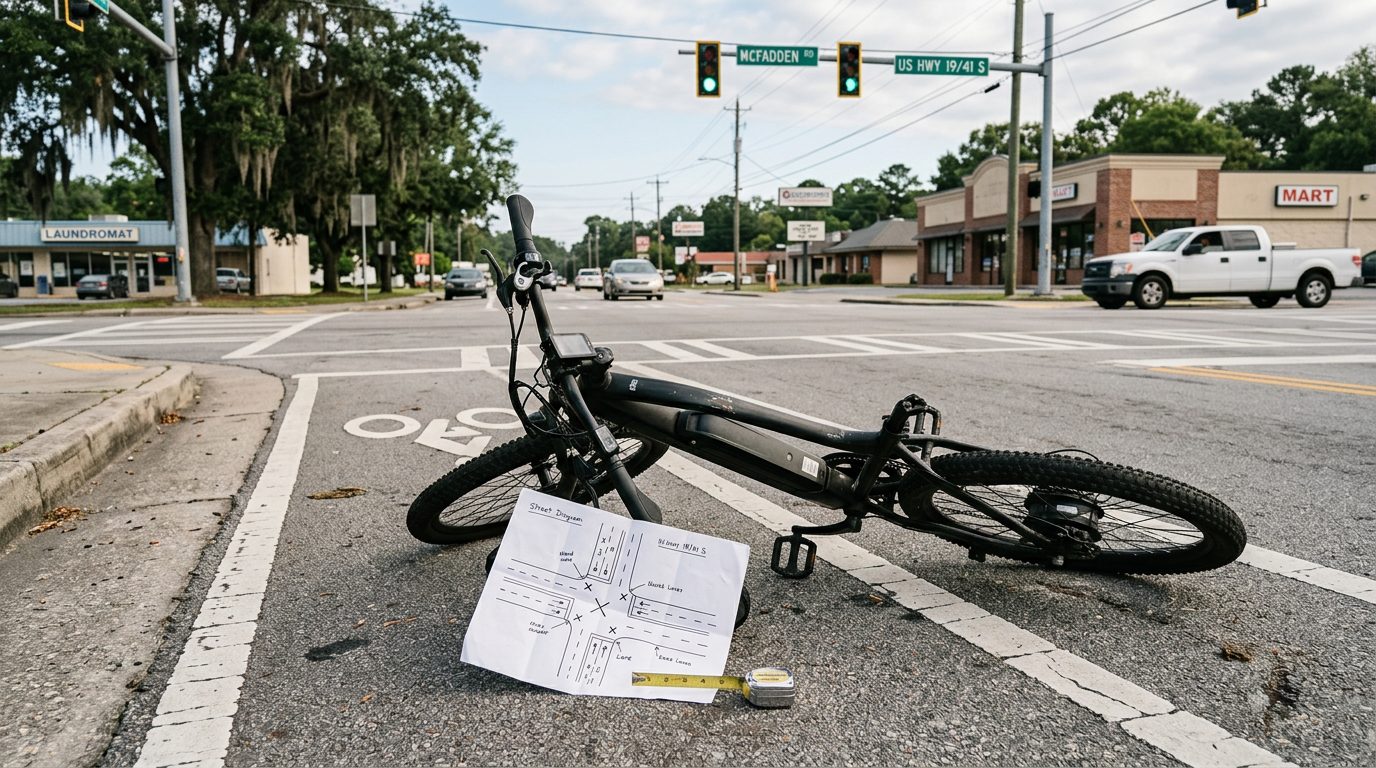
Photos matter. Shoot the bike’s position, any skid marks, road conditions, lighting and nearby signs or signals. Hold off on posts about the crash or the injuries. Anything posted can be used against the family.
Next move: Ask your loved one to write down what they remember while it’s fresh. Save texts and messages about the crash too.
Step 4: Are You Ready for the Insurance Calls?
No insurance call needs an answer on the spot. Hold your answers until the family has legal advice.
Test: Has anyone from an insurance company asked for a recorded statement, a quick settlement or a signature?
Big Insurance uses familiar tactics. It may open with a low offer. It may ask for a recorded statement early, stall on payment, dispute the treatment or argue the crash was “low impact.” An early settlement offer can arrive before the full costs of an injury are known.
The insurer is not on your family’s side. A first offer is rarely what a claim is worth.
Test: Does the household’s auto policy include uninsured motorist (UM/UIM) coverage? UM stands for uninsured motorist. UIM stands for underinsured motorist coverage. Georgia law generally requires auto liability policies to include uninsured motorist coverage for bodily injury, unless the insured rejects or reduces that coverage in writing. Check the policy language, since that is where the answer lives.
Response: Liability coverage, UM/UIM, umbrella or excess coverage, and corporate coverage may each matter. The firm looks at every layer and prepares as if the case may go to trial.
Next move: Don’t give a recorded statement or sign a release before talking with the firm. Tell any adjuster that your family is getting legal advice.
Step 5: Do You Have the Authority and Paperwork to Act for Your Loved One?
Yes, when you hold a signed HIPAA authorization and any power of attorney your loved one signed. HIPAA is the federal health privacy law.
Test: Do you have a signed HIPAA medical authorization? Under Georgia’s medical records law, a provider must furnish requested records within 30 days. That applies when the request comes with the HIPAA authorization and a signed written authorization.
Test: Did your loved one sign a power of attorney covering medical and financial decisions? A power of attorney names a person to act for someone else. Without one, providers and insurers may ask for more paperwork before they talk with you.
Test: Are you the spouse who may bring a loss of consortium claim? Loss of consortium covers the loss of companionship and household support caused by the injury. Whether it applies depends on the facts. Most injury claims in Georgia must be brought within two years after the right of action accrues, which means the date your right to sue begins. Loss of consortium claims have four years.
Next move: Gather the signed forms and bring copies to your consultation, so the firm can see what’s already in place.
Not sure what your next step is?
Talk it through with our team — the first consultation is free, confidential, and carries no obligation.
Step 6: Are the Money and Household Losses Being Tracked?
Yes, when every lost wage, out-of-pocket bill and new household task is written down with a receipt or a note.
Test: Are lost wages, missed shifts and reduced earning ability written down with pay stubs or an employer letter? Georgia calls these special damages, losses you must prove with records. General damages, like pain and daily life, don’t need proof of an exact dollar amount, but they still need a clear story.
Test: Are out-of-pocket costs saved: co-pays, prescriptions, equipment, rides and mileage? Georgia law treats necessary expenses from an injury as part of the damage estimate. Keep every receipt.
Test: Have you taken on jobs your loved one can’t do, like childcare, cooking or yard work? Log the hours. That work is part of the household’s loss too.
Test: Is your loved one on Medicare? If so, the liability insurer should pay first for crash-related care, according to CMS. If that insurer doesn’t pay promptly, usually within 120 days, Medicare may make a conditional payment. That payment must be repaid from a settlement.
Quick Answers for Spouses
How long do we have to file? Georgia’s general deadline for injury claims is two years after the right of action accrues (O.C.G.A. § 9-3-33; Kenneth B. Cameron v. Jmp Pizza, Inc (2026)). Loss of consortium claims have four years.
Can I request my loved one’s records? Yes, and keep the deadline in mind: actions for injuries to the person generally must be brought within two years after the right of action accrues, but claims for injuries to reputation must be brought within one year, and claims involving loss of consortium must be brought within four years (O.C.G.A. § 9-3-33).
If your answers show gaps, or your spouse was badly hurt in a crash someone else caused, you may have a claim worth reviewing. The firm’s first consultation is free, confidential and carries no obligation to continue. Send your answers to the firm and talk through this checklist with a lawyer.

Frequently Asked Questions
What should I do first after my spouse is hurt in an e-bike crash?
Get medical care right away, even if the injuries seem minor, and keep every visit record. Save the e-bike and its battery, photograph the scene, and write down the names and phone numbers of any witnesses.
Should my spouse talk to the other side’s insurance adjuster?
Be careful. Big Insurance adjusters often ask for a recorded statement early, and a casual answer can be used to argue the crash was less serious than it was. A first offer is rarely what a claim is worth, so let a lawyer handle those calls before your spouse says anything on the record.
Why should we keep the e-bike and battery after a crash?
The battery, controller, and wiring can show whether a defect or a fault caused the crash, and that physical evidence can change quickly if it is repaired or thrown away. Terance Madden trained as an electrical engineer before law school, so he starts by asking what the evidence shows and how the crash happened.
Do we need a lawyer to handle my spouse’s e-bike crash claim?
You are not required to hire anyone, but a lawyer can take over the insurance calls, paperwork, and deadlines while your spouse focuses on healing. The initial consultation with T. Madden & Associates, P.C. is free, confidential, and comes with no obligation to continue, so you can call to talk through your options.