

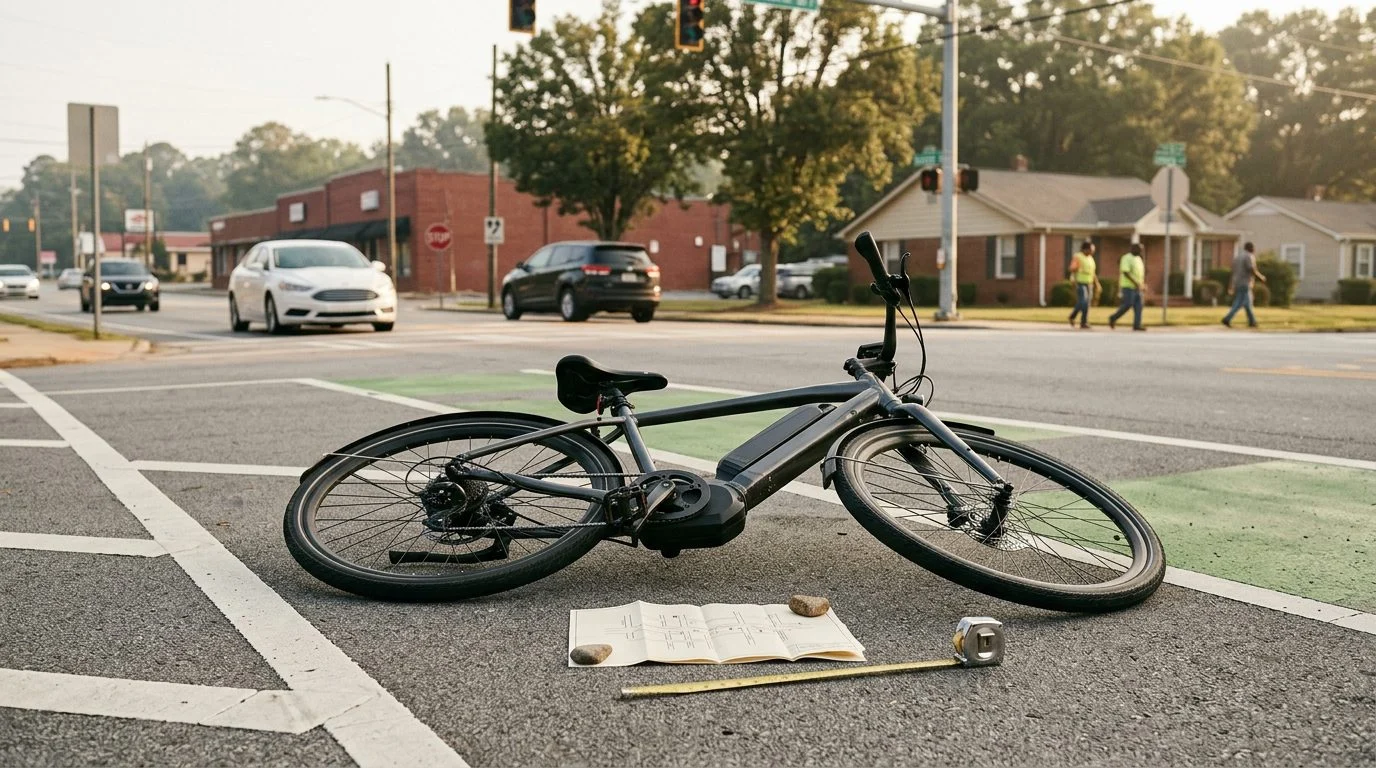
Lithium-ion battery safety | Jonesboro, Atlanta and Georgia
Your e-bike battery is in the house. Do you know how to keep it safe?
Simple habits lower the risk of a fire, and a battery fire can change a family's life in minutes.
T. Madden & Associates, P.C.
1999
In practice since
5
Georgia offices
24/7
Phone line available
By Terance Madden · Published November 20, 2026
You bought an e-bike to save money and get around. Now the battery sits in the hallway, and you’re wondering if that’s a mistake.
Usually, it isn’t. A healthy battery from the bike’s maker can stay indoors when it’s charged and stored with care. The danger comes from damage, modification and cheap parts. This guide covers why batteries catch fire, how to store one safely, the warning signs, and what to keep if a fire has already hurt someone.
Usually yes, if the battery is healthy and handled right
For most owners, a healthy battery from the bike’s maker can stay indoors. The battery’s condition matters far more than the room it sits in.
Lithium batteries pack a lot of energy into a small space. That’s what makes e-bikes light and fast. It’s also why a damaged pack deserves respect.
Four things raise the risk: physical damage, modification, poor charging habits and cheap parts. A pack that was dropped, soaked or crashed can look fine and still hide internal damage. A rebuilt pack with unknown cells is a different story.
So ask two questions. Is this battery in good shape? Am I storing and charging it the right way? If either answer is shaky, fix it before the battery stays in the house.
If a battery fire has hurt someone in your home, you don't have to sort out what comes next alone, and our team will listen to what happened. Talk it through with our team — the first consultation is free, confidential, and carries no obligation.
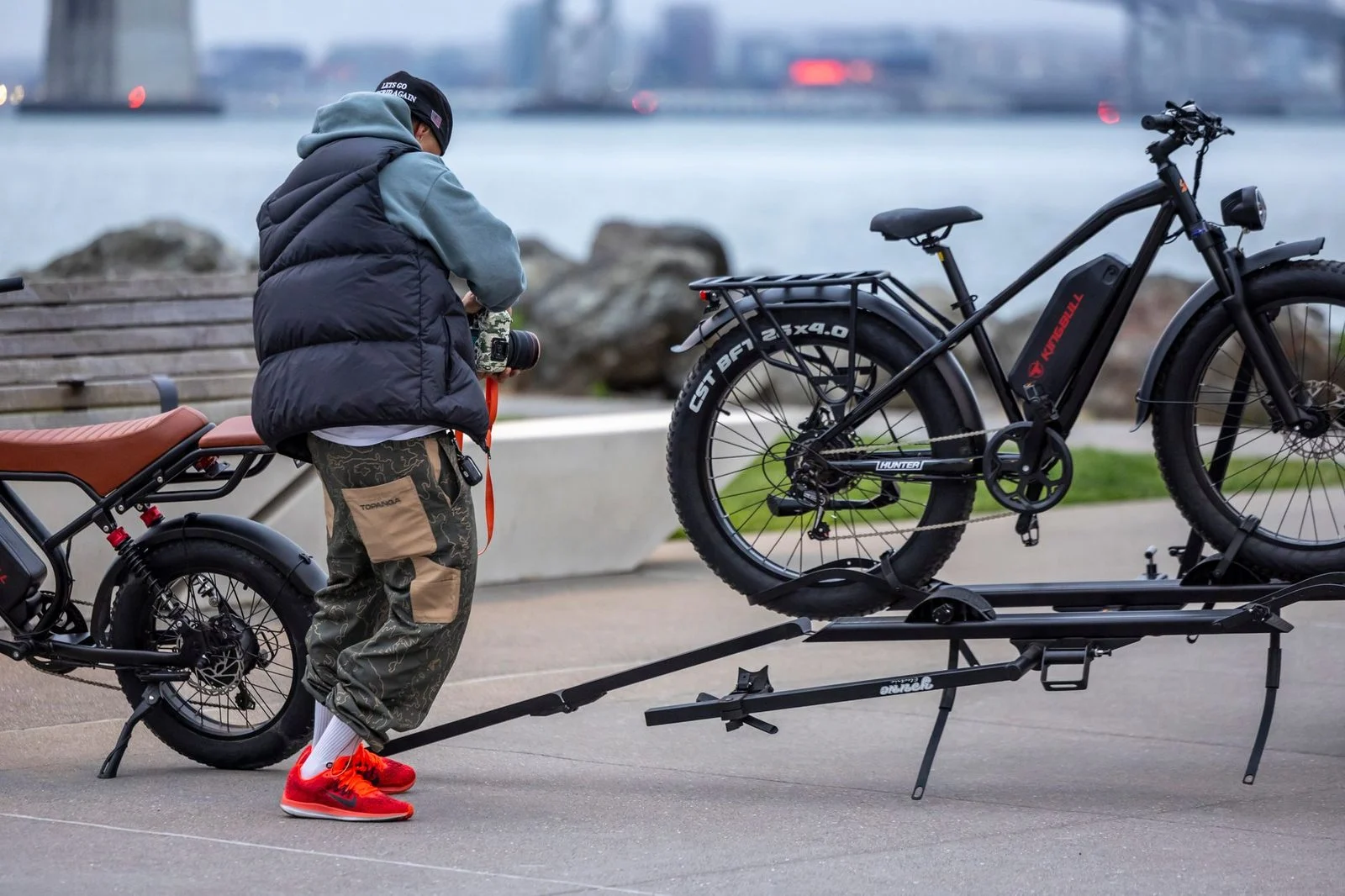
Why lithium batteries catch fire
A lithium battery catches fire when one cell fails and heats the cells around it. Engineers call this thermal runaway (a chain reaction where heat feeds more heat until the pack burns hot and fast).
Something usually goes wrong first. Common triggers include internal damage from a hard hit, overcharging, heat from a sunny window or a hot garage, water getting inside, and low-quality cells that don’t match the pack’s design.
A battery management system (the circuit that watches voltage and temperature) guards against many of these problems. It can only protect the pack as well as the cells and charger it was built to work with.
When the failure starts inside the pack, the real question becomes who designed, made and sold it.
How rare are e-bike battery fires?
Battery fires are real, but the risk is uneven. It depends on the pack in your home, not on how a headline sounds.
Picture two batteries. One is a factory pack, kept dry and charged on its own charger. The other is swollen, modified or built from unbranded parts. They don’t carry the same risk, even though they look alike from across the room.
Owners often wait for a warning sign before they act. By then, the damage may already be there. Focus on what you can see and control: the battery’s condition, how you charge it and what it’s made of.
Safer indoor storage and charging habits
Charge and store the battery on a hard, non-flammable surface, away from exits, bedding and furniture. These habits are simple. They matter most when nobody is watching.
- Use only the charger the maker supplied.
- Stop charging if the pack or the charger gets hot.
- Don’t leave a battery charging overnight or while the house is empty.
- Keep a working smoke alarm nearby.
- Store it at room temperature, away from heaters, direct sun, hot cars and sheds.
Heat is the quiet enemy. A hot garage can push a pack past the temperatures it was built to handle.
Where to keep the battery in the house, and where not to
Keep the battery in a cool, dry spot with air moving around it. Pick a place close enough to an exit to leave fast, and far from anything that burns.
Avoid these spots:
- A closet packed with fabric, boxes or paper
- Under the stairs or in a blocked hallway
- Beside a bed or couch
- A garage or shed that gets very hot or damp
Many owners ask whether to take the battery off the bike for storage. Follow the maker’s storage instructions for charge level and location. Those instructions are written for that exact battery.
Warning signs the battery should not stay inside
A swollen, cracked, leaking, hot or smelly battery should come out of the house right away. Don’t wait to see if it gets worse.
Watch for these signs:
- A bulging or swollen case
- Cracks, leaking fluid or a sharp chemical smell
- Heat during charging or use
- Hissing or popping sounds
- Discoloration on the connectors
- A pack that was dropped, soaked, crashed or left somewhere hot, even if it still runs
- Aftermarket cells, modified packs or unbranded chargers
One sign is enough to act. A battery that still runs is not proof it is safe.
Not sure what your next step is?
Talk it through with our team — the first consultation is free, confidential, and carries no obligation.
What not to do with a damaged battery
Stop using a damaged battery and move it away from living spaces. Do not try to revive it.
Charging a damaged cell can start the fire the owner was trying to prevent. The most common mistake is the quiet one: charging it “just to check” after a drop. Don’t toss the pack in household trash either. Contact your local fire department for safe disposal guidance.
If the battery is smoking, hissing or hot, get everyone out and call 911 right away.
If a battery fire has hurt someone, keep the evidence
Keep the battery, the charger, the bike, photos of the damage and every receipt, manual or message about the purchase. Those items show what happened and who was involved.
Georgia law draws lines between who made a product and who sold it. A product seller is a business that sells, distributes, labels or assembles a product in the course of business (Georgia product seller statute). A company that only labels a product as its own, without any input into its design or making, is treated as a seller, not a manufacturer (Alltrade v. McDonald).
Georgia also keeps a manufacturer’s duty to warn of a danger once the maker knows about it (Georgia manufacturer liability statute). Georgia’s warranty rule can reach a family member or guest hurt in the home (Georgia warranty beneficiary statute). If a fire causes a death, a surviving spouse, or the children if there is no spouse, may recover the full value of the decedent’s life, as shown by the evidence (Georgia wrongful death statute).
Before law school, Terance Madden earned a B.S. in Electrical Engineering, and he reads battery cases the way he’d read a circuit. He asks which cells failed, where the heat started, and what the charger and pack circuitry show. He also asks which records must be preserved before they are lost. A careful look at the cells, charging circuits and certification marks can show whether a failure began inside the pack or outside it.
Can I keep an e-bike battery in the house overnight?
Charging overnight is the habit to avoid, because nobody is awake to notice heat or smoke. Store the battery at room temperature and check it often.
How long do I have to file a claim over a battery fire in Georgia?
For injuries to a person, Georgia generally requires a claim within two years after the right of action accrues (Georgia injury deadline statute). Other deadlines can apply, so don’t wait.
Can a family member hurt in the home make a claim?
Georgia’s warranty rule can reach a family member or guest who is injured in the home. Whether a law applies often depends on the specific facts of each case.
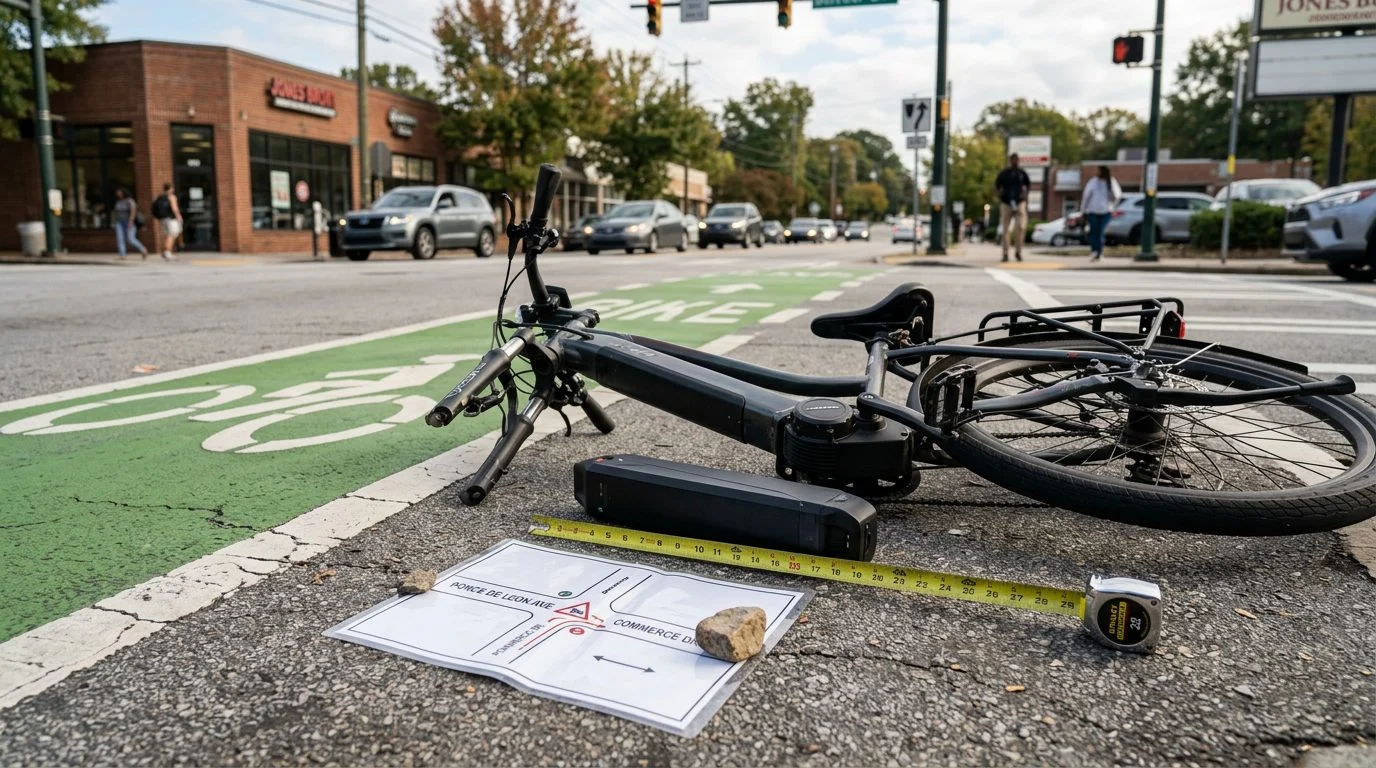
Talk with T. Madden & Associates about a battery fire
If a battery fire has changed your home, talking it through with our team is a sensible next step.
You may be the spouse at the bedside, the parent cleaning up smoke damage, or the adult daughter trying to make sense of a battery still sitting in the hallway. That’s a lot to carry. T. Madden & Associates, P.C. has been in practice since 1999, with offices in Jonesboro, Atlanta, Decatur, Macon and Augusta. The first consultation is free, confidential, and comes without any obligation to continue. Start a free case evaluation and tell us what happened, in your own words.