

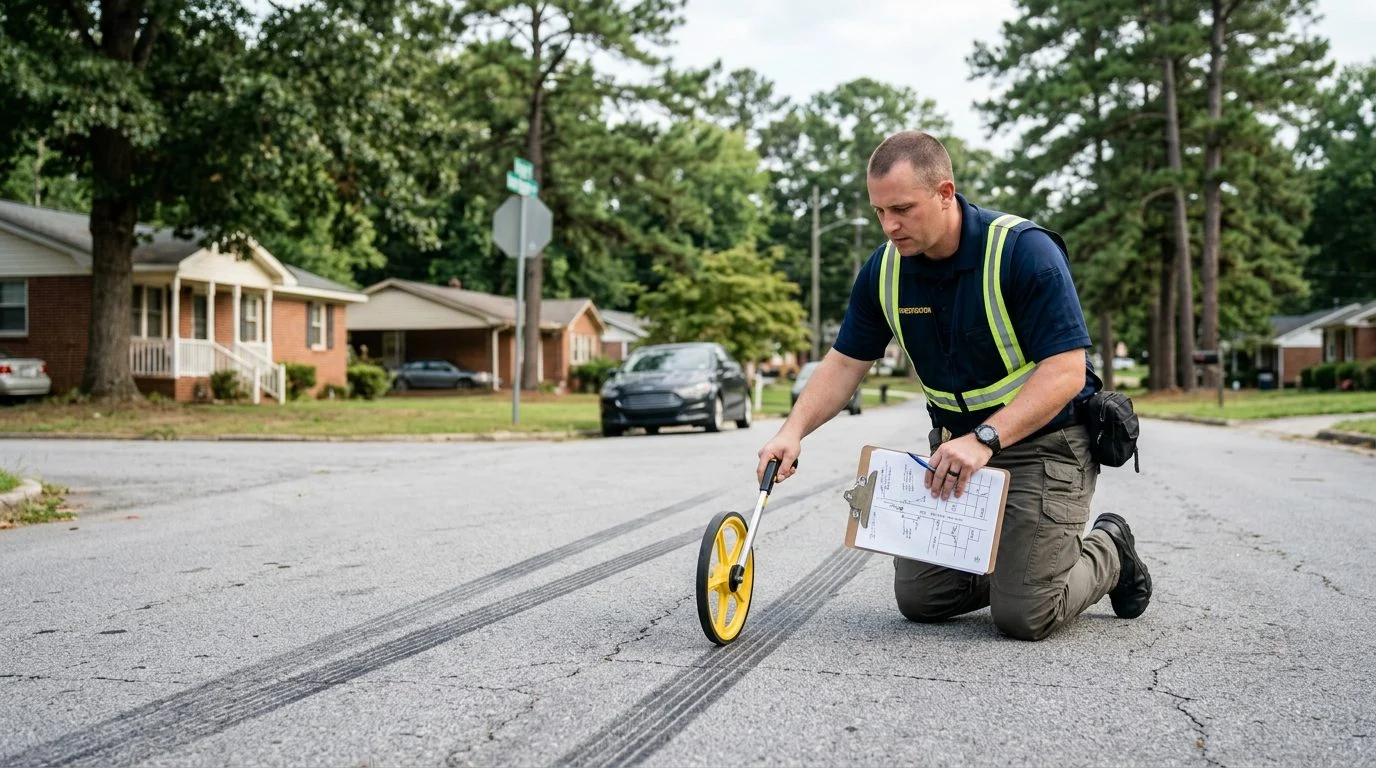
Georgia crash claims | Jonesboro, Atlanta, Decatur, Macon, Augusta
Say less to the insurance company after a crash
The first calls and forms can shape your claim before you know its full value. Here is how to protect yourself while you recover.
T. Madden & Associates, P.C.
1999
Year the firm began practicing law
5
Offices across Georgia
24/7
Call us any time
$0
Free first consultation
By Terance Madden · Published November 17, 2026
You didn’t choose this crash, and now the calls won’t stop. An adjuster may want a recorded statement, a quick signature, or your medical records. The short answer: say less, stick to facts, and never guess about fault or injuries.
Big Insurance is not on your side. Its adjuster’s job is to limit what the insurer pays. Here is what not to tell insurance after a crash, why it matters in Georgia, and how to read a first offer.
Why the Insurance Call Matters More Than It Sounds
Anything you tell the other side’s insurer can end up in the claim file and be quoted back to you. That’s the first thing to remember.
An adjuster is the person an insurer assigns to review a claim and decide what it will pay. Liability means legal responsibility for harm. In your claim, the question is whether someone else’s negligence, meaning a failure to use reasonable care, caused your injuries.
Georgia also shares fault between the people involved. Under O.C.G.A. § 51-12-33, a judge reduces your damages by your share of fault. If you are 50 percent or more responsible, you cannot recover any damages. Your words on the phone can become the evidence used to set that share.
If you are the spouse, parent or adult child handling these calls, you are carrying two jobs at once. You are managing the recovery and the paperwork. That is a lot to hold while someone you love is still healing.
If you're answering the calls and bills for someone hurt in a crash that wasn't their fault, you don't have to sort it out alone, and the firm can talk it through with you. Talk it through with our team — the first consultation is free, confidential, and carries no obligation.
Do Not Give a Recorded Statement Before You Know Your Injuries
Don’t agree to a recorded statement until you know what your injuries are. A recorded statement is audio of your answers to an adjuster’s questions. Adjusters often ask for one within days of a crash, before doctors have finished testing.
That timing is the problem. Pain, headaches, neck stiffness and numbness often show up later. If you say “I’m fine” on day three, that line can be used against you when treatment starts in week three.
Big Insurance often asks early because your injury story is still unfinished. A safer step is to give basic contact and policy details. Then ask for questions in writing, so you can answer after you’ve seen a doctor.
The state’s Office of the Commissioner of Insurance and Safety Fire lists avoiding statements about fault among its auto claim tips.
Do Not Admit Fault or Guess How the Crash Happened
Never admit fault, and never guess at speed, distance or timing. Phrases like “I should have seen him” or “I think I was going too fast” get written down and treated as admissions.
Guessing about speed, braking, lighting or where the other vehicle came from creates a record that may not match the physical evidence. Stick to what you directly saw and felt. Saying “I don’t know” is an honest answer.
Georgia also asks whether you could have avoided the harm with ordinary care. Under O.C.G.A. § 51-11-7, if you could have avoided the consequences of another’s negligence with ordinary care, you cannot recover. In other cases, the other side is not off the hook just because you played a part.
E-bike crashes add another layer. Battery, throttle and speed data may tell a different story than your memory of the moment. Let the data speak, and don’t fill the gap with a guess.
Do Not Downplay Injuries or Speculate About Them
Describe your injuries as they are today, even when they seem small. Delayed pain, headaches, numbness and trouble sleeping all belong in your description, even if they show up days later.
Insurers often argue that a gap in treatment or a late diagnosis means the crash didn’t cause the injury. Don’t fill that gap with guesses. Say the doctor hasn’t finished evaluating you.
Georgia limits medical expense damages to the reasonable value of medically necessary care. Under O.C.G.A. § 51-12-1.1, the jury decides that value.
If you have Medicare, the bills need a second look. The CMS Medicare Secondary Payer overview explains that a conditional payment must be repaid when a settlement or judgment is paid. Medicare.gov coordination of benefits adds that providers may bill Medicare when an insurer doesn’t pay promptly, usually within 120 days.
Insurers may ask you to see doctors they choose. Ask your own doctor how to handle those requests and which records to send. Share history that matters to the crash, and don’t volunteer unrelated history without a plan.
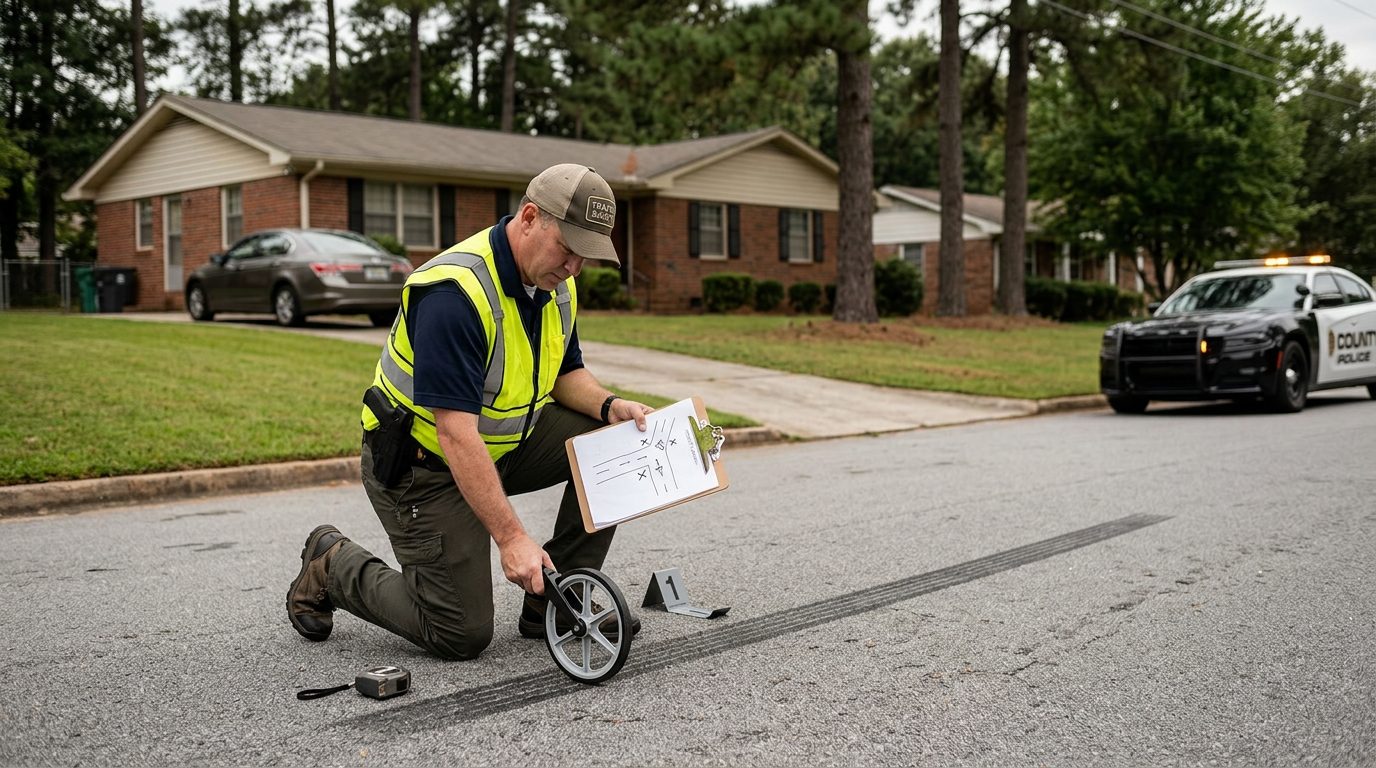
Do Not Hand Over Unverified Details, Opinions or Emotions
Stick to facts you can check, and keep the device, battery and helmet intact. Opinions aren’t facts. Calling the other rider “careless” or saying the crash “felt like slow motion” gets recorded like any other statement.
Your anger and grief are real. They don’t belong in a recorded answer to an adjuster.
Keep the evidence. Don’t throw away a damaged e-bike, battery, charger or helmet. Photograph everything, and ask before any repair or disposal.
Terance Madden holds a B.S. in Electrical Engineering and trained as an engineer before law school. He starts a case by asking what the physical evidence shows, how the crash or injury happened, and which records and devices must be preserved. In an e-bike or battery fire case, that means examining the cells, the charging circuit, and the throttle and speed data, and tracing where a failure or fire began. Those details can show whether a parts or battery maker shares responsibility.
How to Read a First Settlement Offer
A first offer is rarely what a claim is worth. It often arrives before the full picture of your injuries exists.
Big Insurance uses familiar tactics. There is a low early number, a push for a quick signature, and delays that wear you down. There are also “low impact” arguments that ignore how the crash physics and vehicle damage were measured.
Georgia sets rules for some offers.
A fair offer accounts for future medical care, lost work and pain, not only the bills so far. Under O.C.G.A. § 9-11-67.1, any offer to settle a tort claim for personal injury, bodily injury or death arising from a motor vehicle collision is an offer to enter into a bilateral contract, but the section does not apply to offers to settle a product liability claim.
Coverage layers matter. The at-fault person’s liability coverage is one. Your own uninsured and underinsured motorist coverage (UM/UIM) is another. Under O.C.G.A. § 33-7-11, Georgia auto policies must include an endorsement to pay the insured for injuries caused by an uninsured motor vehicle. Umbrella or excess policies, and corporate or parts-maker defendants, may add more. The firm pursues every layer that applies and the full lifetime cost of the injury. It prepares each case as if it will go to trial.
Not sure what your next step is?
Talk it through with our team — the first consultation is free, confidential, and carries no obligation.
Reporting Your Own Crash vs. Talking to the Other Side
Report the crash to your own insurer promptly, and keep that call to the facts it asks for. Reporting to your insurer is not the same as giving a statement to the other driver’s insurer.
Your policy wording sets the notice rule. Read it, and ask your insurer what it needs. The same auto claim tips say to promptly notify police and your insurer and to document the scene.
Keep a log. Write down the date, the caller’s name, what was asked and what you said. Ask for requests in writing.
Deadlines run on their own track. Under O.C.G.A. § 9-3-33, actions for injuries to the person must generally be brought within two years after the right of action accrues, except for actions for injuries to the person involving loss of consortium, which must be brought within four years. Don’t let the calls push that date out of your mind.
Questions Families Ask About Talking to Insurance After a Crash
Here are direct answers to four common questions.
What should you tell the insurance company after a crash?
Give your name, contact details, the date and place, and your policy information. Ask for any other questions in writing.
What are signs of a good settlement offer?
A fair offer covers future medical care, lost work and pain, not just the bills so far. An offer with a rushed deadline and no explanation is a warning sign.
How long after a crash must it be reported?
Report it promptly to your own insurer, and your policy may set more terms. Georgia generally gives two years to file an injury lawsuit (O.C.G.A. § 9-3-33; Kenneth B. Cameron v. Jmp Pizza, Inc (2026)).
Can you report a crash without making a claim?
Ask your own insurer how it handles a report and what it needs from you. Your policy sets those terms, so read the wording before you assume anything.
If you’re answering these calls for someone hurt in a crash that wasn’t their fault, you don’t have to sort out the statements, bills and deadlines alone. Your first consultation with T. Madden & Associates, P.C. is free, confidential, and carries no obligation to continue. Start a free case evaluation.