

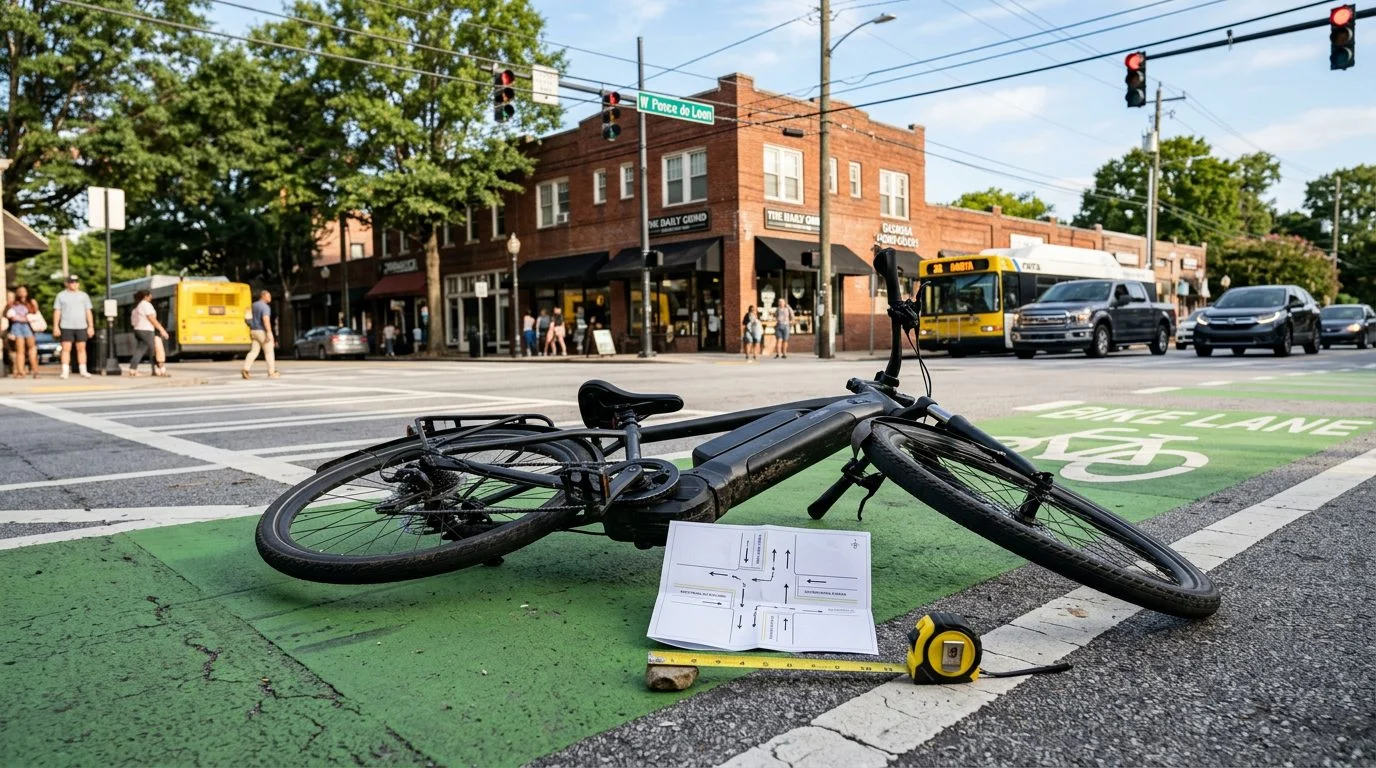
E-Bike Crashes | Georgia
Hurt when your e-bike suddenly surged or stopped responding? Find out what failed.
Throttle and controller problems can look like rider error. The parts, the wiring and the records often tell a different story, and we start there.
The firm at a glance
1999
Year the firm began practice
5
Offices in Jonesboro, Atlanta, Decatur, Macon and Augusta
Free
First consultation, confidential, with no obligation to continue
By Terance Madden · Published November 16, 2026
A stuck or surging throttle can turn a short ride into a serious crash in seconds. If that happened to you or someone you love, the first question is who answers for the part that failed.
A throttle or controller defect claim asks two things. Was the part unsafe when it was sold, and did that flaw cause the injury? Georgia law can hold a manufacturer liable when the answer is yes.
What a Throttle or Controller Defect Looks Like on an E-Bike
A throttle or controller defect is a failure that makes the motor speed up, surge, or cut out when the rider has not asked for it.
The throttle is the twist or thumb control that tells the motor to speed up. The controller is the box that turns that signal and battery power into motor output.
Common failures include:
- The throttle sticks open and the bike keeps accelerating.
- The bike surges at low speed when the rider barely touches the control.
- Power cuts out suddenly in traffic.
- The controller ignores the brake signal and keeps driving the motor.
A stuck or surging throttle can throw a rider into traffic, a curb, or another vehicle, often with no time to react.
Off-brand and imported bikes raise a bigger question. Who designed, tested, and sold the controller or throttle? The name on the frame is not always the name that built the part.
This page is for a rider hurt by a failed part, and for a family whose loved one died after one.
If a throttle stuck or surged and someone you love is still paying for it, you may have a claim, and you do not have to sort it out alone. Talk it through with our team — the first consultation is free, confidential, and carries no obligation.
What a Product Liability Claim Can Cover
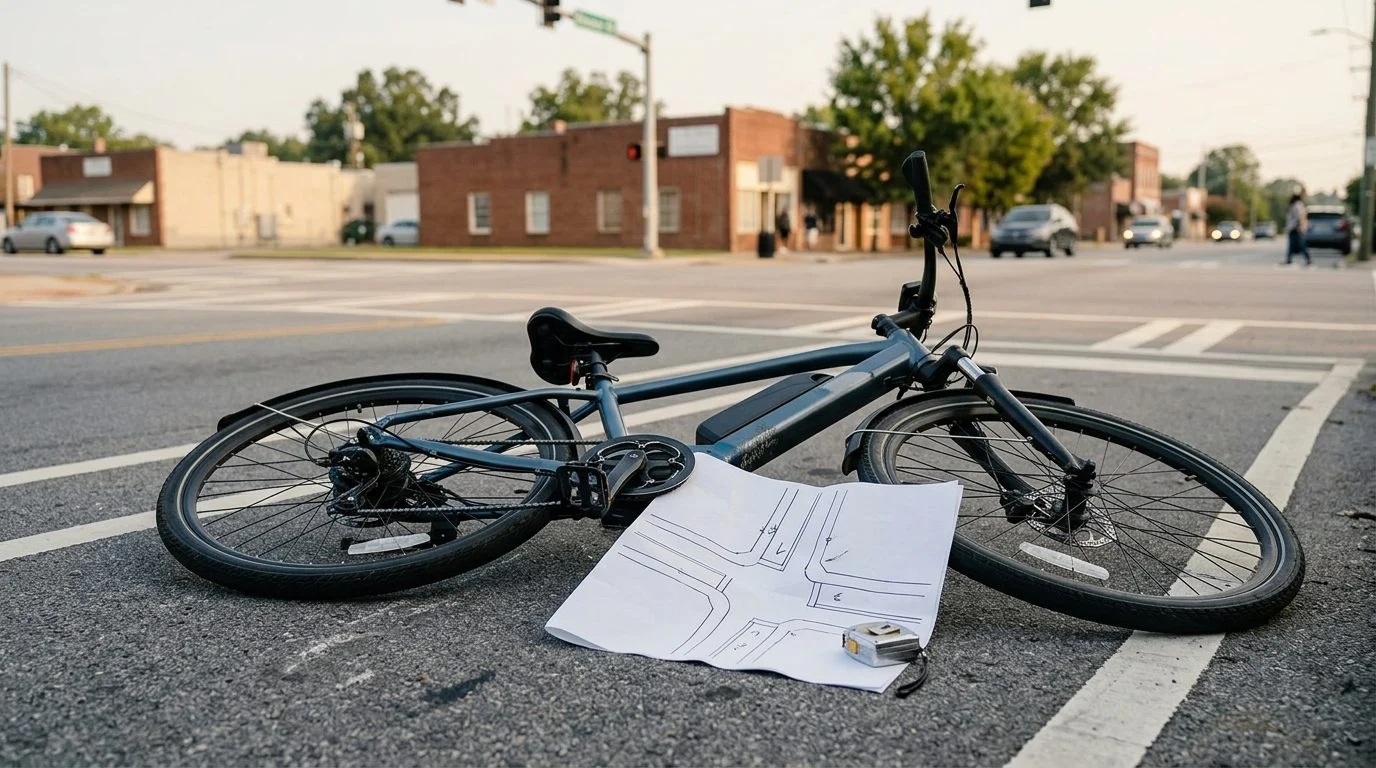
A product liability claim (a claim that a defective product caused the injury) can reach more than the bike’s brand name.
The statute applies “irrespective of privity,” so the rider does not need a direct contract with the maker.
Other companies in the chain can matter too. Under O.C.G.A. § 51-1-11.1, a product seller is not treated as a manufacturer for strict liability (liability without proof the maker was careless). That is why the claim looks closely at who designed, made, and supplied the failed part.
Damages are the money a claim can pursue. Under O.C.G.A. § 51-12-2, general damages such as pain and suffering may be recovered without proof of an amount. Special damages, such as bills and lost pay, must be proved. Future care and lost earning power are part of a serious injury claim.
For a family, O.C.G.A. § 51-4-2 lets a surviving spouse recover the full value of the decedent’s life, as the evidence shows. If there is no surviving spouse, children may recover instead.
Why the Bike, Controller, and Data Decide the Case
The failed parts decide the case, so they must be kept as the crash left them.
Do not repair, sell, or throw away the bike, throttle, controller, wiring, or battery. A repair can erase the clues. A preservation letter asks the other side to keep the parts too. A chain-of-custody record tracks who held each part and when.
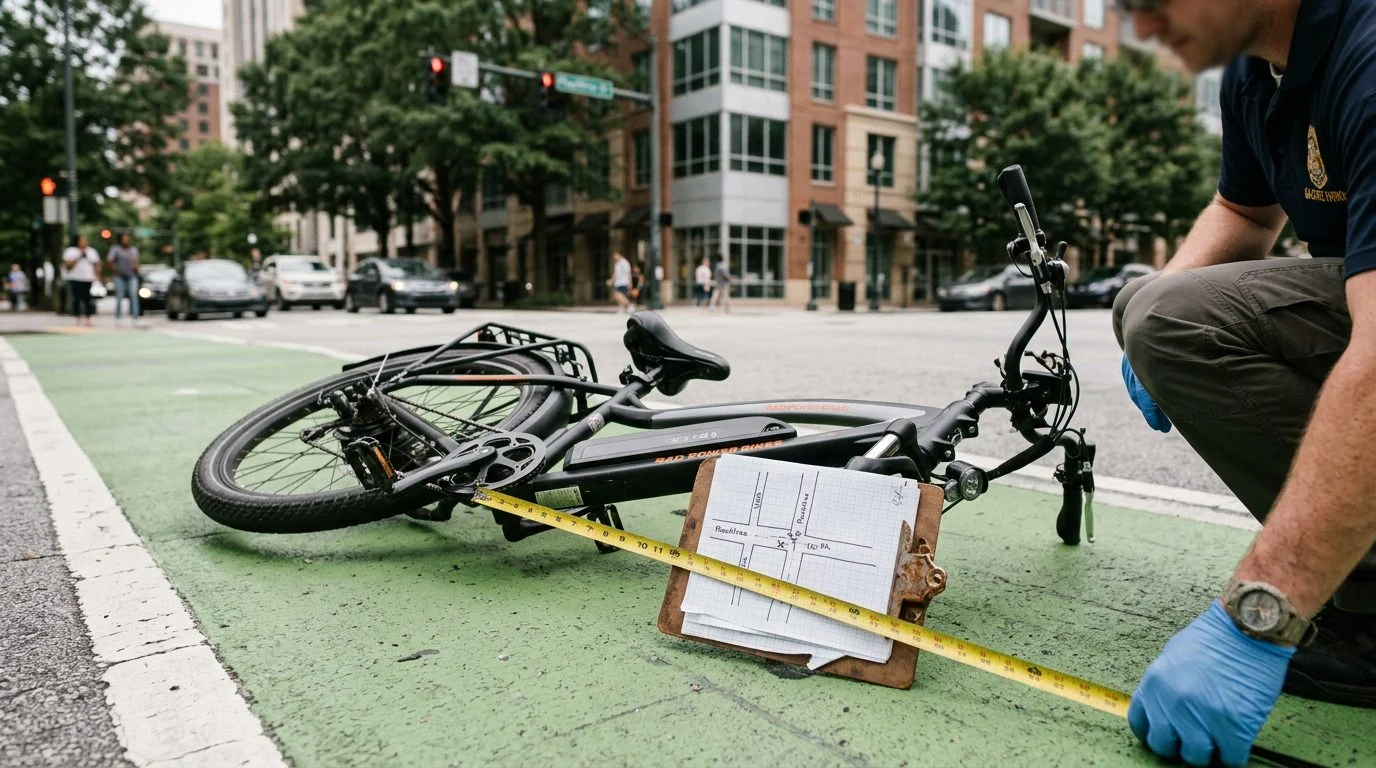
Before law school, Terance Madden earned a B.S. in Electrical Engineering. He starts with how the throttle, controller, wiring, and battery work together, then asks what the evidence shows. That training shapes how he reads each part in a case.
An engineer looks for damage to the wiring, corrosion on connectors, water or heat marks, and any saved settings or firmware data. Each clue helps show whether the fault came from a design flaw, a manufacturing error, or misuse. A clear technical story is what separates a defect claim from a rider-error argument.
Georgia E-Bike Rules and the Defenses You Will Hear
The other side will likely argue the rider caused or added to the injury. Georgia’s fault rule decides how far that argument can go.
Under O.C.G.A. § 51-12-33, a rider’s damages are reduced in proportion to the rider’s percentage of fault. If the rider is 50 percent or more responsible, the rider cannot recover damages.
The jury also weighs the fault of everyone who contributed to the injury, even a company that was never sued, but a nonparty’s fault is considered only if the plaintiff settled with that nonparty or a defending party gives notice not later than 120 days prior to the date of trial that it was wholly or partially at fault. A parts maker can belong in that picture.
A helmet question or a sidewalk question does not decide a defect claim by itself. The real question is what failed and how the failure caused the injury. Local rules on where e-bikes may ride can differ by city and county, so the firm checks the rules for the place of the crash.
Rider habits are one piece of the picture, not the whole case. A helmet or route choice can reduce a rider’s recovery: if the rider is to some degree responsible for the injury or damages claimed, damages are reduced in proportion to the rider’s percentage of fault, and a rider 50 percent or more responsible recovers nothing (O.C.G.A. § 51-12-33; Quynn v. Hulsey (2020)).
How a Throttle Defect Case Moves From First Call to Resolution
A throttle defect case usually moves through five steps: consultation, evidence, investigation, demand, and resolution.
- Consultation. Bring the bike, photos, medical records, witness names, and any receipts from the seller.
- Evidence. The parts are kept and inspected carefully, so no clue is lost.
- Investigation. An engineering review looks at how the failure happened, with outside technical help when a question calls for it.
- Demand. Treatment, lost income, and future needs are documented before any demand is made.
- Resolution. The claim settles if the responsible parties pay what is owed. If they will not, a lawsuit follows.
Under O.C.G.A. § 9-3-33, most injury claims must be brought within two years after the claim arises. Some claims follow different timing, so the dates depend on the facts. Early action also keeps evidence and memories fresh. The firm keeps families posted in plain English at every step.
How Big Insurance Handles E-Bike Throttle and Controller Claims
Big Insurance is not on the rider’s side, and a first offer is rarely what a claim is worth.
Expect these tactics:
- A low first offer, made before the full medical picture is known.
- A recorded statement asked for soon after the crash, while the rider is hurting or on medication.
- Delays and piles of paperwork that can slow the claim down.
- Disputes over whether treatment was needed or what it cost. Under O.C.G.A. § 51-12-1.1, medical damages are limited to the reasonable value of medically necessary care, and either side may challenge reasonableness.
- “It’s just a bike” or “low speed” arguments, and blame placed on modifications or the battery.
The response is to look at every layer of coverage. That includes the liability policy, uninsured or underinsured motorist coverage where it applies, any umbrella or excess policy, and corporate coverage of the maker or seller. The firm values the full lifetime cost of the injury, not only the first bills. The firm prepares each case carefully, including for the chance it goes to court.
Not sure what your next step is?
Talk it through with our team — the first consultation is free, confidential, and carries no obligation.
Why Families Bring These Cases to T. Madden & Associates, P.C.
T. Madden & Associates, P.C. has been in practice since 1999. It has offices in Jonesboro, Atlanta, Decatur, Macon, and Augusta.
Terance Madden is the responsible lawyer for this page. His engineering training shapes how he reads technical evidence in a defect case.
The initial consultation is free, confidential, and without obligation to continue.
Calls are answered 24/7, so a family can reach the firm on a bad night, not only during office hours. The firm does not promise a result, because every case turns on its own facts.
Questions Families Ask Before Calling
Short answers come first, and the evidence decides the rest.
Is a stuck throttle always a defect?
Not always. The evidence decides it, which is why the bike and controller are inspected first.
Does not wearing a helmet end my claim?
Helmet use can be raised as a defense. The question is how much, if at all, it changed the injury.
Who pays medical bills while a claim is open?
Health insurance and other coverage can pay. CMS explains that if Medicare made a conditional payment, it must be repaid from a settlement or judgment.
I am the spouse or adult daughter handling everything. Is this for me?
Yes. The person managing the recovery carries the calls, bills, and records, and the firm takes that load seriously.
Still deciding? That is a reasonable place to be. If a throttle failed and you are now juggling the bike, the bills, and the phone calls, you do not have to carry that alone. Start your free case evaluation when you are ready.