

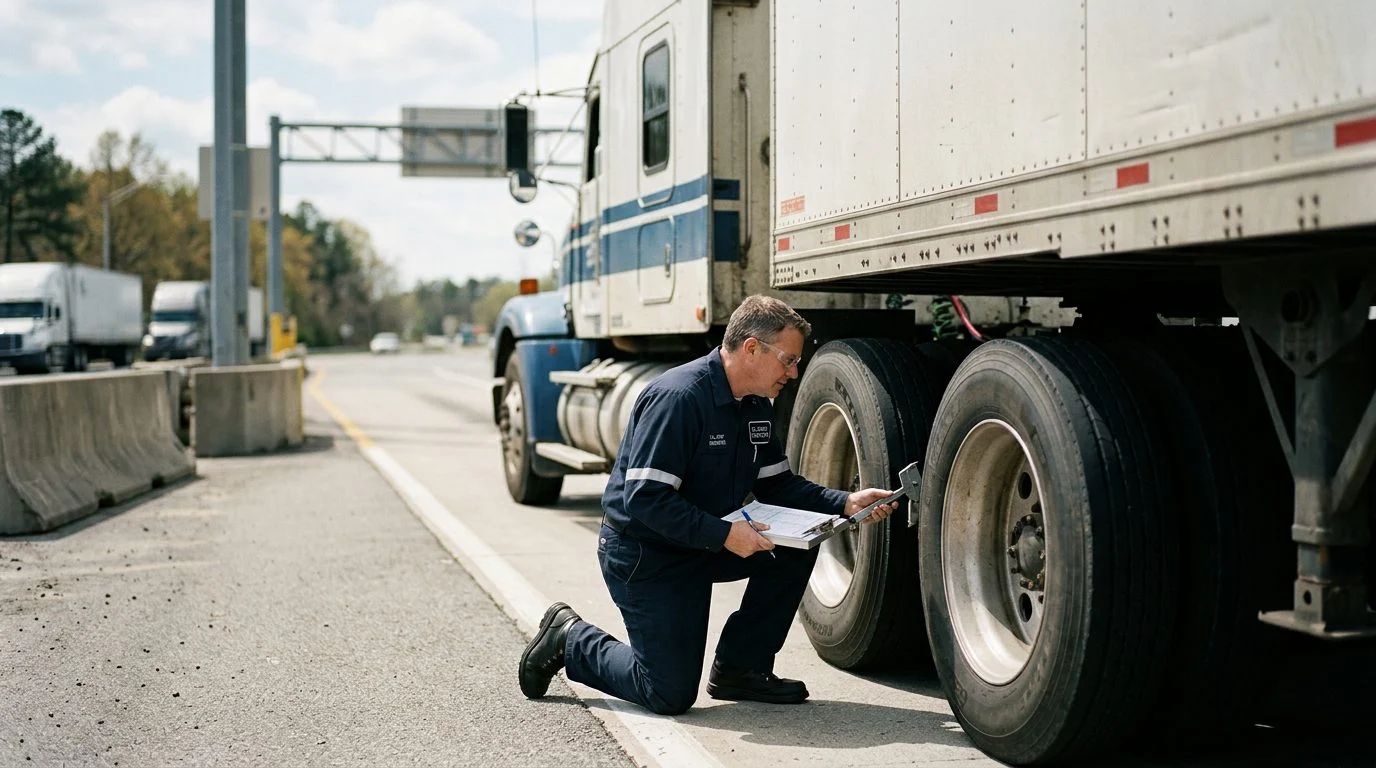
Truck Accidents | Georgia
Hit by a Truck in a Blind Spot? Understand Your Options in Georgia
Truck blind spots, or no-zones, cause many serious crashes. T. Madden & Associates, P.C. has represented injured Georgians since 1999, from our offices in Jonesboro, Atlanta, Decatur, Macon and Augusta.
T. Madden & Associates, P.C. at a Glance
1999
Year the firm began practicing law in Georgia
5
Georgia offices: Jonesboro, Atlanta, Decatur, Macon and Augusta
By Terance Madden · Published October 20, 2026
Short Answer: Can You Be Found at Fault in a Truck Blind-Spot Crash in Georgia?
Yes, you can be assigned some share of fault in a truck blind-spot crash in Georgia. Being in a truck’s blind spot does not, by itself, make you responsible. It also does not automatically make the truck driver responsible. Georgia assigns fault by percentage, and a person found 50 percent or more at fault cannot recover damages under O.C.G.A. § 51-12-33.
Fault depends on how the crash happened. Who moved, who had the right of way, and who could have avoided the collision all matter. A truck crash rarely turns on one moment. It turns on the full sequence of events, from the lane change or turn to the impact.
If a truck's blind spot was part of your crash, you may have real questions about your own share of blame, and you don't have to sort them out alone. Talk it through with our team — the first consultation is free, confidential, and carries no obligation.
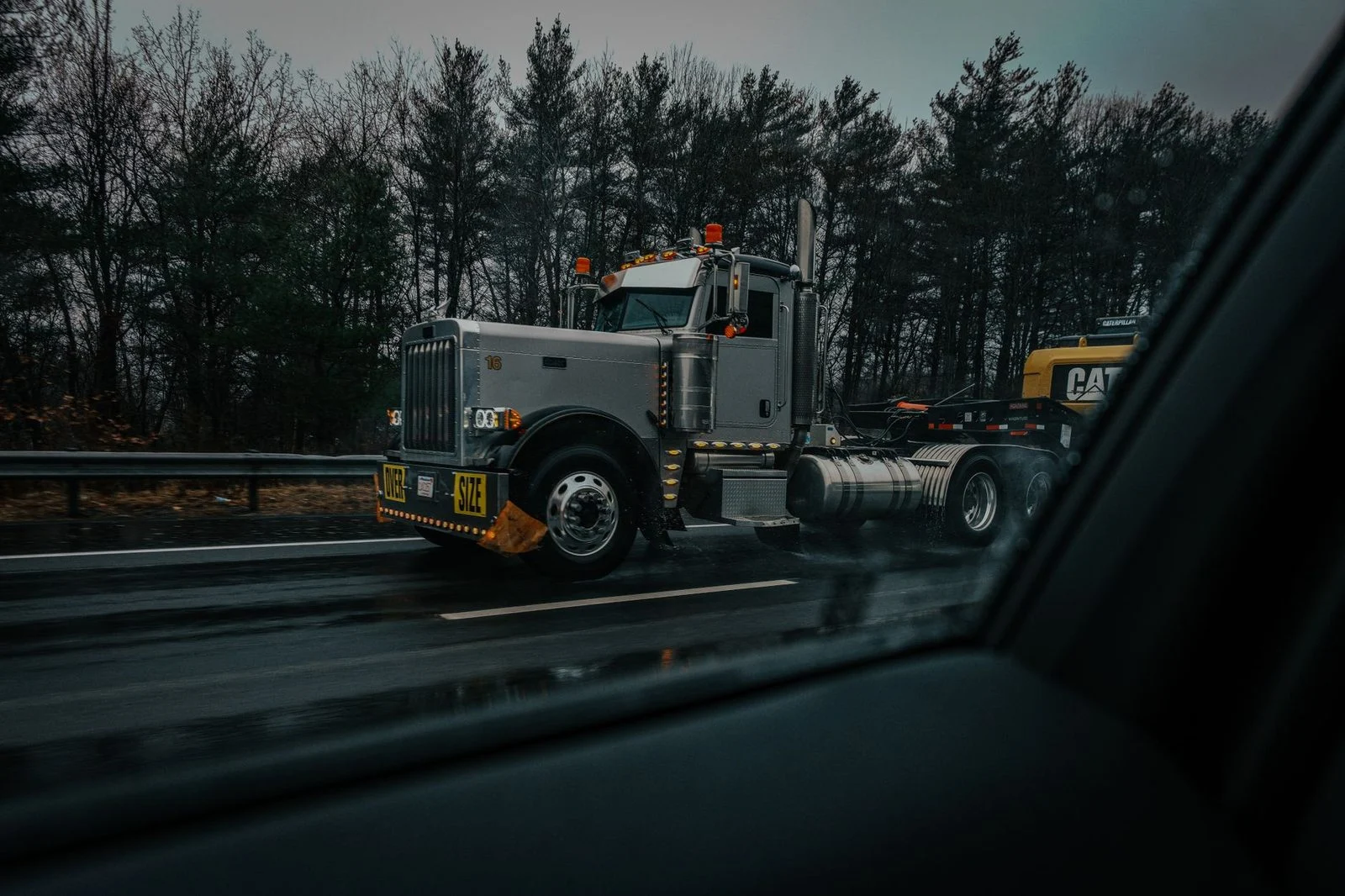
What a Truck Blind Spot Is and Why Trucks Have Large Ones
A truck blind spot is an area around the truck where the driver cannot see a vehicle, even with the mirrors. Large trucks have several of these zones. They sit along both sides, directly behind the trailer, and in front of the cab. Many drivers call them no-zones.
Federal rules call for two rear-vision mirrors on trucks, one at each side, so the driver can see the highway to the rear. 49 CFR 393.80 sets out this requirement, along with its exceptions.
Mirrors still leave gaps. Some trucks built with an interior rearview mirror need only one outside mirror, on the driver’s side. A car can sit in one of these gaps and still be close enough to be hit.
A common mistake is assuming that if you can see the truck’s mirror, the driver can see you. Mirrors show angles, not every space right beside or behind the trailer. Treat the side and rear of a truck as a place to stay out of, not a place where you can count on being seen.
How Georgia’s 50% Rule (Modified Comparative Fault) Works
Georgia lowers your recovery by your share of fault. It cuts off recovery entirely at 50 percent or more (O.C.G.A. § 51-12-33). Under the statute, the trier of fact (the person or group deciding the case) sets the percentage of fault. The judge then reduces the award in proportion to that percentage.
Below 50 percent, you can still recover what remains after the reduction. At 50 percent or more, you recover nothing (O.C.G.A. § 51-12-33). That is why the exact split matters so much in a truck case.
Here is an illustrative example using round numbers only. Imagine total damages of $100,000 and a finding that the car driver was 20 percent at fault. The award would drop by $20,000, leaving $80,000. This is a math example, not a prediction for any real case.
Georgia also has an avoidance rule. Under O.C.G.A. § 51-11-7, a plaintiff who by ordinary care could have avoided the harm caused by the defendant’s negligence is not entitled to recover. In other cases, the defendant is not relieved just because the plaintiff contributed in some way. Many blind-spot readers have never heard of this rule, so it’s worth knowing it exists.
How Fault Is Usually Divided in Blind-Spot Crashes
Fault in blind-spot crashes usually turns on who moved into the other vehicle’s space, and whether that move was safe. Am I at fault if I was in a truck blind spot Georgia? Often the answer depends on the lane change itself. Lane changes and merges are the most common setting for these collisions.
If a truck changes lanes while a car sits in its blind spot, the key question is whether the truck driver checked before moving. If the car moved into the gap, the car driver may carry more of the fault. Both moves can be part of the same crash.
Right turns create a different pattern. Trucks often swing wide to make a turn. A car beside or behind the truck can end up in the path of the trailer. Where each vehicle was positioned, and whether the car had room to pull clear, often becomes the focus.
Each side usually has its own argument. The truck side may say the car was passing on the right or cutting in too close. The car side may say the truck moved without signaling or without checking its mirrors. Following distance also matters. A car that stays right behind a truck can end up in its no-zone when the truck brakes.
Courts look at the full sequence of events, not a single moment. Two crashes that look alike can end with different fault splits because the details differ.
Does Insurance or the Police Report Decide Who Is at Fault?
Neither the police report nor an insurance company’s view makes the final legal decision. A police report records what the officer observed and any citations issued. It can be important evidence, but it is one input among several.
An insurer’s early opinion reflects its own assessment of the claim. It is not a court ruling. Insurers and officers can be wrong, and their early positions can change as more evidence comes in.
In a lawsuit, the trier of fact decides the percentage of fault for each party under O.C.G.A. § 51-12-33. That is the step where the 50 percent line is applied.
What you say at the scene, in writing, or to an adjuster can be used later. Keep a short written timeline of what happened, made on the same day if you can. Write down what you said and to whom. Accurate notes help keep details straight when memories fade.
Evidence That Commonly Shapes the Fault Split
The evidence that most often shapes a blind-spot fault split is physical and recorded, not memory alone. Start with photos and video of both vehicles, the lane lines, and where each vehicle came to rest. These images can show lane position and the space between the vehicles.
Dashcam footage from either vehicle can show signals and lane position before impact. Nearby business or traffic camera footage sometimes exists, but it may be overwritten. It’s worth asking about early.
Witness names and contact details matter. Other drivers, passengers, and people nearby may have seen the lane change or the turn. Their accounts carry more weight when they are recorded close to the event.
Truck records are another key source. Under 49 CFR 395.8, a motor carrier must keep records of duty status and supporting documents for not less than 6 months from the date of receipt. That is a short window, so the request should go out early. Records may be preserved by any technology that accurately reflects all of the information in the record and remains accessible in a form that can be accurately reproduced later for reference, under 49 CFR 379.7.
Medical records tie injuries to the collision. They also show when symptoms began and how they changed over time.
Not sure what your next step is?
Talk it through with our team — the first consultation is free, confidential, and carries no obligation.
Other Parties Who May Share Responsibility
Fault is not always limited to the two drivers. Under O.C.G.A. § 51-12-33, the trier of fact considers the fault of all persons or entities who contributed to the injury, but a nonparty’s fault is considered only if the plaintiff settled with that nonparty or a defending party gave notice, at least 120 days before trial, that the nonparty was wholly or partially at fault.
In a truck crash, that can reach others tied to the trip. A trucking company, or a party involved in loading the cargo, may share responsibility in some cases. A load that shifts or is poorly secured can contribute to a crash. Our cargo shipper and loader liability guide covers this in more detail.
Post-crash testing is another issue some cases raise. Under 49 CFR 382.303, the employer must test surviving drivers for alcohol after certain truck crashes. Those triggers include a loss of human life, for a driver who was performing safety-sensitive functions with respect to the vehicle, or a moving-violation citation within 8 hours tied to injury needing immediate medical treatment away from the scene or disabling vehicle damage requiring tow-away. The alcohol test window closes at 8 hours, and the controlled substance window closes at 32 hours.
Missed work is also part of many truck claims. Our guide on lost wages explains how that loss is documented after a crash.
Steps to Take Now to Protect a Blind-Spot Crash Claim
Getting medical care quickly is the first step, even if injuries seem minor. Some injuries, such as soft-tissue strain or head injuries, can show up hours or days later. A prompt exam also creates a record that ties symptoms to the crash.
Report the crash to police and get the report number. Photograph both vehicles, the road, and the lane markings while they’re still visible. Write down the sequence of events while your memory is fresh.
Be careful with recorded statements to insurers. Before giving one, understand that your words can be used later to assign fault. It is reasonable to say you need time to review what happened.
Timing matters too. Under O.C.G.A. § 9-3-33, actions for injuries to the person must generally be brought within two years after the right of action accrues. Other rules can apply in some situations, so the deadline should be checked against your facts early.
Frequently Asked Questions
What is a blind spot in driving?
A blind spot is an area around a vehicle the driver cannot see directly or in the mirrors. For trucks, these areas are often called no-zones.
What is Georgia’s law on auto accidents?
Georgia lowers a person’s recovery by their percentage of fault (O.C.G.A. § 51-12-33). A plaintiff found 50 percent or more responsible for the injury or damages claimed cannot recover damages.
Does insurance or the police decide who is at fault?
Neither makes the final legal decision. In a lawsuit, the trier of fact decides the percentage of fault for each party.
What vehicles have the worst blind spots?
Large trucks, such as semi-trucks, have the largest blind spots that drivers share the road with.

Talk With T. Madden & Associates, P.C. About Your Truck Crash
If you were hurt near a truck, you may still be working out what happened. You may also be trying to understand a relative’s crash while handling medical bills and insurance calls. You don’t need every answer before you ask a question.
T. Madden & Associates, P.C. has practiced in Georgia since 1999. Terance Madden is the responsible lawyer for the firm, which has offices in Jonesboro, Atlanta, Decatur, Macon and Augusta. The firm offers a free first consultation. It is confidential and carries no obligation to continue.
The firm works on a no-fee-unless-we-win basis. You may still be responsible for court costs and case expenses. Ask about how these work during your consultation.
To talk through the facts of your blind-spot crash, start a free case evaluation through our contact page.
Before You Talk to an Insurance Adjuster
A trucking company's insurer may contact you soon after a crash. Anything you say can be used in the claim. Before you give a recorded statement or sign anything, talk with our team about what to say.
After a Truck Blind Spot Crash, Focus on These Steps
Get Medical Care
Seek treatment right away, even if your injuries seem minor. Some injuries appear hours or days after a crash.
Document the Scene
If you are able, take photos of the vehicles, the road, your injuries and any visible damage to your motorcycle, car or e-bike.
Write Down What You Remember
Record the time, location, weather and what you saw while the details are still fresh. Note any witnesses.
Talk With Our Team
Our team can review what happened and explain your options during a free, confidential consultation with no obligation to continue.
Why Injured People Contact T. Madden & Associates, P.C.
Support From Our Team
Our assistants and office staff work with clients from intake through the case, and Terance Madden is the attorney responsible for your matter.
No Fees Unless There Is a Recovery
The firm's fee is contingent on a recovery. You may still be responsible for court costs and case expenses, and our team will explain these before you decide.
Free, Confidential Consultation
Your first consultation is free, confidential and comes with no obligation to continue.
Available 24/7
Call any time to talk about a recent truck crash, so you do not have to wait to get answers.