

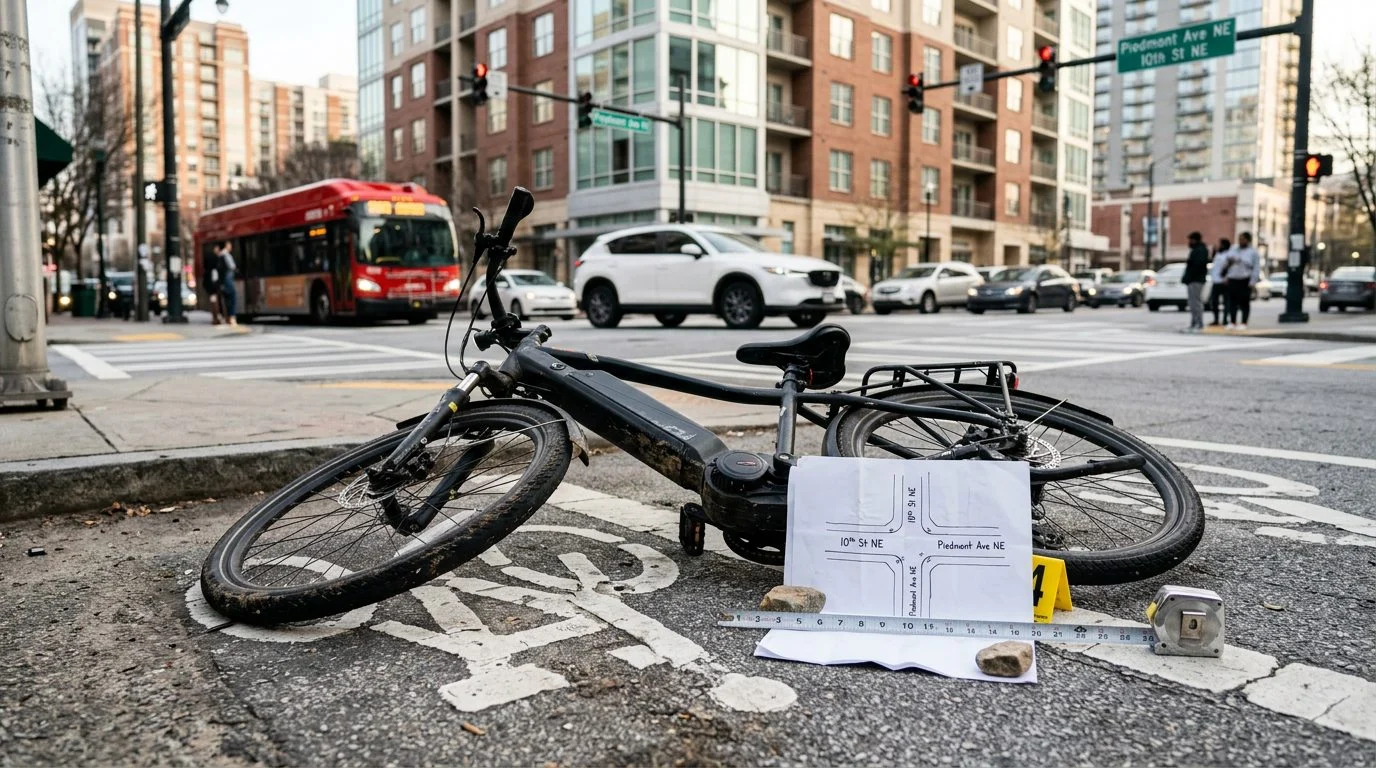
E-Bike Crashes | Georgia
No Police Report? Your E-Bike Crash Claim Can Still Be Proven
Officers do not always come to the scene, and some reports never get written. Here is how the proof is still built.
T. Madden & Associates, P.C.
1999
In practice in Georgia since
5
Offices: Jonesboro, Atlanta, Decatur, Macon and Augusta
24/7
Call us anytime
By Terance Madden · Published November 22, 2026
Someone you love is hurt, the bike is wrecked, and the first question is, “Did anybody call the police?”
The direct answer: Georgia requires a police report only in some crashes, and the facts decide which ones. The report still matters, even when the law does not require one.
The Short Answer: Do You Need a Police Report?
A police report is not always legally required, and whether one was required turns on the facts. The main rule is in O.C.G.A. § 40-6-273. The driver of a vehicle in a crash that causes injury, death, or property damage of $500.00 or more must notify police immediately. Inside a city, that means the local police department. Outside one, it means the county sheriff or the nearest state patrol office.
Whether that duty reaches your e-bike crash depends on what was involved, how it happened, and where. Ask the question early and write down the details.
If no report was made, your claim is not over. The proof simply has to be built another way. The common mistake is assuming that no report means no case. The opposite mistake is assuming a report settles who was at fault. Both are wrong.
If someone else caused your e-bike crash, you don't have to sort out the report and the insurance calls alone. Talk with our team about what the evidence shows. Talk it through with our team — the first consultation is free, confidential, and carries no obligation.
Why a Police Report Matters Even When It Is Not Required
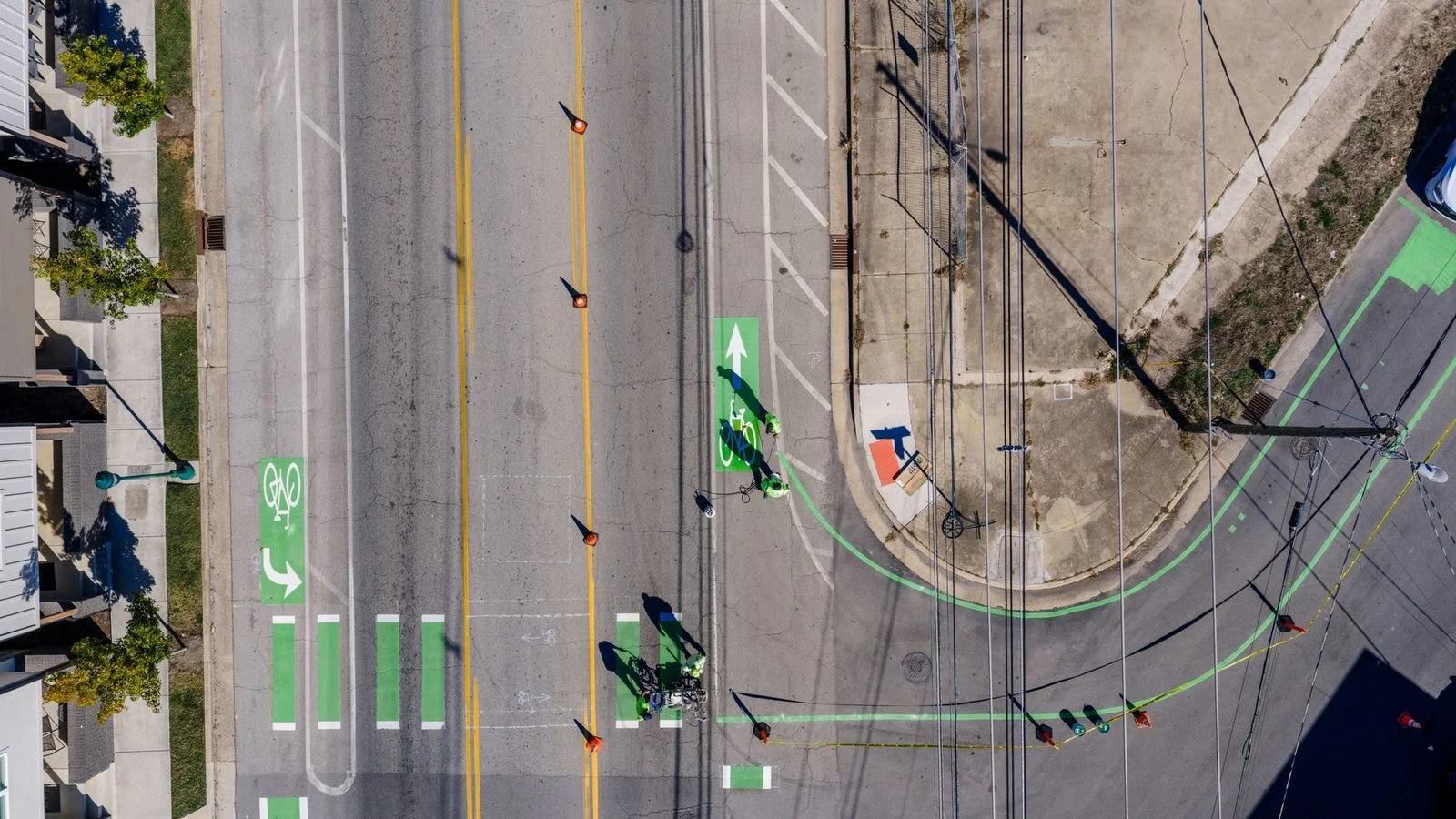
A police report is an official record made close to the crash. That timing is what makes it useful. Evidence is any record that others can check, and a report gives a starting point they can test.
The report usually lists the date, time, and location. It records road conditions, the people involved, any witnesses, and what the officer saw. Those details are hard to rebuild months later from memory.
The report is not the final word. The officer may not have seen the crash itself. The officer may have written down what one driver said, and that account may be wrong. A report can also contain plain errors, such as a wrong street name or a misspelled name. Those can be corrected, but only if someone reads the report and checks it against the other proof.
When to Call 911 and Ask for an Officer
Call 911 right away if anyone is hurt, and ask for an officer to come to the scene. Some injuries feel minor at first and show up hours or days later. Don’t wait to see how you feel.
Ask for an officer too if a car or truck was involved, if the other driver left, or if you can’t clearly identify the other driver. O.C.G.A. § 40-6-270 requires a driver in a crash that causes injury or death, or damage to a vehicle driven or attended by any person, to stop, give their name, address, and registration number, and help anyone who is hurt.
A driver who leaves, or one with no insurance, makes the record matter even more. Check every policy that might apply, including your own auto coverage. Our car accident lawyer page explains that coverage in more detail.
How to Get a Copy of the Crash Report in Georgia
Ask the agency that investigated the crash for a copy. That will be the local police department, the county sheriff, or the state patrol, depending on where the crash happened.
Have these details ready: the date, the location, the names of the drivers, and any report or case number the officer gave you at the scene. The more exact the details, the faster the search.
Start the request early. A report may not be ready right away, so keep documenting the crash from other sources while you wait. Photos, witness names, and messages all count.
What the Report Cannot Do on Its Own
A crash report is one piece of the file. It does not replace the rest of the proof, and it does not decide the claim by itself.
Big Insurance has its own playbook. Adjusters often open with a low offer. They may ask for a recorded statement early, stretch the file out with delays, or dispute the treatment you need. Some argue the crash was “low impact” so the injury looks small.
Here is what to know. An insurer’s first offer is rarely what a claim is worth. Check every coverage layer: the at-fault driver’s liability coverage, your uninsured or underinsured motorist (UM/UIM) coverage, any umbrella or excess policy, and corporate coverage if a business was involved. A fair claim counts the full cost of the injury, including future care when the proof supports it.
Georgia also reduces recovery by the injured person’s share of fault. Under O.C.G.A. § 51-12-33, damages are cut in proportion to the injured person’s fault. The injured person cannot recover any damages at 50 percent or more responsible.
Terance Madden trained as an electrical engineer before he became a lawyer. That training shapes how he works a crash file. He asks what the evidence shows, how the crash happened, and which records must be preserved. Against a “low impact” argument, he looks at the physics of the crash, not only the words in an insurer’s letter. Our low-speed impact page covers that point in more detail.
If There Is No Report or the Report Is Wrong
Start building your own proof now. Take photos of the scene, the bike, and any damage to your helmet or gear. Get witness names and contact details. Save texts and messages about the crash, along with medical records and receipts.
If you’re managing a loved one’s recovery, keep one folder or file. Write down what happened while it’s fresh. Track missed work, rides to appointments, and out-of-pocket costs.
Watch the clock. Under O.C.G.A. § 9-3-33, a lawsuit for injuries to the person must generally be brought within two years after the right of action accrues, except actions for injuries to the person involving loss of consortium, which must be brought within four years after the right of action accrues. That deadline is the statute of limitations, the legal time limit to file suit. Waiting also makes proof harder to pin down.
If the injured person has Medicare, the claim must be reported. CMS reporting guidance explains that a beneficiary must notify Medicare when a claim is made against a liability insurer. Medicare may also make a conditional payment, which must be repaid from a settlement. Medicare coordination of benefits notes that providers may bill Medicare if the insurer doesn’t pay promptly, usually within 120 days.
Can I still make a claim without a police report?
Yes. A missing report does not end a claim. Photos, witnesses, and medical records can carry the proof.
What if the driver who hit me left the scene?
Call 911 and report it right away. Write down everything you remember about the vehicle.
Not sure what your next step is?
Talk it through with our team — the first consultation is free, confidential, and carries no obligation.
Talk to T. Madden & Associates About Your E-Bike Crash
If someone else caused your crash, the firm can talk through what the report and the other evidence show.
Maybe your loved one can’t remember the crash yet. Maybe no one called the police. Maybe an adjuster has already asked for a recorded statement. You don’t have to decide the next step alone.
Terance Madden is the responsible lawyer for this page. The firm has offices in Jonesboro, Atlanta, Decatur, Macon, and Augusta. To talk about your situation, reach out through the free case evaluation page. The first consultation is free, confidential, and comes with no obligation to continue.